States Wildlife

New Jersey wildlife: what lives here and what is dangerous

Last checked November 3, 2026 against official sources.

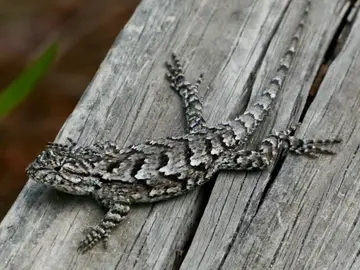
Northern Fence Lizard
Photo: John Matthew Erickson · CC BY 4.0 · iNaturalist

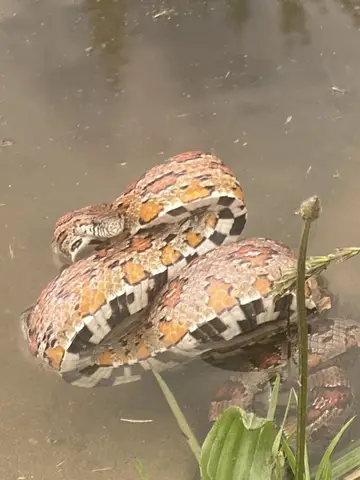
New Jersey has 2 venomous snakes named by official sources: Northern Copperhead and Timber Rattlesnake, as labelled by NJDEP Division of Fish & Wildlife, Endangered and Nongame Species Program. This guide covers 9 animal groups from New Jersey Department of Environmental Protection, Division of Fish and Wildlife (NJDEP Fish & Wildlife) lists and other official sources, with photos, venomous status and when each group is active.

Identification help has limits: a photo cannot confirm that an animal is safe. Watch from a distance and never handle a wild animal.

On this page
  1. Animal groups
  2. Dangerous animals
  3. Invasive species
  4. Seasons
  5. Official agency and reporting
  6. Questions
  7. Sources

Animal groups in New Jersey

Dangerous animals in New Jersey

These are the animals official sources describe as venomous or as a risk to people in New Jersey, across 7 groups. The reason is given in the source's own terms.

AnimalGroupWhy, per the sourceSource
Northern CopperheadSnakesVenomous: “This is one of two VENOMOUS SNAKES found in NJ.”NJDEP Division of Fish & Wildlife, Endangered and Nongame Species Program
Timber RattlesnakeSnakesVenomous: “This is one of two VENOMOUS SNAKES found in NJ.”NJDEP Division of Fish & Wildlife, Endangered and Nongame Species Program
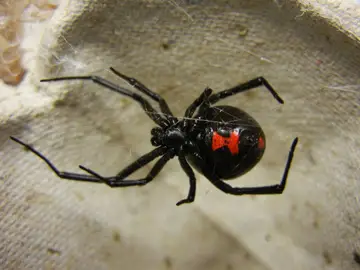
Widow spiders (genus Latrodectus)SpidersVenomous: “Black widow spiders produce venom that contains a neurotoxin.”NJAES
Southern black widowSpidersVenomous: “The southern black widow (Latrodectus mactans) is the most notorious because of its potent venom”NJAES
Widow spiders (black widows)SpidersVenomous: “In North America, only the widow spiders in the genus Latrodectus and the recluse spiders, in the genus Loxosceles are dangerous to humans.”NJAES
Ticks (arachnids, not spiders)Ticks (arachnids)Disease: “Tick borne illnesses most commonly found in New Jersey are; Anaplasmosis, Babesiosis, Ehrlichiosis, Lyme Disease, and Rocky Mountain Spotted Fever.”NJ Poison Control Center (NJPIES), Rutgers New Jersey Medical School
Longhorned tickTicks (arachnids)Invasive tick listed by NJDEP among the most commonly encountered invasive animals and pests with known impacts: “Longhorned Tick Haemaphysalis longicornis”NJDEP
Common Snapping TurtleTurtlesStrikes when on land: “On land, Common Snapping Turtles are quite strike-prone.”NJDEP Division of Fish & Wildlife, ENSP
Bees, wasps, hornets and yellow jacketsInsects and BugsStings: “Allergic reactions to these insects could be life threatening, and emergency support should be sought IMMEDIATELY.”NJ Poison Control Center (NJPIES), Rutgers New Jersey Medical School
MosquitoesInsects and BugsDisease: “Mosquitoes may carry potentially dangerous illnesses, the two most commonly found in New Jersey are; West Nile Virus, and Eastern Equine Encephalitis.”NJ Poison Control Center (NJPIES), Rutgers New Jersey Medical School
Black BearMammalsBears near homes and trails: “However, if you encounter a black bear in your neighborhood or outdoors while hiking or camping, follow these common-sense safety tips.”NJDEP Fish & Wildlife
Roughtail StingraySharks and Marine LifeVenomous: “The tail spines are poisonous, yet it is rarely life-threatening to humans.”Florida Museum of Natural History, University of Florida
Bluntnose StingraySharks and Marine LifeVenomous: “…with a tail one and a half times its body length bearing a serrated venomous spine”Florida Museum of Natural History, University of Florida
Atlantic StingraySharks and Marine LifeVenomous: “They have long venomous spines on their tails, but they are not aggressive”Florida Museum of Natural History, University of Florida
Southern StingraySharks and Marine LifeVenomous: “Research is being conducted by the biomedical and neurobiological industries on the venomous component of the tail spine”Florida Museum of Natural History, University of Florida
Spotted Eagle RaySharks and Marine LifeVenomous: “…it is considered potentially dangerous to humans due to the venomous tail spines that can inflict serious wounds.”Florida Museum of Natural History, University of Florida
Cownose RaySharks and Marine LifeVenomous tail spine: “…the long sturdy tail has one or two serrated spines with mild venom.”Florida Museum of Natural History, University of Florida
Lionfish (invasive; 3 USGS NAS records off New Jersey)Sharks and Marine LifeVenomous spines (NOAA): “The spines of this species deliver a venomous sting that can last for days and cause extreme pain, sweating, respiratory distress, and even paralysis.”NOAA National Ocean Service
Sea nettle (stinging jellyfish)Sharks and Marine LifeStinging jellyfish present in Barnegat Bay and other NJ coastal waterways (NJDEP): “Sea nettles (Chrysaora quinquecirrha), a type of stinging jellyfish, are present in the waters of Barnegat Bay and other coastal waterways of New Jersey.”NJDEP

Not confirmed here

Official sources name the recluse spiders, including the brown recluse, in connection with New Jersey, but none we use says they live there. They are not counted among the dangerous animals above.

Venomous snakes in New Jersey shows each venomous snake with photos and range.

Invasive and nonnative species

16 nonnative animals are named on New Jersey's official lists (NJDEP). The USGS Nonindigenous Aquatic Species database records 1 nonnative animal in our groups with an established population in New Jersey.

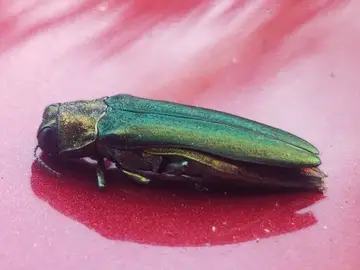
  • Emerald ash borer Agrilus planipennis
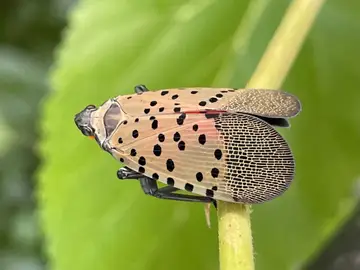
  • Spotted lanternfly Lycorma delicatula
  • Spongy moth (gypsy moth) Lymantria dispar
  • Longhorned tick Haemaphysalis longicornis
  • Asian carps (grass, silver, bighead) C. idella; H. molitrix; H. nobolis (as printed)
  • Flathead catfish Pylodictis olivaris
  • Northern snakehead Channa spp.
  • Red-eared slider Trachemys scripta elegans

All invasive species in New Jersey, with where they live and how to report them.

When animals are active in New Jersey

Darker cells are the months with more open-licence observation records of each group in New Jersey (GBIF). They show when people see and record these animals, not how many there are. The current month, this month, is highlighted.

JanFebMarAprMayJunJulAugSepOctNovDec
SnakesJanuary: 2 recordsFebruary: 5 recordsMarch: 45 recordsApril: 134 recordsMay: 168 recordsJune: 95 recordsJuly: 65 recordsAugust: 66 recordsSeptember: 79 recordsOctober: 72 recordsNovember: 27 recordsDecember: 3 records
SpidersJanuary: 14 recordsFebruary: 20 recordsMarch: 99 recordsApril: 300 recordsMay: 386 recordsJune: 295 recordsJuly: 293 recordsAugust: 267 recordsSeptember: 376 recordsOctober: 158 recordsNovember: 82 recordsDecember: 24 records
LizardsJanuary: 0 recordsFebruary: 0 recordsMarch: 3 recordsApril: 35 recordsMay: 51 recordsJune: 18 recordsJuly: 27 recordsAugust: 37 recordsSeptember: 32 recordsOctober: 10 recordsNovember: 0 recordsDecember: 0 records
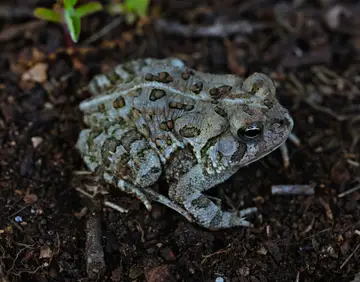
Frogs and ToadsJanuary: 1 recordFebruary: 25 recordsMarch: 159 recordsApril: 214 recordsMay: 320 recordsJune: 237 recordsJuly: 300 recordsAugust: 207 recordsSeptember: 190 recordsOctober: 66 recordsNovember: 14 recordsDecember: 4 records
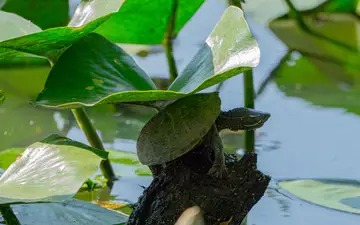
TurtlesJanuary: 2 recordsFebruary: 13 recordsMarch: 90 recordsApril: 211 recordsMay: 246 recordsJune: 252 recordsJuly: 159 recordsAugust: 170 recordsSeptember: 132 recordsOctober: 96 recordsNovember: 8 recordsDecember: 3 records
Insects and BugsJanuary: 182 recordsFebruary: 230 recordsMarch: 1,127 recordsApril: 2,904 recordsMay: 6,286 recordsJune: 9,415 recordsJuly: 12,572 recordsAugust: 10,747 recordsSeptember: 7,844 recordsOctober: 3,719 recordsNovember: 1,118 recordsDecember: 198 records
MammalsJanuary: 244 recordsFebruary: 254 recordsMarch: 404 recordsApril: 477 recordsMay: 547 recordsJune: 452 recordsJuly: 452 recordsAugust: 412 recordsSeptember: 353 recordsOctober: 267 recordsNovember: 260 recordsDecember: 262 records
Sharks and Marine LifeJanuary: 3 recordsFebruary: 2 recordsMarch: 4 recordsApril: 6 recordsMay: 15 recordsJune: 37 recordsJuly: 34 recordsAugust: 27 recordsSeptember: 3 recordsOctober: 12 recordsNovember: 7 recordsDecember: 1 record

What official sources say about seasons

Official agency and how to report

New Jersey's wildlife agency is the New Jersey Department of Environmental Protection, Division of Fish and Wildlife (NJDEP Fish & Wildlife).

Report: DEP 24-hour hotline 1-877-WARN DEP (1-877-927-6337) for venomous snakes on private land, bear damage or nuisance bears, and injured or dead bobcats; report endangered, threatened and special concern wildlife (and roadkill) with the NJ Wildlife Tracker app. NJDEP Fish & Wildlife

Official safety advice

Questions people ask about New Jersey wildlife

Are there alligators in New Jersey?

Not established. USGS NAS lists 5 American alligator records in New Jersey (1933 Essex, 1942 Union, 2005 Middlesex, 2018 Atlantic, 2021 Middlesex): four are marked failed and the 2021 record has no status. New Jersey lists alligators as a "potentially dangerous species" that needs a permit to possess. US Geological Survey

How many venomous snakes are in New Jersey?

NJ Fish and Wildlife: 22 snake species can still be found in New Jersey. Two are venomous, the timber rattlesnake and the northern copperhead. NJDEP Division of Fish & Wildlife, Endangered and Nongame Species Program

How many snake species are in New Jersey?

Historically 23 species; the queen snake is believed extirpated, and 22 species can still be found. NJDEP Division of Fish & Wildlife, Endangered and Nongame Species Program

Are there cottonmouths (water moccasins) in New Jersey?

No. The northern water snake is often mistaken for the cottonmouth, which does not occur in New Jersey. NJDEP Division of Fish & Wildlife, Endangered and Nongame Species Program

Where do copperheads live in New Jersey?

Northern region, as far south as the Sourlands of Hunterdon and Somerset counties, and north through western Bergen County. The species is state threatened (2026 list). NJDEP Division of Fish & Wildlife, Endangered and Nongame Species Program

Are there rattlesnakes in New Jersey?

Yes. The timber rattlesnake (state endangered). Three populations remain: along the Kittatinny Ridge, in the Highlands, and in the Pine Barrens. NJDEP Division of Fish & Wildlife, Endangered and Nongame Species Program · More

Has anyone died from a snake bite in New Jersey?

The brochure says no one has ever died from a copperhead bite or a timber rattlesnake bite in New Jersey. NJDEP Division of Fish & Wildlife, Endangered and Nongame Species Program

Are there black bears in New Jersey?

Yes. The population has grown since the 1980s and spread south and east from northwestern New Jersey. NJDEP Fish & Wildlife

Are there black widow spiders in New Jersey?

Yes. Rutgers Cooperative Extension says widow spiders occur in every US state. It does not give a New Jersey range for each widow species. NJAES

Are there brown recluse spiders in New Jersey?

Rutgers says it is established over much of the southern US and recently in New York. NJAES

Are joro spiders in New Jersey?

A February 2026 Rutgers fact sheet says "Not in NJ yet, but is anticipated to arrive in coming years", and elsewhere calls it new to New Jersey. It calls the spider generally harmless to humans and pets. NJAES

Are there sharks off new jersey?

Yes. NJ Fish and Wildlife lists sand tiger, sandbar shark, smooth dogfish and spiny dogfish as abundant in New Jersey waters, and the white shark as rarely found. NJDEP Fish & Wildlife

Are there great white sharks in New Jersey?

Rarely. The white shark is on the state list of species rarely found in New Jersey marine waters. It is a prohibited species that anglers must release. NJDEP Fish & Wildlife

Do spotted lanternflies bite or harm people?

No. The NJ Department of Agriculture says it does not harm humans or animals. It is a serious invasive plant pest. New Jersey Department of Agriculture

Are snapping turtles dangerous in New Jersey?

The state field guide says snapping turtles on land are quite strike-prone; underwater they usually pull their heads in. NJDEP Division of Fish & Wildlife, ENSP

Are there cuban treefrogs in New Jersey?

USGS NAS has 5 Cuban treefrog records in New Jersey from 2018 to 2024; establishment is not stated. US Geological Survey

Sources

  1. New Jersey's Endangered, Threatened, and Special Concern Species. NJDEP Fish & Wildlife, ENSP. archived copy, captured August 25, 2026; checked November 3, 2026.
  2. Snakes of New Jersey (brochure). NJDEP Division of Fish & Wildlife, Endangered and Nongame Species Program. PDF Last-Modified 2021-06-23; checked November 3, 2026.
    Quoted passages (14)
    “This is one of two VENOMOUS SNAKES found in NJ.”
    “22 species of snakes can still be found in the most densely populated state in the country.”
    “Two of our snake species are venomous, the timber rattlesnake and the northern copperhead, and the remaining twenty species are non-venomous.”
    “Often, the non-venomous northern water snake is misidentified as the water moccasin (cottonmouth) which does not occur in New Jersey.”
    “…inhabiting NJ’s northern region extending as far south as the Sourlands of Hunterdon and Somerset counties northeast through localized areas within Somerset and north through western Bergen County”
    “…three populations remain: in NJ’s northern region along the Kittatinny Ridge and within the Highlands region and in southern NJ within the Pine Barrens”
    “No one has ever died from a copperhead bite in NJ. … No one has ever died from a timber rattlesnake bite in NJ.”
    “If you encounter a venomous snake, you should keep a safe distance (at least 5 feet) and keep young children and pets at your side for control.”
    “Call 911 immediately”
    “Landowners that encounter timber rattlesnakes or northern copperheads on their property and wish to have them removed should contact ENSP immediately through the DEP Hotline: 1-877-WARN DEP (1-877-927-6337)”
    “Never walk barefoot!”
    “…which makes it illegal for anyone to kill, collect, or harass our native snake species.”
    “These snakes are the first to emerge in NJ, and can often be seen in mid-March during warm spells.”
    “They give birth to 6-17 young in mid-August to early October. … Six to 10 young are born in late August”
  3. Spiders of Medical Importance (FS1121). Rutgers Cooperative Extension (NJAES). May 2010; checked November 3, 2026.
    Quoted passages (5)
    “Black widow spiders produce venom that contains a neurotoxin.”
    “The southern black widow (Latrodectus mactans) is the most notorious because of its potent venom”
    “In North America, only the widow spiders in the genus Latrodectus and the recluse spiders, in the genus Loxosceles are dangerous to humans.”
    “They occur in every state in the United States.”
    “…is now established over much of the southern USA, and recently in New York”
  4. Bites and Stings. NJ Poison Control Center (NJPIES), Rutgers New Jersey Medical School. undated page; checked November 3, 2026.
    Quoted passages (4)
    “Tick borne illnesses most commonly found in New Jersey are; Anaplasmosis, Babesiosis, Ehrlichiosis, Lyme Disease, and Rocky Mountain Spotted Fever.”
    “Allergic reactions to these insects could be life threatening, and emergency support should be sought IMMEDIATELY.”
    “Mosquitoes may carry potentially dangerous illnesses, the two most commonly found in New Jersey are; West Nile Virus, and Eastern Equine Encephalitis.”
    “1. Call 1-800-222-1222”
  5. Invasive Animals and Pests. NJDEP. archived copy, captured February 24, 2026; checked November 3, 2026.
    Quoted passages (8)
    “Longhorned Tick Haemaphysalis longicornis”
    “Emerald Ash Borer Agrilus planipennis”
    “Spotted Lanternfly (Adult) Lycorma delicatula”
    “Gypsy (spongy) Moth-Larva Lymantria dispar”
    “C. idella … H. molitrix … H. nobolis”
    “Flathead Catfish Pylodictis olivaris”
    “Northern Snakehead Channa spp.”
    “Red-eared Slider Trachemys scripta elegans”
  6. Field Guide to Reptiles and Amphibians of New Jersey: Turtles. NJDEP Division of Fish & Wildlife, ENSP. 1st edition, February 2001; checked November 3, 2026.
    Quoted passages (2)
    “On land, Common Snapping Turtles are quite strike-prone.”
    “When to find them: Active April through November.”
  7. Black Bears in New Jersey. NJDEP Fish & Wildlife. archived copy, captured July 21, 2026; checked November 3, 2026.
    Quoted passages (4)
    “However, if you encounter a black bear in your neighborhood or outdoors while hiking or camping, follow these common-sense safety tips.”
    “To report black bear damage and nuisance behavior, call the DEP’s 24-hour, toll-free hotline: 1-877-WARN DEP (1-877-927-6337)”
    “…there are now confirmed bear sightings in all 21 of New Jersey’s counties.”
    “Black bears are not true hibernators and may be active throughout the year.”
  8. Roughtail Stingray species profile (Discover Fishes). Florida Museum of Natural History, University of Florida. updated June 3, 2025; checked November 3, 2026.
    Quoted passages (1)
    “The tail spines are poisonous, yet it is rarely life-threatening to humans.”
  9. Bluntnose Stingray species profile (Discover Fishes). Florida Museum of Natural History, University of Florida. updated June 3, 2025; checked November 3, 2026.
    Quoted passages (1)
    “…with a tail one and a half times its body length bearing a serrated venomous spine”
  10. Atlantic Stingray species profile (Discover Fishes). Florida Museum of Natural History, University of Florida. updated June 3, 2025; checked November 3, 2026.
    Quoted passages (1)
    “They have long venomous spines on their tails, but they are not aggressive”
  11. Southern Stingray species profile (Discover Fishes). Florida Museum of Natural History, University of Florida. updated June 3, 2025; checked November 3, 2026.
    Quoted passages (1)
    “Research is being conducted by the biomedical and neurobiological industries on the venomous component of the tail spine”
  12. Spotted Eagle Ray species profile (Discover Fishes). Florida Museum of Natural History, University of Florida. updated May 30, 2025; checked November 3, 2026.
    Quoted passages (1)
    “…it is considered potentially dangerous to humans due to the venomous tail spines that can inflict serious wounds.”
  13. Cownose Ray species profile (Discover Fishes). Florida Museum of Natural History, University of Florida. updated May 29, 2025; checked November 3, 2026.
    Quoted passages (1)
    “…the long sturdy tail has one or two serrated spines with mild venom.”
  14. Lionfish Facts. NOAA National Ocean Service. updated September 23, 2026; checked November 3, 2026.
    Quoted passages (1)
    “The spines of this species deliver a venomous sting that can last for days and cause extreme pain, sweating, respiratory distress, and even paralysis.”
  15. Sea Nettle Management (Barnegat Bay). NJDEP. updated February 12, 2026; checked November 3, 2026.
    Quoted passages (1)
    “Sea nettles (Chrysaora quinquecirrha), a type of stinging jellyfish, are present in the waters of Barnegat Bay and other coastal waterways of New Jersey.”
  16. USGS NAS records: American alligator, New Jersey. U.S. Geological Survey. database queried November 3, 2026; checked November 3, 2026.
  17. Jorō Spider: Description, Behavior, and Contrast with Similar Species (FS1386). Rutgers Cooperative Extension (NJAES). February 2026; checked November 3, 2026.
    Quoted passages (1)
    “Not in NJ yet, but is anticipated to arrive in coming years”
  18. Marine Life of New Jersey: Marine Fish of New Jersey. NJDEP Fish & Wildlife. archived copy, captured August 15, 2026; checked November 3, 2026.
    Quoted passages (1)
    “The following species are found abundantly in New Jersey waters:”
  19. Spotted Lanternfly. New Jersey Department of Agriculture. undated page; checked November 3, 2026.
    Quoted passages (1)
    “While it does not harm humans or animals, it can reduce the quality of life for people living in heavily infested areas.”
  20. USGS NAS records: Cuban treefrog, New Jersey. U.S. Geological Survey. database queried November 3, 2026; checked November 3, 2026.
  21. Field Guide to Reptiles and Amphibians of New Jersey: Lizards. NJDEP Division of Fish & Wildlife, ENSP. 1st edition, February 2001; checked November 3, 2026.
    Quoted passages (1)
    “When to find them: June through September. … When to find them: Active May through September.”
  22. Field Guide to Reptiles and Amphibians of New Jersey: Toads and Frogs. NJDEP Division of Fish & Wildlife, ENSP. 1st edition, February 2001; checked November 3, 2026.
    Quoted passages (1)
    “An early breeder, March through May. … Breeds from February to May.”
  23. GBIF.org occurrence records, human observations licensed CC0 1.0 or CC BY 4.0 only, accessed November 3, 2026. The datasets behind these counts are listed on our Sources page.