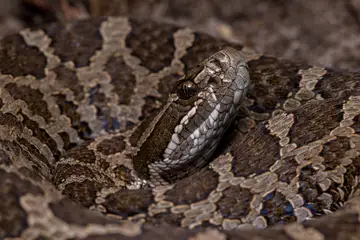
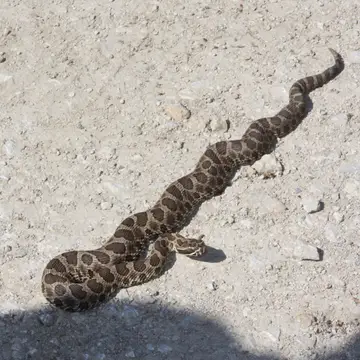
Michigan has 1 venomous snake named by official sources: Eastern Massasauga Rattlesnake. It is labelled venomous by Michigan Department of Natural Resources.
The venomous snake of Michigan
Recognize them from a distance; a photo cannot confirm that a snake is safe. Identifying animals safely.
“The eastern massasauga rattlesnake is Michigan’s only venomous native snake. The snake’s bite is painful but extremely unlikely to be fatal.” Michigan Department of Natural Resources
Size
Usually 18 to 30 inches long (New York DEC: 18 to 40 inches, average 27.5). The western massasauga in Arizona reaches only about 22 inches.
How to recognize it
A segmented rattle (a single button in newborns) and vertical, catlike pupils. In Michigan it is the only snake with both.
Nine large plates on top of the head (the timber rattlesnake has many small scales there)
A heat-sensing pit on each side of the head between the eye and nostril; the head is flat and much wider than the neck
Where in Michigan
The Eastern Massasauga occurs throughout the Lower Peninsula and on Bois Blanc Island, Mackinac County … Michigan State University Extension
Conservation
state threatened; federally threatened
What the sources say
Venom: “Eastern massasauga rattlesnake (VENOMOUS).” (Michigan Department of Natural Resources)
Range: The Eastern Massasauga occurs throughout the Lower Peninsula and on Bois Blanc Island, Mackinac County. There are no records for this or any other venomous snake in the Upper Peninsula.
Habitat: The Eastern Massasauga, the only venomous species of snake in Michigan, inhabits marshes and swamps, though they often wander into upland meadows and woods in summer. (Michigan State University Extension)
Call 911 or Poison Help at 1-800-222-1222 right away. Poison Help connects you to your local poison center, any time of day.
Official advice from Michigan Department of Natural Resources:
Venomous snakebite: call 911 or Poison Help at 1-800-222-1222. Michigan DNR: if bitten, seek medical attention; if possible call 911, sit down and wait for emergency responders. Michigan Department of Natural Resources
Leave snakes alone: handling or harassing them is the most common cause of bites; Michigan snakes do not attack, chase or lunge at people. Michigan Department of Natural Resources
How to report
Report poaching or harassment of massasaugas to the DNR Report All Poaching hotline, 800-292-7800. Report spotted lanternfly outside confirmed counties, gray fox and other sightings through the DNR/State 'Eyes in the Field' online tool. Report reptile/amphibian sightings to the Michigan Herp Atlas. Michigan Department of Natural Resources
“Michigan snakes do not attack, chase or lunge at people or seek out human contact. If a snake is observed, stay at least 3 feet away from the head to avoid getting bit. Handling or harassing snakes is the most common cause for humans getting bit.”
“…the eastern massasauga rattlesnake, the only venomous species found in Michigan”
“Snakes usually come out of hibernation in April or early May in Michigan.and can sometimes be seen sunning themselves around the entrance to the underground cavity.”
“It is the only Michigan snake with segmented rattles on the end of its tail and elliptical, ("catlike") vertical pupils in the eyes.”
“Massasaugas are found throughout the Lower Peninsula, but not in the Upper Peninsula (thus there are no venomous snakes on the Upper Peninsula mainland.)”