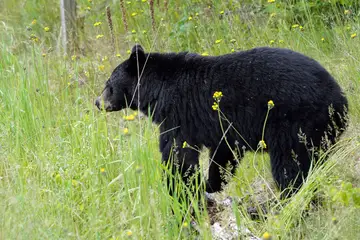
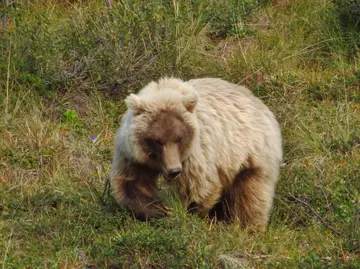
Black bears occur in three regions — the north Georgia mountains, the Ocmulgee River drainage in central Georgia, and in/around the Okefenokee Swamp — with about 5,100 statewide; DNR records no bear attacks on humans in Georgia.
Georgia DNR Wildlife Resources Division: “Black bears occur in three distinct regions in Georgia, but may range over the entire state at times in search of food or a territory of their own. Bear populations exist in the north Georgia mountains, along the Ocmulgee River drainage in central Georgia, and in/around the Okefenokee Swamp in southeast Georgia.” Source
Not established. DNR says no credible physical evidence of a mountain lion population exists in Georgia; only three credible sightings in 25 years, all related to the Florida panther. Georgia DNR Wildlife Resources Division
Yes. Armadillos are common in central and southern Georgia and spreading north along I-75; they may be absent from mountain counties. University of Georgia Warnell School
The 2 on Georgia's list
Photo: U.S. Fish and Wildlife Service - Midwest Region · Public domain · Wikimedia Commons
“There are no recorded bear attacks on humans in Georgia, and no fatalities. There have only been three documented fatal black bear attacks in the Southeastern United States.” Georgia DNR Wildlife Resources Division
Size
Smokies: males average about 6 ft long, 3 ft at the shoulder and 250 lb in summer; females usually just over 100 lb. Missouri: 46 to 78 inches long, 86 to 600 lb.
How to recognize it
Straight facial profile, rounded erect ears, very short tail
Short curved claws for climbing
Where in Georgia
Bear populations exist in the north Georgia mountains, along the Ocmulgee River drainage in central Georgia, and in/around the Okefenokee Swamp in southeast Georgia. Georgia DNR Wildlife Resources Division
What the sources say
Habitat: Bears typically live in forested areas, favoring mature hardwood-pine forests (Georgia DNR Wildlife Resources Division)
Photo: U.S. Fish and Wildlife Service - Midwest Region · Public domain · Wikimedia Commons
Florida Black Bear
Ursus americanus floridanus
Conservation
GA state rank S4 (Apparently Secure)
What the sources say
Habitat: Large undeveloped wooded tracts in areas that include multiple forest types (Georgia DNR Wildlife Resources Division, Wildlife Conservation Section)
Black Bear Fact Sheet. Georgia DNR Wildlife Resources Division. Revised August 2021; checked November 3, 2026.Quoted passages (4)
“Black bears occur in three distinct regions in Georgia, but may range over the entire state at times in search of food or a territory of their own. Bear populations exist in the north Georgia mountains, along the Ocmulgee River drainage in central Georgia, and in/around the Okefenokee Swamp in southeast Georgia.”
“There are no recorded bear attacks on humans in Georgia, and no fatalities. There have only been three documented fatal black bear attacks in the Southeastern United States.”
“Most nuisance issues can be resolved through simple actions, like removing bird feeders and outdoor pet food, or storing garbage in an area unavailable to bears, such as in a garage or enclosed building.”
“The breeding season is in July and cubs are born in the den in late January or February.”
Living with Coyotes (fact sheet). Georgia DNR Wildlife Resources Division. updated May 2020; checked November 3, 2026.Quoted passages (1)
“Coyotes (Canis latrans) are extremely adaptable to their environment and can be found throughout suburban and urban areas. … Coyotes are a non-native species in Georgia and can be harvested year-round on private property.”
“To date, no credible physical evidence (carcasses, trail camera pictures, photographs, film footage, etc.) has been found to substantiate the existence of a population of mountain lions in Georgia.”
WSFNR-17-36 Nine-banded Armadillo (M. T. Mengak). University of Georgia Warnell School (Extension publication series; PDF hosted on gadnrle.org). WSFNR-17-36; checked November 3, 2026.Quoted passages (1)
“Armadillos are common in central and southern Georgia and can easily be found in most of Georgia’s 159 counties. They may be absent from the mountain counties but are found northward along the Interstate 75 corridor.”