This page lists 46 sharks, rays and other marine animals: 26 from Georgia DNR's Recreational finfish seasons, limits and sizes — Sharks and 20 named in other official sources.
6 are venomous by official accounts. 1 is nonnative.
Which sharks, rays and other marine animals can hurt you
Official sources single out these sharks, rays and other marine animals in Georgia, in their own words:
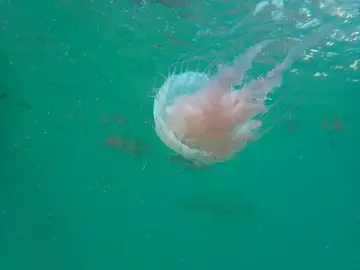
Sting (venom). “When you brush against a tentacle, tiny triggers on the tentacle's surface release the stingers which shoot out like a microscopic, barbed dart and inject venom.” UGA Cooperative Extension, Camden County
Beached jellyfish
Stingers can still release venom. “It's important to note that jellyfish that have washed up dead on the beach may still release venom if their stingers are touched.” UGA Cooperative Extension, Camden County
Venom: “When you brush against a tentacle, tiny triggers on the tentacle's surface release the stingers which shoot out like a microscopic, barbed dart and inject venom.” (UGA Cooperative Extension, Camden County)
Venom: “When you brush against a tentacle, tiny triggers on the tentacle's surface release the stingers which shoot out like a microscopic, barbed dart and inject venom.” (UGA Cooperative Extension, Camden County)
Venom: “When you brush against a tentacle, tiny triggers on the tentacle's surface release the stingers which shoot out like a microscopic, barbed dart and inject venom.” (UGA Cooperative Extension, Camden County)
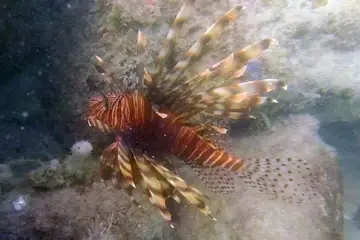
Venom: “The dorsal- and anal-fin spines of the lionfish contain a potent venom that can administer a painful sting (Steinitz 1959).” (US Geological Survey, Nonindigenous Aquatic Species Database)
Venom: “When you brush against a tentacle, tiny triggers on the tentacle's surface release the stingers which shoot out like a microscopic, barbed dart and inject venom.” (UGA Cooperative Extension, Camden County)
Venom: “When you brush against a tentacle, tiny triggers on the tentacle's surface release the stingers which shoot out like a microscopic, barbed dart and inject venom.” (UGA Cooperative Extension, Camden County)
No confirmed photo of Atlantic Angel Shark
Atlantic Angel Shark
Squatina dumeril
Not stated
Venom
No official source we use states whether this animal is venomous. That does not mean it is harmless: do not handle it.
Conservation
Prohibited shark (no harvest) under Georgia regulations
No confirmed photo of Atlantic Sharpnose Shark
Atlantic Sharpnose Shark
Rhizoprionodon terraenovae
Not stated
Venom
No official source we use states whether this animal is venomous. That does not mean it is harmless: do not handle it.
No confirmed photo of Basking Shark
Basking Shark
Cetorhinus maximus
Not stated
Venom
No official source we use states whether this animal is venomous. That does not mean it is harmless: do not handle it.
Conservation
Prohibited shark (no harvest) under Georgia regulations
No confirmed photo of Bigeye Sand Tiger
Bigeye Sand Tiger
Odontaspis noronhai
Not stated
Venom
No official source we use states whether this animal is venomous. That does not mean it is harmless: do not handle it.
Conservation
Prohibited shark (no harvest) under Georgia regulations
No confirmed photo of Bigeye Sixgill Shark
Bigeye Sixgill Shark
Hexanchus nakamurai
Not stated
Venom
No official source we use states whether this animal is venomous. That does not mean it is harmless: do not handle it.
Conservation
Prohibited shark (no harvest) under Georgia regulations
No confirmed photo of Bigeye Thresher
Bigeye Thresher
Alopias superciliosus
Not stated
Venom
No official source we use states whether this animal is venomous. That does not mean it is harmless: do not handle it.
Conservation
Prohibited shark (no harvest) under Georgia regulations
No confirmed photo of Bignose Shark
Bignose Shark
Carcharhinus altimus
Not stated
Venom
No official source we use states whether this animal is venomous. That does not mean it is harmless: do not handle it.
Conservation
Prohibited shark (no harvest) under Georgia regulations
No official source we use states whether this animal is venomous. That does not mean it is harmless: do not handle it.
Size
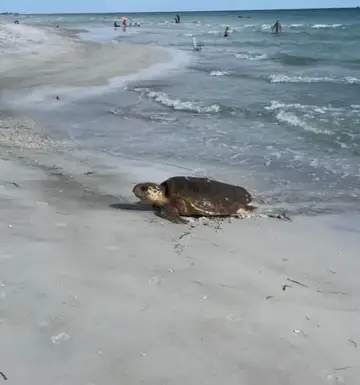
Adults 2.5 to 3.5 feet long and 200 to 350 pounds (NOAA). NCWRC gives 31 to 45 inches shell length and 170 to 350 pounds; SCDNR says adults can weigh as much as 300 pounds and reach up to four feet in shell length.
How to recognize it
Very large head with powerful jaws.
Slightly heart-shaped top shell.
Two pairs of scales (prefrontal scutes) between the eyes above the nostrils; two claws on each flipper.
Conservation
Federally listed; DNR: "The loggerhead is listed as threatened worldwide"
What the sources say
Habitat: Nests on barrier island beaches (Georgia DNR Wildlife Resources Division)
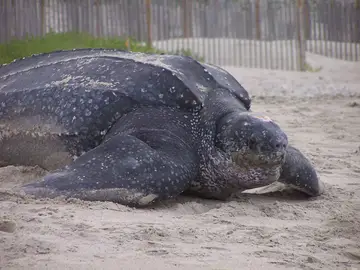
Adult leatherbacks differ from all other sea turtles, including the loggerhead, in their large size, spindle-shaped body and leathery shell without scales.
Lionfish or Red lionfish and devil firefish (each other)?
Red lionfish and devil firefish (each other) Venomous
USGS: the two invasive species look the same; positive identification takes genetic analysis.
Photos show typical adults; individuals vary. Never get close to compare.
When sharks, rays and other marine animals are active in Georgia
Records of sharks, rays and other marine animals in Georgia peak in February to May. They show when people record sharks, rays and other marine animals, not how many there are (about month bars).
JanFebMarAprMayJunJulAugSepOctNovDec
146 records of sharks, rays and other marine animals in Georgia by month (GBIF, CC0 and CC BY records).
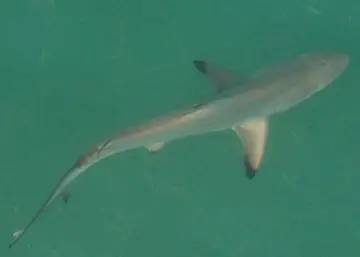
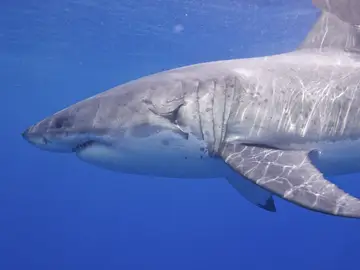
Yes. NOAA says sharks are the top predators at Gray's Reef National Marine Sanctuary off the Georgia coast; common species include blacktip, white, great hammerhead, nurse, sand tiger and tiger sharks. NOAA Gray's Reef National Marine Sanctuary
“Common shark species seen at Gray's Reef National Marine Sanctuary include blacktip, white, great hammerhead, nurse, sand tiger, and tiger sharks.”
Are there lionfish in Georgia?
Yes. Georgia DNR lists lionfish among aquatic nuisance species found in or near Georgia, and NOAA lists the invasive lionfish among fishes at Gray's Reef National Marine Sanctuary. NOAA Gray's Reef National Marine Sanctuary
“The diverse population also includes endangered species like the Atlantic sturgeon and invasive species like the lionfish.”
“The dorsal- and anal-fin spines of the lionfish contain a potent venom that can administer a painful sting (Steinitz 1959).”
Understanding Jellyfish. UGA Cooperative Extension, Camden County (Jessica Warren, ANR Agent). published 2023-08-22, modified 2025-09-23; checked November 3, 2026.Quoted passages (2)
“When you brush against a tentacle, tiny triggers on the tentacle's surface release the stingers which shoot out like a microscopic, barbed dart and inject venom.”
“It's important to note that jellyfish that have washed up dead on the beach may still release venom if their stingers are touched.”