Glass Lizard
Ophisaurus (genus; US species: O. attenuatus, O. compressus, O. mimicus, O. ventralis) · also called Glass Snake, Joint Snake and legless lizard · Last checked November 3, 2026.
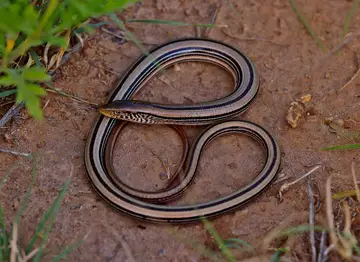

Glass lizards are long, legless lizards that look like snakes but have movable eyelids, ear openings and a groove along each side. Their long tails break off easily. Missouri Department of Conservation says all Missouri lizards, including its slender glass lizard, are harmless to humans, though some may attempt to bite if handled, usually causing a mild pinch-like pain. Four species live in the southeastern and central US, with Florida and Georgia listing all four. Because they look like snakes, keep in mind UF/IFAS advice that it is best not to attempt to capture, harass or harm any snake. University of Georgia Savannah River Ecology Laboratory
This page covers a genus (Ophisaurus (genus; US species: O. attenuatus, O. compressus, O. mimicus, O. ventralis)), not a single species.
On this page
Is the glass lizard dangerous?
Missouri Department of Conservation: all of Missouri's lizards, a group that includes the western slender glass lizard, are harmless to humans, although some will attempt to bite if handled, usually causing a mild pain similar to being pinched. This statement is about Missouri only. MDC
“All of Missouri’s lizards are harmless to humans, although some will attempt to bite if handled, usually causing a mild pain similar to being pinched.”
Bites and stings: Missouri Department of Conservation, for Missouri's lizards: some will attempt to bite if handled, usually causing a mild pain similar to being pinched. No statement specific to glass lizard bites was found.
No official source we use states whether this animal is venomous. That does not mean it is harmless: do not handle it.
How to identify a glass lizard
A photo or description can narrow it down, but cannot confirm what an animal is or that it is safe. Look from a distance and do not handle wild animals.
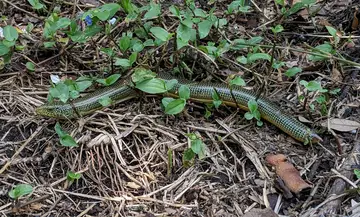

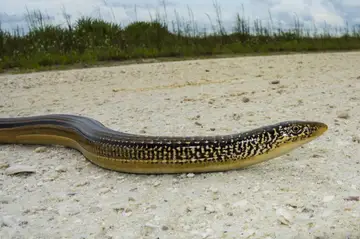

Size: Depends on species: from 15 inches (island and mimic) to 43 inches (eastern), and Missouri reports up to 46 inches for the western slender glass lizard, its longest lizard. Missouri Department of Conservation
Colors: Generally brown or yellowish; old eastern glass lizards may be greenish above and yellow below; the only glass lizard that may look green. Pattern: Slender: dark stripes below the side groove and under the tail; eastern: no dark stripes below the side groove or beneath the tail, and no clear stripe down the back.
Key features
- No legs; movable eyelids, ear openings and inflexible jaws, which snakes do not have University of Georgia Savannah River Ecology Laboratory
- Groove along each side of the body Missouri Department of Conservation
- Stiff to the touch from bony plates in the scales Illinois Department of Natural Resources
- Very long tail, about two-thirds of total length, that breaks easily Missouri Department of Conservation
Young
Young eastern glass lizards are khaki with bold dark lines down the sides; adults are often more speckled and green-toned. Newborn eastern glass lizards are 6 to 8 inches in Alabama's account.
Animals mistaken for the glass lizard
Glass Lizard or Snakes (for example gartersnakes, lined snake, red-bellied snake)?
Glass Lizard
Snakes (for example gartersnakes, lined snake, red-bellied snake)
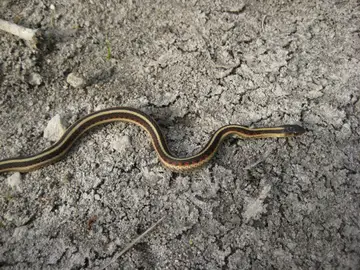
Missouri Department of Conservation: note the lizard's eyelids, ear openings and lateral (side) groove to tell it from snakes. SREL: glass lizards differ from snakes in having movable eyelids, external ear openings and inflexible jaws. Missouri Department of Conservation
Some snakes are venomous. UF/IFAS: it is best not to attempt to capture, harass or harm any snake, as doing so may put you at risk of being bitten by a venomous species.
Where the glass lizard lives
- Native or listed
- Nonnative or not established
- No official record in our data
- 1–9
- 10–99
- 100–999
- 1,000+
State boundaries: U.S. Census Bureau, cartographic boundary file cb_2024_us_state_20m.
When it is active
Active by day. Missouri: on the surface mainly April to October, peaking in April and May and again in October. Oklahoma: April through November depending on climate. Missouri Department of Conservation
US open-licence records for all US glass lizards (genus Ophisaurus) peak in March to June and September.
Habitat and habits
Habitat: Varies by species: sandy Coastal Plain and Piedmont habitats including pine flatwoods, dunes, wet meadows and marsh edges (eastern, NC); prairies, pastures, open woods and glades (western slender, Missouri); dry grasslands and open woods (Illinois).
Behavior: Forages by day and shelters beneath boards and debris. When seized, it commonly breaks off all or part of the tail, which wriggles and distracts the predator. The pieces do not rejoin, but the tail slowly regrows, usually shorter.
Diet: Insects, spiders, snails and other invertebrates, plus small lizards and snakes, eggs of ground-nesting birds and occasionally young mice. Rigid jaws limit prey to no larger than the head.
Young: Missouri: mating from late April into early June; 5 to 17 eggs laid between June and early July under cover, and the mother stays until they hatch.
Legal status and reporting
Federal: Not ESA-listed: ECOS shows only Species of Concern for the island and mimic glass lizards, which is not a listing, and no record for the other two. ECOS
Protection: Varies by state. Georgia law: most native wildlife cannot be held without permits or licenses, and glass lizards are on DNR's list. NPS: the eastern slender glass lizard is deemed in need of management in Tennessee and threatened in Kentucky.
Questions about the glass lizard
Glass lizard vs snake
SREL says glass lizards differ from snakes in having movable eyelids, external ear openings and inflexible jaws, and Missouri Department of Conservation says to note the eyelids, ear openings and the groove along each side. Some snakes are venomous, and UF/IFAS says it is best not to attempt to capture, harass or harm any snake.
Glass lizard bite
No statement specific to glass lizard bites was found. Missouri Department of Conservation says Missouri's lizards are harmless to humans, though some will attempt to bite if handled, usually causing a mild pinch-like pain.
Glass lizard tail
The tail makes up about two-thirds of total length and breaks easily, sometimes into several pieces that can keep wriggling and distract a predator. SREL says the belief that pieces can rejoin is a myth, though the tail slowly regrows.
Glass lizard size
About 15 to 26 inches for island and mimic glass lizards, 18 to 43 inches for eastern glass lizards, and 22 to 42 inches for slender glass lizards. Missouri reports its western slender glass lizards up to 46 inches.
Glass lizard florida
Florida's official checklist lists four: slender, island, mimic and eastern glass lizards.
Glass lizard georgia
Georgia DNR lists eastern, island, mimic and slender glass lizards on its native wildlife page.
Glass lizard nc
North Carolina's 2025 wildlife action plan lists the eastern, eastern slender and mimic glass lizards. NCWRC says slender glass lizards are most often found across the Coastal Plain and southern Piedmont.
Are there legless lizards in florida?
Yes. Florida's official checklist lists four glass lizards.
Are there legless lizards in georgia?
Yes. Georgia DNR lists four glass lizards.
Are there legless lizards in north carolina?
Yes. North Carolina lists the eastern, eastern slender and mimic glass lizards.
Are there legless lizards in south carolina?
Yes. SREL, which SCDNR links for species information, covers eastern, island, mimic and slender glass lizards in South Carolina.
Are there legless lizards in alabama?
Yes. Outdoor Alabama covers the eastern, eastern slender and mimic glass lizards.
Are there legless lizards in tennessee?
Yes. TWRA says the slender glass lizard is the only legless lizard in Tennessee and occurs across the state except the northwest and northeast.
Are there legless lizards in missouri?
Yes. Missouri Department of Conservation says the western slender glass lizard is presumed statewide except the southeast.
Are there legless lizards in oklahoma?
Yes. The Oklahoma Department of Wildlife Conservation field guide covers the western slender glass lizard.
Are there legless lizards in texas?
Yes. Herps of Texas lists the slender glass lizard (archived 2020 copy).
Are there legless lizards in virginia?
Yes. Virginia DWR's list includes the eastern and eastern slender glass lizards.
Are there legless lizards in louisiana?
Yes. Louisiana's 2025 wildlife action plan lists the western slender and eastern glass lizards.
Are there legless lizards in california?
Yes, but a different lizard: California's species list includes the California legless lizard (Anniella pulchra), which is not a glass lizard.
Sources
- Slender Glass Lizard (Ophisaurus attenuatus). University of Georgia Savannah River Ecology Laboratory (linked by SCDNR as its species information). undated page; checked November 3, 2026.
Quoted passages (2)
“Glass lizards are long, slender, legless lizards that superficially resemble snakes. They differ from snakes, though, in that they have moveable eyelids, external ear openings, and inflexible jaws.”
“The common belief that these pieces can rejoin is a myth, although the tail will slowly regrow over a period of months or years.”
- A Guide to Missouri's Lizards (MDC publication E00213). Missouri Department of Conservation (MDC). printed code "4/2023 E00213"; checked November 3, 2026.
Quoted passages (1)
“All of Missouri’s lizards are harmless to humans, although some will attempt to bite if handled, usually causing a mild pain similar to being pinched.”
- Checklist of Florida's Amphibians and Reptiles (Revised 2023). Florida Fish and Wildlife Conservation Commission (FWC). Revised 2023; checked November 3, 2026.
- Laws Related to Native Wildlife. Georgia DNR Wildlife Resources Division. undated page; checked November 3, 2026.
- Recognizing Florida's Venomous Snakes (UW229). UF/IFAS Extension (Ask IFAS). WEC 202/UW229 'Recognizing Florida's Venomous Snakes' 2024); checked November 3, 2026.
- Western Slender Glass Lizard (MDC Field Guide). Missouri Department of Conservation. undated page; checked November 3, 2026.
Quoted passages (7)
“Adult total length: 22 to 46 inches. The western slender glass lizard is Missouri’s longest lizard.”
“…a lateral (side) groove runs down the entire length of the body”
“About two-thirds of the total length of this species is its long tail”
“Glass lizards consume a variety of insects and other invertebrates, including land snails and spiders; they also eat other lizards, frogs, small snakes, eggs of ground-nesting birds, and occasionally young mice.”
“Western slender glass lizards are active on the surface mainly from April to October.”
“The female produces one clutch of eggs per season, containing 5–17 eggs, between June and early July.”
“Note the lizard's eyelids, ear openings, and lateral groove to help you distinguish it from snakes.”
- Slender Glass Lizard (Wild About Illinois Lizards). Illinois Department of Natural Resources. undated page; checked November 3, 2026.
Quoted passages (1)
“This animal feels stiff when touched due to the bony plates that reinforce its scales.”
- Eastern Glass Lizard (NCWRC species page). N.C. Wildlife Resources Commission. undated page; checked November 3, 2026.
Quoted passages (1)
“Younger individuals appear khaki with bold dark lines down their sides”
- USFWS ECOS species report: Scientific Name like 'Ophisaurus%' (ESA listing status). U.S. Fish and Wildlife Service (ECOS). database queried November 3, 2026; checked November 3, 2026.
Quoted passages (1)
“Mimic glass lizard … {'value': 'Ophisaurus mimicus', 'url': 'https://ecos.fws.gov/ecp/species/4769'} … Species of Concern”
- Island Glass Lizard (Ophisaurus compressus). University of Georgia Savannah River Ecology Laboratory (linked by SCDNR as its species information). undated page; checked November 3, 2026.
- Mimic Glass Lizard (Ophisaurus mimicus). University of Georgia Savannah River Ecology Laboratory (linked by SCDNR as its species information). undated page; checked November 3, 2026.
- 2025 SWAP Appendix 3 Table 3-7 REPTILES SGCN and Priority Species List (2025 WAP Revision Taxa Team Evaluations). N.C. Wildlife Resources Commission. 2025 NC SWAP; checked November 3, 2026.
- Slender Glass Lizard (NCWRC species page). N.C. Wildlife Resources Commission. undated page; checked November 3, 2026.
- Eastern Glass Lizard (Ophisaurus ventralis). University of Georgia Savannah River Ecology Laboratory (linked by SCDNR as its species information). undated page; checked November 3, 2026.
- Eastern Glass Lizard. Alabama Department of Conservation and Natural Resources (Outdoor Alabama). undated page; checked November 3, 2026.
- Eastern Slender Glass Lizard. Alabama Department of Conservation and Natural Resources (Outdoor Alabama). undated page; checked November 3, 2026.
- Mimic Glass Lizard. Alabama Department of Conservation and Natural Resources (Outdoor Alabama). undated page; checked November 3, 2026.
- Slender Glass Lizard (Tennessee Watchable Wildlife species account). Tennessee Wildlife Resources Agency (Tennessee Watchable Wildlife website). undated page; checked November 3, 2026.
- Western Slender Glass Lizard (ODWC Field Guide). Oklahoma Department of Wildlife Conservation. undated page; checked November 3, 2026.
- Herps of Texas: Lizards of Texas. Herps of Texas, Biodiversity Collections, Dept. of Integrative Biology, The University of Texas at Austin. 2020-04-28 (archive capture date; checked November 3, 2026.
- List of Native and Naturalized Fauna of Virginia. Virginia Department of Wildlife Resources (DWR). May, 2026; checked November 3, 2026.
- 2025 Louisiana State Wildlife Action Plan. Louisiana Department of Wildlife and Fisheries. 2025 plan; checked November 3, 2026.
- Complete List of Amphibian, Reptile, Bird and Mammal Species in California. California Department of Fish and Wildlife (CWHR Program). 2016-05 (document dated "May, 2016"; checked November 3, 2026.
- GBIF.org occurrence records, human observations licensed CC0 1.0 or CC BY 4.0 only, accessed November 3, 2026. The datasets behind these counts are listed on our Sources page.
- State boundaries: U.S. Census Bureau, cartographic boundary file cb_2024_us_state_20m.