States Wildlife

Rhode Island wildlife: what lives here and what is dangerous

Last checked November 3, 2026 against official sources.

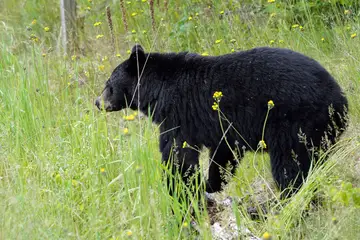
Black Bear
Photo: U.S. Fish and Wildlife Service - Midwest Region · Public domain · Wikimedia Commons

No venomous snake is known to live in Rhode Island today. The timber rattlesnake, labelled venomous by official sources, is listed as extirpated. This guide covers 8 animal groups from Rhode Island Department of Environmental Management (DEM), Division of Fish & Wildlife lists and other official sources, with photos, venomous status and when each group is active.

Identification help has limits: a photo cannot confirm that an animal is safe. Watch from a distance and never handle a wild animal.

On this page
  1. Animal groups
  2. Dangerous animals
  3. Invasive species
  4. Seasons
  5. Official agency and reporting
  6. Questions
  7. Sources

Animal groups in Rhode Island

Dangerous animals in Rhode Island

These are the animals official sources describe as venomous or as a risk to people in Rhode Island, across 6 groups. The reason is given in the source's own terms.

AnimalGroupWhy, per the sourceSource
Black WidowSpidersVenomous: “Black widows and brown recluses are two types of venomous spiders in the United States.”CDC / NIOSH
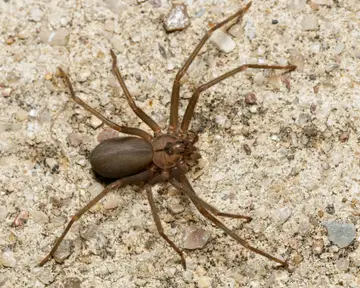
Brown RecluseSpidersVenomous: “Black widows and brown recluses are two types of venomous spiders in the United States.”CDC / NIOSH
Lone Star TickTicks (arachnids)Disease: “…but the nymphal and adult stages can transmit the germs causing Ehrlichiosis, Heartland virus disease, Southern tick-associated rash illness (STARI), Bourbon virus disease, and Tularemia”University of Rhode Island, TickEncounter
Deer TickTicks (arachnids)Lyme diseaseMassachusetts & Rhode Island Poison Center
Bees and waspsInsects and BugsStings deadly and very dangerous to people who are highly allergic, per the poison centerMassachusetts & Rhode Island Poison Center
Mosquitoes (EEE and West Nile virus)Insects and BugsDisease: “Approximately 30% of people with EEE virus die, and many survivors have ongoing neurological problems.”Rhode Island DEM and Rhode Island Department of Health
Mute SwanBirdsTerritorial: “…are capable of capsizing personal watercrafts, espe-cially while protecting their eggs and young.”Rhode Island DEM, Division of Fish & Wildlife
Striped SkunkMammalsRabies Vector Species, as DEM classifies the group: “In Rhode Island, skunks, foxes, woodchucks, raccoons, and bats are classified as Rabies Vector Species (RVS) and can pose a serious health risk.”Rhode Island DEM, Division of Fish & Wildlife
Red FoxMammalsRabies Vector Species, as DEM classifies the group: “In Rhode Island, skunks, foxes, woodchucks, raccoons, and bats are classified as Rabies Vector Species (RVS) and can pose a serious health risk.”Rhode Island DEM, Division of Fish & Wildlife
Gray FoxMammalsRabies Vector Species, as DEM classifies the group: “In Rhode Island, skunks, foxes, woodchucks, raccoons, and bats are classified as Rabies Vector Species (RVS) and can pose a serious health risk.”Rhode Island DEM, Division of Fish & Wildlife
WoodchuckMammalsRabies Vector Species, as DEM classifies the group: “In Rhode Island, skunks, foxes, woodchucks, raccoons, and bats are classified as Rabies Vector Species (RVS) and can pose a serious health risk.”Rhode Island DEM, Division of Fish & Wildlife
RaccoonMammalsRabies Vector Species, as DEM classifies the group: “In Rhode Island, skunks, foxes, woodchucks, raccoons, and bats are classified as Rabies Vector Species (RVS) and can pose a serious health risk.”Rhode Island DEM, Division of Fish & Wildlife
Big Brown BatMammalsRabies Vector Species, as DEM classifies the group: “In Rhode Island, skunks, foxes, woodchucks, raccoons, and bats are classified as Rabies Vector Species (RVS) and can pose a serious health risk.”Rhode Island DEM, Division of Fish & Wildlife
Eastern Red BatMammalsRabies Vector Species, as DEM classifies the group: “In Rhode Island, skunks, foxes, woodchucks, raccoons, and bats are classified as Rabies Vector Species (RVS) and can pose a serious health risk.”Rhode Island DEM, Division of Fish & Wildlife
Hoary BatMammalsRabies Vector Species, as DEM classifies the group: “In Rhode Island, skunks, foxes, woodchucks, raccoons, and bats are classified as Rabies Vector Species (RVS) and can pose a serious health risk.”Rhode Island DEM, Division of Fish & Wildlife
Little Brown BatMammalsRabies Vector Species, as DEM classifies the group: “In Rhode Island, skunks, foxes, woodchucks, raccoons, and bats are classified as Rabies Vector Species (RVS) and can pose a serious health risk.”Rhode Island DEM, Division of Fish & Wildlife
Northern Long-eared BatMammalsRabies Vector Species, as DEM classifies the group: “In Rhode Island, skunks, foxes, woodchucks, raccoons, and bats are classified as Rabies Vector Species (RVS) and can pose a serious health risk.”Rhode Island DEM, Division of Fish & Wildlife
Silver-haired BatMammalsRabies Vector Species, as DEM classifies the group: “In Rhode Island, skunks, foxes, woodchucks, raccoons, and bats are classified as Rabies Vector Species (RVS) and can pose a serious health risk.”Rhode Island DEM, Division of Fish & Wildlife
Small-footed BatMammalsRabies Vector Species, as DEM classifies the group: “In Rhode Island, skunks, foxes, woodchucks, raccoons, and bats are classified as Rabies Vector Species (RVS) and can pose a serious health risk.”Rhode Island DEM, Division of Fish & Wildlife
Tri-colored BatMammalsRabies Vector Species, as DEM classifies the group: “In Rhode Island, skunks, foxes, woodchucks, raccoons, and bats are classified as Rabies Vector Species (RVS) and can pose a serious health risk.”Rhode Island DEM, Division of Fish & Wildlife
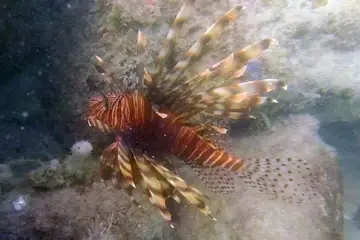
LionfishSharks and Marine LifeVenomous: “The dorsal- and anal-fin spines of the lionfish contain a potent venom that can administer a painful sting (Steinitz 1959).”USGS Nonindigenous Aquatic Species Database
SharksSharks and Marine LifeDEM says interacting with sharks is a risk for people in the ocean: “The waters off Rhode Island are part of a natural ecosystem that contains some risk for people. In the ocean, this includes interacting with sharks.”Rhode Island DEM, Division of Parks and Recreation

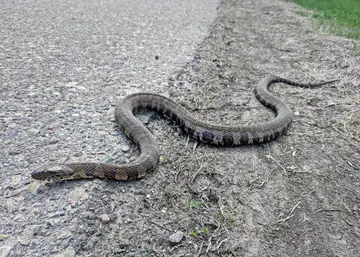
Venomous snakes in Rhode Island shows each venomous snake with photos and range.

Invasive and nonnative species

6 nonnative animals are named on Rhode Island's official lists (Rhode Island DEM via RI.gov). The USGS Nonindigenous Aquatic Species database records 1 nonnative animal in our groups with an established population in Rhode Island.

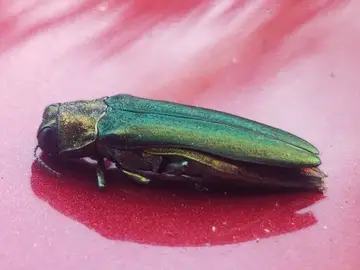
  • Emerald Ash Borer
  • European Green Crab Carcinus maenas
  • Asian Shore Crab Hemigrapsus sanguineus
  • Asian Clam Corbicula fluminea
  • Mute Swan Cygnus olor
  • Lionfish Pterois volitans/miles

All invasive species in Rhode Island, with where they live and how to report them.

When animals are active in Rhode Island

Darker cells are the months with more open-licence observation records of each group in Rhode Island (GBIF). They show when people see and record these animals, not how many there are. The current month, this month, is highlighted.

JanFebMarAprMayJunJulAugSepOctNovDec
SnakesJanuary: 0 recordsFebruary: 0 recordsMarch: 2 recordsApril: 16 recordsMay: 22 recordsJune: 14 recordsJuly: 10 recordsAugust: 12 recordsSeptember: 6 recordsOctober: 9 recordsNovember: 5 recordsDecember: 0 records
SpidersJanuary: 1 recordFebruary: 1 recordMarch: 7 recordsApril: 11 recordsMay: 35 recordsJune: 39 recordsJuly: 14 recordsAugust: 21 recordsSeptember: 21 recordsOctober: 8 recordsNovember: 1 recordDecember: 1 record
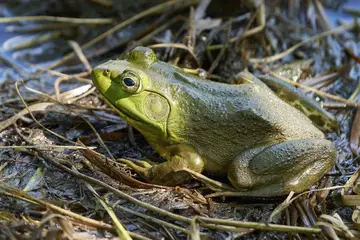
Frogs and ToadsJanuary: 1 recordFebruary: 0 recordsMarch: 15 recordsApril: 235 recordsMay: 317 recordsJune: 30 recordsJuly: 39 recordsAugust: 34 recordsSeptember: 37 recordsOctober: 11 recordsNovember: 1 recordDecember: 0 records
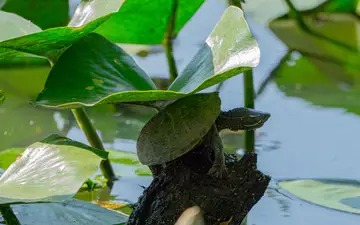
TurtlesJanuary: 0 recordsFebruary: 0 recordsMarch: 2 recordsApril: 19 recordsMay: 11 recordsJune: 24 recordsJuly: 29 recordsAugust: 13 recordsSeptember: 11 recordsOctober: 8 recordsNovember: 1 recordDecember: 0 records
Insects and BugsJanuary: 6 recordsFebruary: 6 recordsMarch: 55 recordsApril: 167 recordsMay: 509 recordsJune: 1,156 recordsJuly: 1,331 recordsAugust: 758 recordsSeptember: 424 recordsOctober: 206 recordsNovember: 58 recordsDecember: 11 records
MammalsJanuary: 22 recordsFebruary: 16 recordsMarch: 23 recordsApril: 49 recordsMay: 43 recordsJune: 27 recordsJuly: 52 recordsAugust: 34 recordsSeptember: 26 recordsOctober: 18 recordsNovember: 35 recordsDecember: 25 records
Sharks and Marine LifeJanuary: 1 recordFebruary: 2 recordsMarch: 1 recordApril: 6 recordsMay: 10 recordsJune: 9 recordsJuly: 7 recordsAugust: 12 recordsSeptember: 4 recordsOctober: 1 recordNovember: 2 recordsDecember: 1 record

What official sources say about seasons

Official agency and how to report

Rhode Island's wildlife agency is the Rhode Island Department of Environmental Management (DEM), Division of Fish & Wildlife.

Report: Injured or orphaned wildlife: DEM 401-222-3070. Sightings: [email protected]. Division of Fish & Wildlife: 1-401-789-0281. Rhode Island DEM, Division of Fish & Wildlife

Official safety advice

Questions people ask about Rhode Island wildlife

Are there venomous snakes in Rhode Island?

No. DEM says no venomous snakes occur in Rhode Island. Snakes kept as pets can still be involved in bites, and the regional poison center lists two venomous species for the Massachusetts and Rhode Island region. Rhode Island DEM, Division of Fish & Wildlife

Are there rattlesnakes in Rhode Island?

No. DEM says timber rattlesnakes were once found but are extirpated, circa 1963. Rhode Island DEM, Division of Fish & Wildlife

Are there copperheads in Rhode Island?

No. DEM says copperheads occur in southern New England but have never been documented in Rhode Island. RINHS (2015) reports one bite in East Providence and attributes it to a non-wild snake. Rhode Island DEM, Division of Fish & Wildlife

Are there water moccasins in Rhode Island?

No. DEM says cottonmouths occur no farther north than Virginia and are often confused with the native Northern watersnake. Rhode Island DEM, Division of Fish & Wildlife

Are there black widows in Rhode Island?

Yes. The Connecticut Poison Control Center (UConn Health) names Rhode Island in the black widow range and says true sightings or bites are uncommon in New England. Connecticut Poison Control Center, UConn Health

Are there brown recluse spiders in Rhode Island?

The MA & RI Poison Center includes Rhode Island in its range and says encounters are rare; the Connecticut Poison Control Center says it is not native to any New England state. Connecticut Poison Control Center, UConn Health

Are there sharks in Rhode Island?

Yes. DEM names blue, mako, sand tiger, thresher and great white sharks in Rhode Island waters. Rhode Island DEM, Division of Parks and Recreation

Are there bears in Rhode Island?

DEM says black bear sightings have become more common as populations in Connecticut and Massachusetts grow, but breeding in Rhode Island remains unconfirmed. Rhode Island DEM, Division of Fish & Wildlife

Sources

  1. Learn about RI wildlife. Rhode Island DEM, Division of Fish & Wildlife. archived copy, captured June 8, 2026; checked November 3, 2026.
    Quoted passages (3)
    “In Rhode Island, skunks, foxes, woodchucks, raccoons, and bats are classified as Rabies Vector Species (RVS) and can pose a serious health risk.”
    “…please call DEM at 401-222-3070”
    “For your safety, do not touch wildlife with bare hands.”
  2. Reptiles of Rhode Island (DEM publication page). Rhode Island DEM, Division of Fish & Wildlife. archived copy, captured June 12, 2026; checked November 3, 2026.
    Quoted passages (1)
    “It provides meticulous accounts of the state’s seven native turtles and 13 native snakes and their respective habitats”
  3. Rhode Island Wildlife Action Plan, Chapter 1: Rhode Island’s Fish and Wildlife. Rhode Island DEM, Division of Fish & Wildlife. archived copy, captured March 5, 2026; checked November 3, 2026.
    Quoted passages (4)
    “Rhode Island hosts 92 different species of mammals, at least 80 of which are indigenous or native to the state.”
    “…one species, the Timber Rattlesnake, is extirpated circa 1963”
    “Sightings of Black Bear have become more common in Rhode Island as populations in neighboring Connecticut and Massachusetts continue to grow. However, the breeding status of Black Bear in Rhode Island remains unconfirmed”
    “Sea turtles visit Rhode Island’s estuarine and marine waters during the warmer months”
  4. Venomous Spiders at Work. CDC / NIOSH. archived copy, captured October 13, 2026; checked November 3, 2026.
    Quoted passages (1)
    “Black widows and brown recluses are two types of venomous spiders in the United States.”
  5. Lone Star Tick (TickEncounter). University of Rhode Island, TickEncounter. undated page; checked November 3, 2026.
    Quoted passages (2)
    “…but the nymphal and adult stages can transmit the germs causing Ehrlichiosis, Heartland virus disease, Southern tick-associated rash illness (STARI), Bourbon virus disease, and Tularemia”
    “Adults are active April-late August”
  6. Peligros en el Aire Libre (Outdoor Hazards; Spanish-language page). Massachusetts & Rhode Island Poison Center. undated page; checked November 3, 2026.
  7. Final RI Mosquito Report of 2024: No Additional EEE or West Nile Virus Findings (press release). Rhode Island DEM and Rhode Island Department of Health. archived copy, captured May 14, 2026; checked November 3, 2026.
    Quoted passages (2)
    “Approximately 30% of people with EEE virus die, and many survivors have ongoing neurological problems.”
    “Cases of WNV occur during mosquito season, which starts in the summer and continues through fall.”
  8. Mute Swan factsheet. Rhode Island DEM, Division of Fish & Wildlife. archived copy, captured May 16, 2026; checked November 3, 2026.
    Quoted passages (3)
    “…are capable of capsizing personal watercrafts, espe-cially while protecting their eggs and young.”
    “While beautiful, these large birds have negative impacts on our native waterfowl species and the aquatic ecosystems they inhabit.”
    “Should you come across a mute swan while boating, turn around or give the animal the widest possible berth.”
  9. Pterois volitans/miles (lionfish) fact sheet. USGS Nonindigenous Aquatic Species Database. Revision Date: 2/19/2025; checked November 3, 2026.
    Quoted passages (1)
    “The dorsal- and anal-fin spines of the lionfish contain a potent venom that can administer a painful sting (Steinitz 1959).”
  10. Sharks of RI / safety tips handout (RI State Parks beach sheet). Rhode Island DEM, Division of Parks and Recreation. archived copy, captured June 2, 2025; checked November 3, 2026.
    Quoted passages (2)
    “The waters off Rhode Island are part of a natural ecosystem that contains some risk for people. In the ocean, this includes interacting with sharks.”
    “At any given time, we know that blue sharks, mako sharks, sand tiger sharks, thresher sharks, and great whites are present in our waters along with a wide diversity of other marine species.”
  11. DEM announces Emerald Ash Borer found in Rhode Island (press release). Rhode Island DEM via RI.gov. Release date: 07-25-2018; checked November 3, 2026.
    Quoted passages (1)
    “Emerald Ash Borer (EAB), a destructive forest insect from Asia, has been found for the first time in Rhode Island”
  12. Rhode Island Aquatic Invasive Species Management Plan. Rhode Island Coastal Resources Management Council. Approved November 7, 2007; checked November 3, 2026.
    Quoted passages (2)
    “Marine aquatic invaders that have become established in Rhode Island include the European green crab (Carcinus maenas), Asian shore crab (Hemigrapsus sanguineus),”
    “The Asian clam (Corbicula fluminea) has been found in Rhode Island waters and is spreading”
  13. USGS NAS occurrence records, Rhode Island: lionfish (Pterois volitans/miles). USGS Nonindigenous Aquatic Species database. undated page; checked November 3, 2026.
    Quoted passages (1)
    “Atlantic Ocean, Rhode Island, Narragansett Bay (East Passage), southern end of Conanicut Island at Fort Wetherill, Jamestown”
  14. Snakes of Rhode Island (DEM Division of Fish & Wildlife factsheet). Rhode Island DEM, Division of Fish & Wildlife. archived copy, captured February 19, 2025; checked November 3, 2026.
    Quoted passages (7)
    “There are no venomous snakes in Rhode Island.”
    “Copperheads (Agkistrodon contortrix) are also found in southern New England, but have never been documented in Rhode Island.”
    “Cottonmouths (Agkistrodon piscivorus), also called ‘water moccasins’ are a southern species, occurring no farther north than Virginia, and are unable to survive in northern climates.”
    “Leave the snake alone.”
    “If a snake feels cornered or threatened, it may act aggressively.”
    “In spring and autumn, garter snakes often find their way into basements.”
    “Most active in the spring, which is also when they mate”
  15. Brown Recluse and Black Widow Spiders. Connecticut Poison Control Center, UConn Health. Page modified 2022-12-09; checked November 3, 2026.
    Quoted passages (2)
    “Black widows may be found in Connecticut, Massachusetts, Rhode Island, and the southern parts of Maine, New Hampshire and Vermont.”
    “The brown recluse is not native to any of the New England States.”
  16. A Copperhead in Rhode Island? Rhode Island Natural History Survey (non-profit survey; not a state agency). July 30, 2015; checked November 3, 2026.
    Quoted passages (1)
    “But also don’t pick up a snake if you can’t identify it.”
  17. GBIF.org occurrence records, human observations licensed CC0 1.0 or CC BY 4.0 only, accessed November 3, 2026. The datasets behind these counts are listed on our Sources page.