Invasive and nonnative animals in Rhode Island
Last checked November 3, 2026 against official sources.
On this page
6 nonnative animals are named on 4 official lists for Rhode Island: “DEM announces Emerald Ash Borer found in Rhode Island (press release)” (Rhode Island DEM via RI.gov), “Rhode Island Aquatic Invasive Species Management Plan” (Rhode Island Coastal Resources Management Council), “Mute Swan factsheet” (Rhode Island DEM, Division of Fish & Wildlife) and “USGS NAS occurrence records, Rhode Island: lionfish (Pterois volitans/miles)” (USGS Nonindigenous Aquatic Species database).
The USGS Nonindigenous Aquatic Species database records an established population in Rhode Island for 1 nonnative animal in the groups this guide covers.
To report a sighting, see how to report.
Being on a list of nonnative species does not always mean an animal is harmful or established: each list below is described in its source's terms. A sighting of a listed animal is still worth reporting to the agency.
DEM announces Emerald Ash Borer found in Rhode Island (press release)
Rhode Island DEM via RI.gov, Release date: 07-25-2018. 1 animal.
-
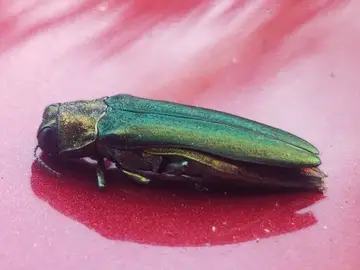
Photo: Brandon McCracken · CC BY 4.0 · iNaturalist Emerald Ash Borer
Rhode Island Aquatic Invasive Species Management Plan
Rhode Island Coastal Resources Management Council, Approved November 7, 2007. 3 animals.
-
Asian Clam Corbicula fluminea
Rhode Island waters (as of the 2007 plan) Rhode Island Coastal Resources Management Council
-
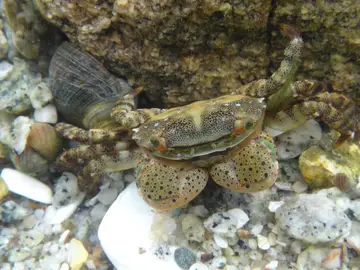
Photo: Alie / C.A. Kratzer · CC BY-SA 4.0 · iNaturalist · resized Asian Shore Crab Hemigrapsus sanguineus
Marine waters Rhode Island Coastal Resources Management Council
-
European Green Crab Carcinus maenas
Marine waters Rhode Island Coastal Resources Management Council
Mute Swan factsheet
Rhode Island DEM, Division of Fish & Wildlife, archived copy, captured May 16, 2026. 1 animal.
-
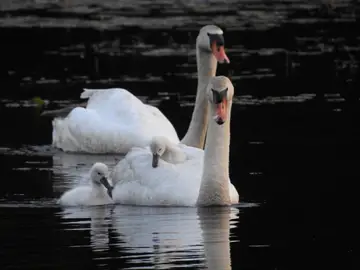
Photo: Laura Mae · CC BY 4.0 · iNaturalist Mute Swan Cygnus olor
Fresh, brackish and saltwater wetlands statewide (about 500 birds in 2019 per DEM) Rhode Island DEM, Division of Fish & Wildlife
USGS NAS occurrence records, Rhode Island: lionfish (Pterois volitans/miles)
USGS Nonindigenous Aquatic Species database, undated page. 1 animal.
-
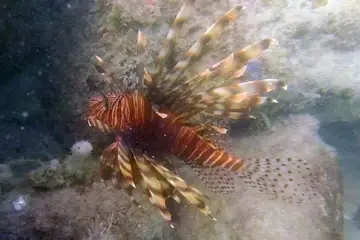
Photo: Kristof Zyskowski · CC BY 4.0 · iNaturalist Lionfish Pterois volitans/miles
Narragansett Bay USGS Nonindigenous Aquatic Species database
Established in Rhode Island, per USGS records
The U.S. Geological Survey's Nonindigenous Aquatic Species (NAS) database tracks nonnative aquatic animals. These have at least one record with the status "established" in Rhode Island, which USGS defines as a population showing evidence of reproduction and overwinter survival.
| Animal | Group | First record | Latest record | Counties |
|---|---|---|---|---|
| Lionfish Pterois volitans/miles | Sharks and Marine Life | 2005 | 2016 | 2 |
Source: U.S. Geological Survey. [2026]. Nonindigenous Aquatic Species Database. Gainesville, Florida. Accessed [11/3/2026]. "Native Transplant" animals are native elsewhere in the US but not in Rhode Island.
How to report a sighting in Rhode Island
Injured or orphaned wildlife: DEM 401-222-3070. Sightings: [email protected]. Division of Fish & Wildlife: 1-401-789-0281. Rhode Island DEM, Division of Fish & Wildlife
Do not try to catch or handle the animal. A photo taken from a safe distance, the place and the date help the agency.
Sources
- Rhode Island Aquatic Invasive Species Management Plan. Rhode Island Coastal Resources Management Council. Approved November 7, 2007; checked November 3, 2026.
Quoted passages (2)
“The Asian clam (Corbicula fluminea) has been found in Rhode Island waters and is spreading”
“Marine aquatic invaders that have become established in Rhode Island include the European green crab (Carcinus maenas), Asian shore crab (Hemigrapsus sanguineus),”
- Mute Swan factsheet. Rhode Island DEM, Division of Fish & Wildlife. archived copy, captured May 16, 2026; checked November 3, 2026.
Quoted passages (1)
“While beautiful, these large birds have negative impacts on our native waterfowl species and the aquatic ecosystems they inhabit.”
- USGS NAS occurrence records, Rhode Island: lionfish (Pterois volitans/miles). USGS Nonindigenous Aquatic Species database. undated page; checked November 3, 2026.
Quoted passages (1)
“Atlantic Ocean, Rhode Island, Narragansett Bay (East Passage), southern end of Conanicut Island at Fort Wetherill, Jamestown”
- DEM announces Emerald Ash Borer found in Rhode Island (press release). Rhode Island DEM via RI.gov. Release date: 07-25-2018; checked November 3, 2026.
Quoted passages (1)
“Emerald Ash Borer (EAB), a destructive forest insect from Asia, has been found for the first time in Rhode Island”
- Learn about RI wildlife. Rhode Island DEM, Division of Fish & Wildlife. archived copy, captured June 8, 2026; checked November 3, 2026.
Quoted passages (1)
“…please call DEM at 401-222-3070”
- U.S. Geological Survey. [2026]. Nonindigenous Aquatic Species Database. Gainesville, Florida. Accessed [11/3/2026].