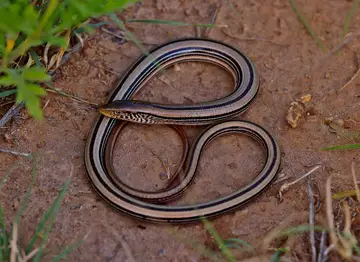
No official source we use states whether this animal is venomous. That does not mean it is harmless: do not handle it.
Size
5 to 8.5 inches
How to recognize it
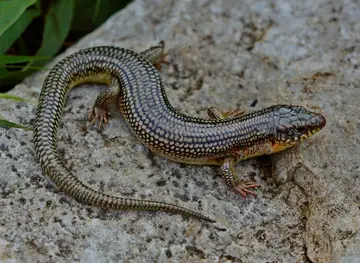
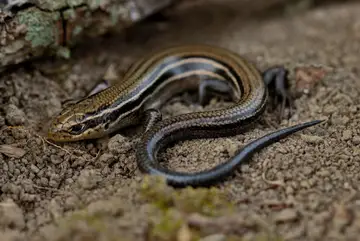
Smooth, shiny scales
Enlarged middle row of scales under the tail (separates it from the southeastern five-lined skink)
Tail breaks off easily and twitches to distract predators; it grows back shorter
Where in Nebraska
In Nebraska, only a few populations have been found in Richardson county, and one specimen was found in Lancaster County. Nebraska Game and Parks Commission
Conservation
Nongame species in need of conservation, "Species with no take" (Neb. Admin. Code Ch. 10, effective 06/04/2025)
What the sources say
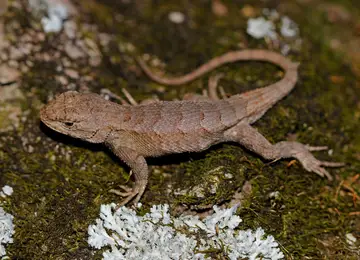
Habitat: These skinks can be found in moist woodland areas or near woodland/grassland edges. Preferred habitat is an area where the sunlight reaches the grown such as on an exposed rock, leaf litter or other debris, which they will use for cover. (Nebraska Game and Parks Commission)
No official source we use states whether this animal is venomous. That does not mean it is harmless: do not handle it.
Where in Nebraska
These skinks can be found in the counties in the south that border Kansas, it can also be found in the southern panhandle around the North Platte River. Nebraska Game and Parks Commission
Conservation
Nongame species in need of conservation, "Species with no take" (Neb. Admin. Code Ch. 10, effective 06/04/2025)
What the sources say
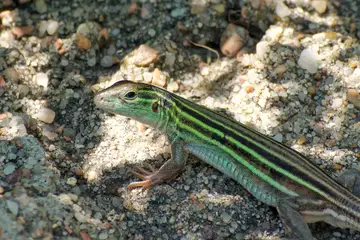
Habitat: These skinks prefer rocky areas in grasslands with loose soils. They are very abundant in the Tallgrass prairie areas. (Nebraska Game and Parks Commission)
No official source we use states whether this animal is venomous. That does not mean it is harmless: do not handle it.
Where in Nebraska
In Nebraska, these skinks are mainly found in the western panhandle, as well as areas that are extensions of the Sandhills. Nebraska Game and Parks Commission
What the sources say
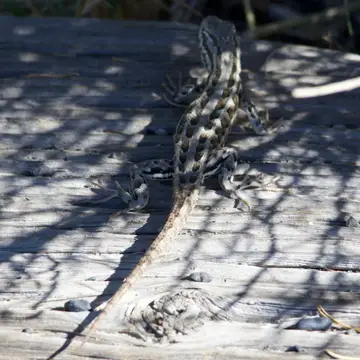
Habitat: These skinks prefer open grasslands in short- and mixed-grass prairies, with sandy soils. (Nebraska Game and Parks Commission)
Nongame species in need of conservation, "Species with no take" (Neb. Admin. Code Ch. 10, effective 06/04/2025)
What the sources say
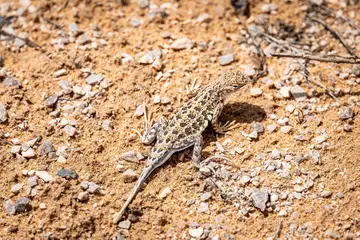
Habitat: This lizard can be found in shortgrass prairies. They prefer sandy and loose soil so they can bury themselves. They also like rocky areas with lots of gravel and pebbles for camouflage. (Nebraska Game and Parks Commission)
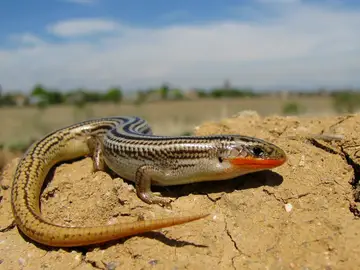
Habitat: These skinks prefer grassy and rocky areas with lots of vegetation for cover. They usually are found in loose soils often near the edge of water such as a stream or reservoir. (Nebraska Game and Parks Commission)
Habitat: These lizards prefer grasslands with sandy soils and little vegetation. They also can be found in rocky areas where they will be seen basking in the sun. Yucca plants are very common when finding these lizards as they use the plants for shelter and protection. (Nebraska Game and Parks Commission)
No official source we use states whether this animal is venomous. That does not mean it is harmless: do not handle it.
Where in Nebraska
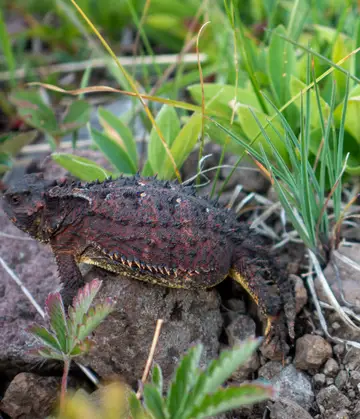
So far in Nebraska, these lizards have only been found in Morrill County, which is located in the central panhandle area of the state. Nebraska Game and Parks Commission
Conservation
Nongame species in need of conservation, "Species with no take" (Neb. Admin. Code Ch. 10, effective 06/04/2025)
What the sources say
Habitat: These lizards prefer higher elevation areas with rock or fine gravel or sandy soils. (Nebraska Game and Parks Commission)
Habitat: This lizard prefers grasslands with loose and sandy soils. This animal can actually survive in fairly arid areas as well. (Nebraska Game and Parks Commission)
Habitat: These lizards prefer tallgrass prairie with loose soil. They will normally avoid densely wooded areas. (Nebraska Game and Parks Commission)
When lizards are active in Nebraska
Records of lizards in Nebraska peak in May to June and August. They show when people record lizards, not how many there are (about month bars).
JanFebMarAprMayJunJulAugSepOctNovDec
57 records of lizards in Nebraska by month (GBIF, CC0 and CC BY records).
How to report
NGPC: 402-471-0641 (or a local conservation officer). Sick or dead wildlife: report to a Game and Parks office. Invasive species: Nebraska Invasive Species Council, [email protected] or its Report A Sighting page. Reptile and amphibian sightings: UNL Report A Sighting form (herpneb.unl.edu/report-sighting). Nebraska Game and Parks Commission