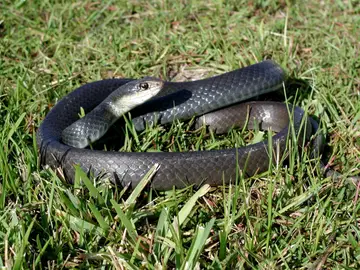
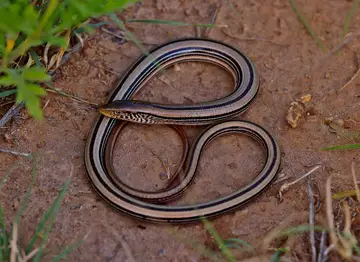
Nebraska has 4 venomous snakes named by official sources: Copperhead, Timber rattlesnake, Prairie rattlesnake and Western Massasauga Rattlesnake, as labelled by Nebraska Game and Parks Commission. This guide covers 9 animal groups from Nebraska Game and Parks Commission lists and other official sources, with photos, venomous status and when each group is active.
Identification help has limits: a photo cannot confirm that an animal is safe. Watch from a distance and never handle a wild animal.
These are the animals official sources describe as venomous or as a risk to people in Nebraska, across 6 groups. The reason is given in the source's own terms.
Venomous: “Nebraska is home to nearly 30 different snakes, 25 that are non-venomous and four that are venomous. … Timber rattlesnake (Crotalus horridus)”
Venomous: “Nebraska is home to nearly 30 different snakes, 25 that are non-venomous and four that are venomous. … Prairie rattlesnake (Crotalus viridis)”
Venomous: “The venom generally induces mild bite reactions such as brief pain, swelling and nausea, but some humans have suffered more intense symptoms.”
Sting: “While its sting is not typically harmful to humans — it is comparable to a bee or wasp — it can potentially pose a significant risk to those allergic to stinging insects.”
Allergic reactions can be life-threatening: “In allergic individuals, insect stings can cause a life-threatening systemic reaction that can rapidly lead to anaphylactic shock.”
Darker cells are the months with more open-licence observation records of each group in Nebraska (GBIF). They show when people see and record these animals, not how many there are. The current month, this month, is highlighted.
Report: NGPC: 402-471-0641 (or a local conservation officer). Sick or dead wildlife: report to a Game and Parks office. Invasive species: Nebraska Invasive Species Council, [email protected] or its Report A Sighting page. Reptile and amphibian sightings: UNL Report A Sighting form (herpneb.unl.edu/report-sighting). Nebraska Game and Parks Commission
The prairie rattlesnake is generally in the western half of the state; the other three are restricted to the southeast. Nebraska Game and Parks Commission
Are there cottonmouths (water moccasins) in Nebraska?
Not on the official list. NGPC names the four venomous snakes and the cottonmouth is not one of them. NGPC makes no separate statement about the cottonmouth. Nebraska Game and Parks Commission
Not stated. NGPC lists Nebraska reptiles as turtles, lizards and snakes and gives no direct statement on alligators. Nebraska Game and Parks Commission
Are there scorpions in Nebraska?
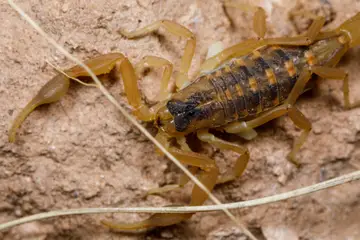
Yes. One species, the striped bark scorpion, in parts of south-central Nebraska along the Kansas border. Nebraska Game and Parks Commission
Are there black widows in Nebraska?
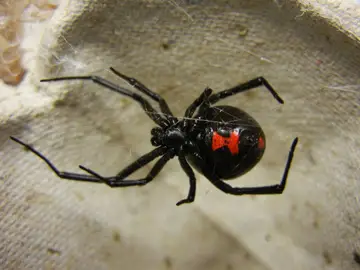
Yes. The western black widow is the most common; the southern black widow arrives occasionally on freight and furniture. Nebraska Extension
Are there brown recluse spiders in Nebraska?
Yes. Nebraska Extension gives the range as Georgia west to Nebraska and south through Texas, primarily inside heated buildings. Nebraska Extension
Are there hobo spiders in Nebraska?
Nebraska Extension (2016) says the hobo spider is not known to be in Nebraska yet. Nebraska Extension
Are there mountain lions in Nebraska?
Yes. NGPC describes three established populations, and sets hunting units in the Pine Ridge, Niobrara and Wildcat Hills. Nebraska Game and Parks Commission
Are there bears in Nebraska?
Rarely. The State Museum (2008) calls the black bear extirpated, with a few exploring individuals in extreme western Nebraska, and the grizzly extirpated. Genoways et al.
Are there armadillos in Nebraska?
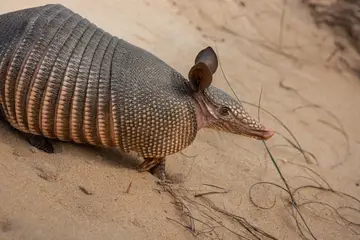
Yes. Expanding in southern and central Nebraska per the 2008 bulletin; NISC lists it on its Watchlist. Genoways et al.
Are there feral hogs in Nebraska?
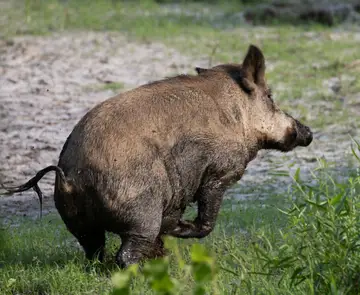
Not confirmed for 2026. The State Museum bulletin (2008) recorded established feral populations. NISC (02/16/2026) puts the feral hog in its Priority category ("highly unwanted species and all efforts should be made to prevent the expansion of their populations"), which does not say whether hogs are present now. Genoways et al.
Contact Us. Nebraska Game and Parks Commission. archived copy, captured August 24, 2026; checked November 3, 2026.Quoted passages (1)
“You may contact us by mail, phone at 402-471-0641, or the contact form below.”
Snakes of Nebraska. Nebraska Game and Parks Commission. archived copy, captured October 1, 2023; checked November 3, 2026.Quoted passages (6)
“Nebraska is home to nearly 30 different snakes, 25 that are non-venomous and four that are venomous. … Copperhead (Agkistrodon contortrix)”
“Nebraska is home to nearly 30 different snakes, 25 that are non-venomous and four that are venomous. … Timber rattlesnake (Crotalus horridus)”
“Nebraska is home to nearly 30 different snakes, 25 that are non-venomous and four that are venomous. … Prairie rattlesnake (Crotalus viridis)”
“Nebraska is home to nearly 30 different snakes, 25 that are non-venomous and four that are venomous. … Massasauga (Sistrurus catenatus)”
“These snakes have only been found in Richardson and Gage county.”
“Milk snakes (found in Nebraska/non-venomous) and coral snakes (not in Nebraska/venomous), look almost identical.”
Nebraska's Venomous Snakes. Nebraska Game and Parks Commission (NEBRASKAland Magazine; by Monica Macoubrie, Wildlife Education Specialist). July 11, 2022; checked November 3, 2026.Quoted passages (2)
“In Nebraska, we have 29 species of snakes, and of those species, only four of them are venomous.”
“They are the prairie rattlesnake (Crotalus viridis), western massasauga rattlesnake (Sistrurus tergeminus), timber rattlesnake (Crotalus horridus) and copperhead (Agkistrodon contortrix).”
Lizards of Nebraska. Nebraska Game and Parks Commission. archived copy, captured October 1, 2023; checked November 3, 2026.Quoted passages (1)
“Nebraska is home to 10 lizard species”
Amphibians. Nebraska Game and Parks Commission. archived copy, captured July 20, 2024; checked November 3, 2026.Quoted passages (2)
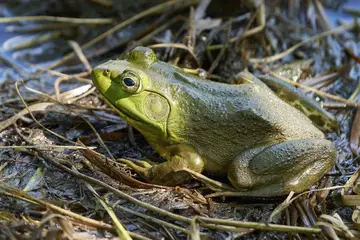
“Nebraska is home to 11 species of frogs and toads and two species of salamanders.”
“All amphibians in Nebraska will return to aquatic habitats to breed during late winter, spring and summer months.”
Turtles of Nebraska. Nebraska Game and Parks Commission. archived copy, captured December 2, 2023; checked November 3, 2026.Quoted passages (1)
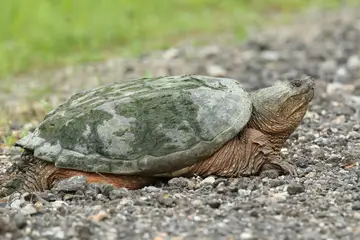
“Nebraska is home to nine turtle species”
Nebraska Has Scorpions? Nebraska Game and Parks Commission (NEBRASKAland Magazine blog). archived copy, captured September 17, 2025; checked November 3, 2026.Quoted passages (3)
“Nebraskans likely are unfamiliar that one species of scorpion inhabits parts of south-central Nebraska along the Kansas border.”
“While its sting is not typically harmful to humans — it is comparable to a bee or wasp — it can potentially pose a significant risk to those allergic to stinging insects.”
“…they are dormant from late October to mid-March”
“Insect stings probably injure more people each year than all other venomous animals combined.”
“In allergic individuals, insect stings can cause a life-threatening systemic reaction that can rapidly lead to anaphylactic shock.”
“Generally, these insects will not sting unless stepped on, touched, or annoyed.”
“Most insect stings occur during late summer and fall when stinging insects are most abundant.”
Medically Important Ticks of Nebraska. Nebraska Department of Health and Human Services. archived copy, captured July 12, 2026; checked November 3, 2026.Quoted passages (7)
“Transmits tularemia and Rocky Mountain spotted fever.”
“Transmits Lyme disease”
“Transmits ehrlichiosis, tularemia, Heartland virus, Bourbon virus, and STARI.”
“Transmits Rocky Mountain spotted fever, Colorado tick fever, and tularemia.”
“Transmits Rocky Mountain spotted fever (in the southwestern U.S. and along the U.S.-Mexico border).”
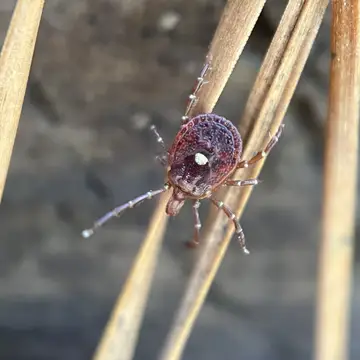
“Below you will find information about medically important ticks of Nebraska.”
“When ticks are active in Nebraska (April-October)”
“Eurasian Collared Dove Streptopelia decaocto Established”
“European Starling Sternus vulgaris Established”
“House Mouse Mus musculus Established”
“House Sparrow Passer domesticus Established”
“Norway Rat Rattus norvegicus Established”
“Rock Dove Columba livia Established”
Reptiles and Amphibians. Nebraska Game and Parks Commission. archived copy, captured June 15, 2024; checked November 3, 2026.Quoted passages (2)
“There are 14 amphibian species, 9 species of turtles, 10 lizard species and 30 snakes that call Nebraska home.”
“Snakes are most active in warm weather (75-90°F) and tend to avoid both cold and extremely hot temperatures.”
Nebraska Regional Poison Center. Nebraska Regional Poison Center. archived copy, captured October 1, 2026; checked November 3, 2026.Quoted passages (1)
“The person has collapsed or stopped breathing? Call 911 or your local emergency number right away … For Poisoning Questions or Emergencies, Call 800.222.1222”
Western Massasauga. Nebraska Game and Parks Commission. archived copy, captured November 15, 2023; checked November 3, 2026.Quoted passages (2)
“While the venomous bite of a massasauga should be treated by a doctor immediately, there have been no known deaths from their bite.”
“As with other snakes in Nebraska, massasaugas hibernate during the winter months.”
Timber Rattlesnake. Nebraska Game and Parks Commission. archived copy, captured November 15, 2023; checked November 3, 2026.Quoted passages (1)
“Anyone can report illegal harassment of all snake species to the Nebraska Game and Parks Commission.”
Nebraska Ticks & Prevention (Tick Tag Go). University of Nebraska-Lincoln (Nebraska One Health, Tick Tag Go). undated page; checked November 3, 2026.Quoted passages (2)
“Perform regular, full body, tick checks on your person and children”
“May/June is regarded as high tick season in Nebraska.”
Prairie Rattlesnake. University of Nebraska-Lincoln, Institute of Agriculture and Natural Resources / School of Natural Resources. undated page; checked November 3, 2026.Quoted passages (1)