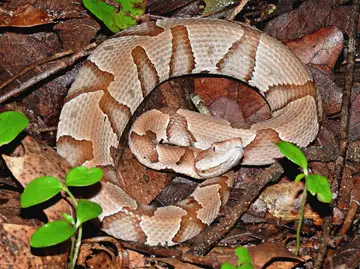
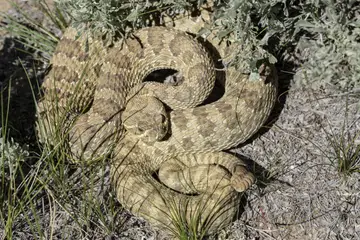
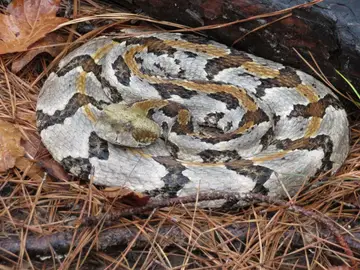
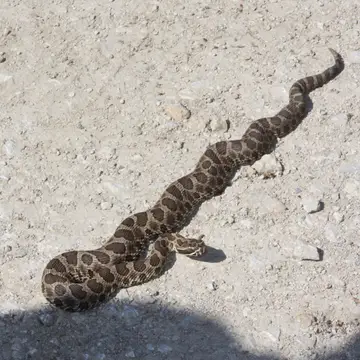
Nebraska has 4 venomous snakes named by official sources: Copperhead, Timber rattlesnake, Prairie rattlesnake and Western Massasauga Rattlesnake. Each one is labelled venomous by Nebraska Game and Parks Commission.
The 4 venomous snakes of Nebraska
Recognize them from a distance; a photo cannot confirm that a snake is safe. Identifying animals safely.
Nongame species in need of conservation, "Species with no take" (Neb. Admin. Code Ch. 10, effective 06/04/2025)
JFMAMJJASOND
31 records by month.What the sources say
Venom: “Nebraska is home to nearly 30 different snakes, 25 that are non-venomous and four that are venomous. … Copperhead (Agkistrodon contortrix)” (Nebraska Game and Parks Commission)
Habitat: These snakes prefer hilly and wooded areas with rocky outcrops. (Nebraska Game and Parks Commission)
Usually about 3 to 4 feet; Montana gives 15 to 60 inches and NPS says up to 5 feet. Arizona gives a maximum of 28 to 64 inches (excluding rattle) depending on subspecies; in Colorado it is rarely over 39 inches.
How to recognize it
Rattle (or a button in newborns) at the tail tip
Head much broader than the neck, many small scales on top of the head, heat-sensing pit between eye and nostril
Venom: “Nebraska is home to nearly 30 different snakes, 25 that are non-venomous and four that are venomous. … Prairie rattlesnake (Crotalus viridis)” (Nebraska Game and Parks Commission)
Habitat: These snakes can be found in the mixed grass and short grass prairies in areas with rocky mesas and canyons. These snakes are usually found in association with prairie dog towns as well. (Nebraska Game and Parks Commission)
“There are known deaths due to timber rattlesnake bites, and extreme caution should be taken if a timber rattlesnake is encountered.” Nebraska Game and Parks Commission
Size
Most adults 36 to 60 inches (3 to 5 feet); record 74.5 inches.
How to recognize it
Black tail ending in a rattle
Heat-sensing pit between nostril and eye
Large, thick head distinct from the neck; cat-like vertical pupil
Venom: “Nebraska is home to nearly 30 different snakes, 25 that are non-venomous and four that are venomous. … Timber rattlesnake (Crotalus horridus)” (Nebraska Game and Parks Commission)
Habitat: These snakes prefer deciduous woodlands with areas of rocky outcroppings. Often times they can be found in woodlands along streams closer to prairies. (Nebraska Game and Parks Commission)
The Massasauga is protected in Nebraska and is considered a threatened species by the Nebraska Game and Parks Commission.
What the sources say
Venom: “Nebraska is home to nearly 30 different snakes, 25 that are non-venomous and four that are venomous. … Massasauga (Sistrurus catenatus)” (Nebraska Game and Parks Commission)
Habitat: This snake prefers wet areas such as prairies and grasslands. One key feature that needs to be in any habitat these animals are found is crayfish burrows. Massasaugas will use them for hibernation during the winter months. Many of this snake’s natural habitat has been converted to agricultural lands so they have been reduced to live around artificial ponds and lakes. (Nebraska Game and Parks Commission)
For 1 other snake on Nebraska's list, no official source we use states whether it is venomous: Diamondback Water Snake. That does not make them harmless. Leave every snake alone.
See all 30 snakes, venomous and not, on Nebraska snakes. Nebraska Game and Parks Commission gives Nebraska 29 snake species in all; that page lists the 30 that official sources name one by one.
Snakes people confuse
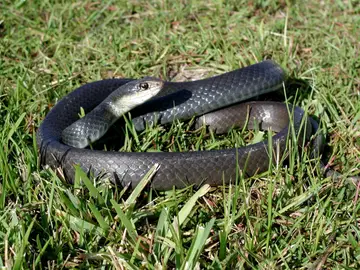
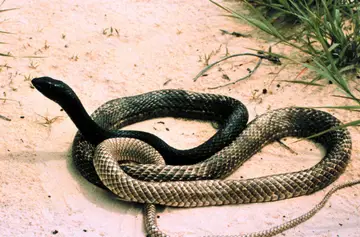
Black Racer or Timber rattlesnake?
Photo: Everglades NPS from Homestead, Florida, United States · Public domain · Wikimedia Commons
The copperhead's head is coppery with no marks; the milksnake's head is light with brownish marks (Pennsylvania). Tennessee: copperhead has a copper-colored, unmarked head and triangular shapes on the side of the body. Pennsylvania says the eastern milksnake is the snake most often killed by mistake for a copperhead. Belly colour is not used here: Pennsylvania's own pages describe the copperhead belly two different ways (uniform cream in one account, mottled white to gray in another).
TWRA: the racer lacks the coachwhip's reddish tint along the sides of the tail; an all-black coachwhip is distinctly lighter or reddish toward the rear. Oklahoma: the coachwhip is much larger.
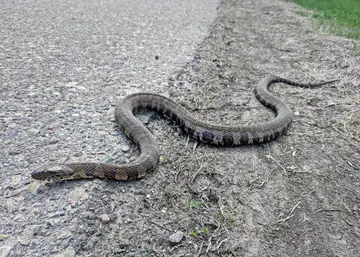
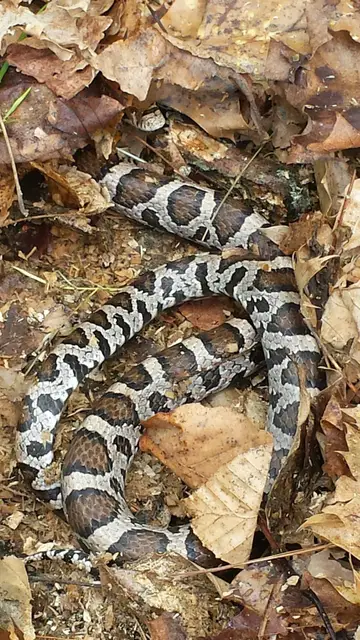
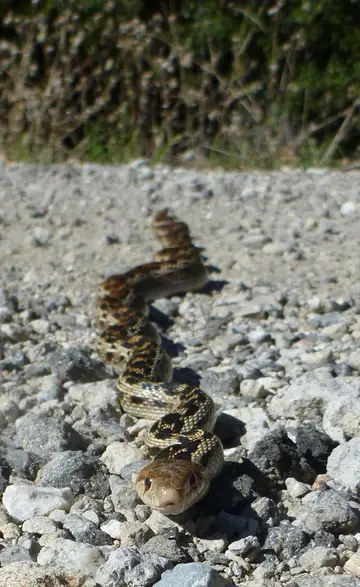
Gopher snake (gophersnake) or Rattlesnakes?
Photo: National Park Service from USA · Public domain · Wikimedia Commons
WDFW: gopher snakes lack a rattle and facial pits and have smaller, square back spots. NPS Cabrillo: the gopher snake's tail is long, skinny and pointed with no rattle, its head is about as slender as its neck (rattlesnakes have large spade- or triangle-shaped heads), and its back pattern is a rectangular chain rather than the circles or diamonds of a rattlesnake. Caution: a defensive gopher snake flattens its head into a triangle and vibrates its tail, so do not rely on head shape or sound alone.
Photos show typical adults; individuals vary. Never get close to compare.
When venomous snakes are active in Nebraska
Records of snakes in Nebraska peak in May to June and September to October. They show when people record snakes, not how many there are (about month bars).
JanFebMarAprMayJunJulAugSepOctNovDec
691 records of snakes in Nebraska by month (GBIF, CC0 and CC BY records).
NGPC: 402-471-0641 (or a local conservation officer). Sick or dead wildlife: report to a Game and Parks office. Invasive species: Nebraska Invasive Species Council, [email protected] or its Report A Sighting page. Reptile and amphibian sightings: UNL Report A Sighting form (herpneb.unl.edu/report-sighting). Nebraska Game and Parks Commission
About this list
The species list comes from Snakes of Nebraska (Nebraska Game and Parks Commission) (Nebraska Game and Parks Commission, Internet Archive capture 2023-10-01; article July 11, 2022). 1 more entry comes from other official sources named on each card.
Venom labels come only from official sources and link to them; "Not stated" never means harmless. How labels work.
Sources
Contact Us. Nebraska Game and Parks Commission. archived copy, captured August 24, 2026; checked November 3, 2026.Quoted passages (1)
“You may contact us by mail, phone at 402-471-0641, or the contact form below.”
Snakes of Nebraska. Nebraska Game and Parks Commission. archived copy, captured October 1, 2023; checked November 3, 2026.Quoted passages (33)
“Nebraska is home to nearly 30 different snakes, 25 that are non-venomous and four that are venomous. … Eastern glossy snake (Arizona elegans)”
“Nebraska is home to nearly 30 different snakes, 25 that are non-venomous and four that are venomous. … Eastern racer (Coluber constrictor)”
“Nebraska is home to nearly 30 different snakes, 25 that are non-venomous and four that are venomous. … Prairie kingsnake (Lampropeltis calligaster)”
“Nebraska is home to nearly 30 different snakes, 25 that are non-venomous and four that are venomous. … Speckled kingsnake (Lampropeltis holbrooki)”
“Nebraska is home to nearly 30 different snakes, 25 that are non-venomous and four that are venomous. … Milk snake (Lampropeltis triangulum)”
“Nebraska is home to nearly 30 different snakes, 25 that are non-venomous and four that are venomous. … Smooth green snake (Liochlorophis vernalis)”
“Nebraska is home to nearly 30 different snakes, 25 that are non-venomous and four that are venomous. … Coachwhip (Masticophis flagellum)”
“Nebraska is home to nearly 30 different snakes, 25 that are non-venomous and four that are venomous. … Western fox snake (Pantherophis ramspotti)”
“Nebraska is home to nearly 30 different snakes, 25 that are non-venomous and four that are venomous. … Great Plains rat snake (Pantherophis emoryi)”
“Nebraska is home to nearly 30 different snakes, 25 that are non-venomous and four that are venomous. … Bullsnake (Pituophis catenifer)”
“Nebraska is home to nearly 30 different snakes, 25 that are non-venomous and four that are venomous. … Western rat snake/black rat snake (Scotophis obsoletus)”
“Nebraska is home to nearly 30 different snakes, 25 that are non-venomous and four that are venomous. … Plains blackhead snake (Tantilla nigriceps)”
“Nebraska is home to nearly 30 different snakes, 25 that are non-venomous and four that are venomous. … Western worm snake (Carphophis vermis)”
“Nebraska is home to nearly 30 different snakes, 25 that are non-venomous and four that are venomous. … Ringneck snake (Diadophis punctatus)”
“Nebraska is home to nearly 30 different snakes, 25 that are non-venomous and four that are venomous. … Western hognose snake (Heterodon nasicus)”
“Nebraska is home to nearly 30 different snakes, 25 that are non-venomous and four that are venomous. … Eastern hognose snake (Heterodon platirhinos)”
“Nebraska is home to nearly 30 different snakes, 25 that are non-venomous and four that are venomous. … Northern water snake (Nerodia sipedon)”
“Nebraska is home to nearly 30 different snakes, 25 that are non-venomous and four that are venomous. … Graham’s crayfish snake (Regina grahamii)”
“Nebraska is home to nearly 30 different snakes, 25 that are non-venomous and four that are venomous. … Brown snake (Storeria dekayi)”
“Nebraska is home to nearly 30 different snakes, 25 that are non-venomous and four that are venomous. … Redbelly snake (Storeria occipitomaculata)”
“Nebraska is home to nearly 30 different snakes, 25 that are non-venomous and four that are venomous. … Terrestrial garter snake (Thamnophis elegans)”
“Nebraska is home to nearly 30 different snakes, 25 that are non-venomous and four that are venomous. … Western ribbon snake (Thamnophis proximus)”
“Nebraska is home to nearly 30 different snakes, 25 that are non-venomous and four that are venomous. … Plains garter snake (Thamnophis radix)”
“Nebraska is home to nearly 30 different snakes, 25 that are non-venomous and four that are venomous. … Common garter snake (Thamnophis sirtalis)”
“Nebraska is home to nearly 30 different snakes, 25 that are non-venomous and four that are venomous. … Lined snake (Tropidoclonion lineatum)”
“Nebraska is home to nearly 30 different snakes, 25 that are non-venomous and four that are venomous. … Copperhead (Agkistrodon contortrix)”
“Copperhead (Agkistrodon contortrix)”
“Nebraska is home to nearly 30 different snakes, 25 that are non-venomous and four that are venomous. … Timber rattlesnake (Crotalus horridus)”
“Nebraska is home to nearly 30 different snakes, 25 that are non-venomous and four that are venomous. … Prairie rattlesnake (Crotalus viridis)”
“Prairie rattlesnake (Crotalus viridis)”
“Nebraska is home to nearly 30 different snakes, 25 that are non-venomous and four that are venomous. … Massasauga (Sistrurus catenatus)”
“These snakes have only been found in Richardson and Gage county.”
“Milk snakes (found in Nebraska/non-venomous) and coral snakes (not in Nebraska/venomous), look almost identical.”
Nebraska's Venomous Snakes. Nebraska Game and Parks Commission (NEBRASKAland Magazine; by Monica Macoubrie, Wildlife Education Specialist). July 11, 2022; checked November 3, 2026.Quoted passages (2)
“In Nebraska, we have 29 species of snakes, and of those species, only four of them are venomous.”
“They are the prairie rattlesnake (Crotalus viridis), western massasauga rattlesnake (Sistrurus tergeminus), timber rattlesnake (Crotalus horridus) and copperhead (Agkistrodon contortrix).”
Timber Rattlesnake. Nebraska Game and Parks Commission. archived copy, captured November 15, 2023; checked November 3, 2026.Quoted passages (2)
“There are known deaths due to timber rattlesnake bites, and extreme caution should be taken if a timber rattlesnake is encountered.”
“Anyone can report illegal harassment of all snake species to the Nebraska Game and Parks Commission.”
Western Massasauga. Nebraska Game and Parks Commission. archived copy, captured November 15, 2023; checked November 3, 2026.Quoted passages (2)
“The side effects of a bite are serious because of the cyto-toxin injected, which kills surrounding tissue.”
“As with other snakes in Nebraska, massasaugas hibernate during the winter months.”
Chapter 10, Nongame Species In Need Of Conservation. Nebraska Game and Parks Commission (Nebraska Administrative Code, Chapter 10; copy hosted by UNL). Effective Date: 06/04/2025; checked November 3, 2026.
Reptiles and Amphibians. Nebraska Game and Parks Commission. archived copy, captured June 15, 2024; checked November 3, 2026.Quoted passages (1)
“Snakes are most active in warm weather (75-90°F) and tend to avoid both cold and extremely hot temperatures.”
Prairie Rattlesnake. University of Nebraska-Lincoln, Institute of Agriculture and Natural Resources / School of Natural Resources. undated page; checked November 3, 2026.Quoted passages (1)