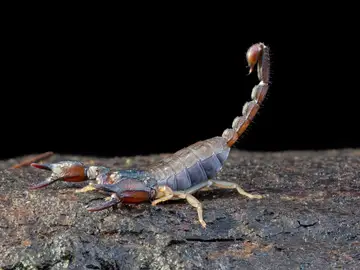
This page lists 2 scorpions.
1 is venomous by official accounts.
Not every species: no complete official list of Oregon scorpions exists, so this page covers the ones state and Extension sources name. How lists are built.
Which scorpions can hurt you
Official sources single out these scorpions in Oregon, in their own words:
Habitat: Western forest scorpions can be found in moist wooded areas in Oregon. (Oregon State University Extension Service)
When scorpions are active in Oregon
Records of scorpions in Oregon peak in May to June and August to September. They show when people record scorpions, not how many there are (about month bars).
JanFebMarAprMayJunJulAugSepOctNovDec
87 records of scorpions in Oregon by month (GBIF, CC0 and CC BY records).
If you are bitten or stung
Call 911 or Poison Help at 1-800-222-1222 right away. Poison Help connects you to your local poison center, any time of day.
Official advice from Oregon Poison Center, Oregon Health & Science University:
Invasive species sightings: Oregon Invasives Hotline, oregoninvasiveshotline.org or 1-866-INVADER; wildlife conflicts: local ODFW office (ODFW main phone 503-947-6000) Oregon Invasives Hotline
What official sources say
Are there scorpions in Oregon?
Yes. OSU Extension identifies the western forest scorpion (Uroctonus mordax) in western Oregon; the Oregon Poison Center says the Northwest Forest Scorpion has been found in the Cascade foothills. Oregon State University Extension Service
“These scorpions are found in the mountainous and western parts of California, western Oregon and southwestern Washington.”
“These scorpions are found in the mountainous and western parts of California, western Oregon and southwestern Washington.”
Bites & Stings. Oregon Poison Center, Oregon Health & Science University (poison-control program serving Oregon). undated page; checked November 3, 2026.Quoted passages (3)
“Scorpions have long, curved tipped tails containing venom and pincers for hands.”
“Most scorpions found in the U.S. are less toxic than those found in other areas of the world, but may still be painful.”
“If you are experiencing difficulty breathing or swallowing, seek immediate medical attention by calling 911 or the poison center at 1-800-222-1222.”
Oregon Invasives Hotline. Oregon Invasives Hotline (Oregon Invasive Species Council; "Maintained by Oregon State University"). undated page; checked November 3, 2026.Quoted passages (1)
“Report potential invasive species you've found to the Online Hotline. Your submission will provide vital early detection information to the experts working to stop the next invasion before it starts!”