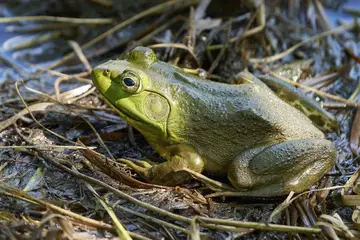
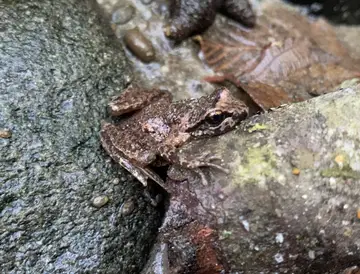
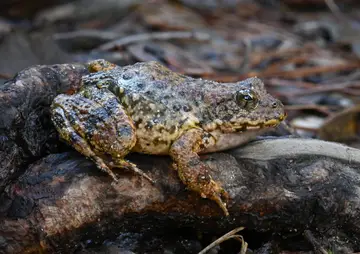
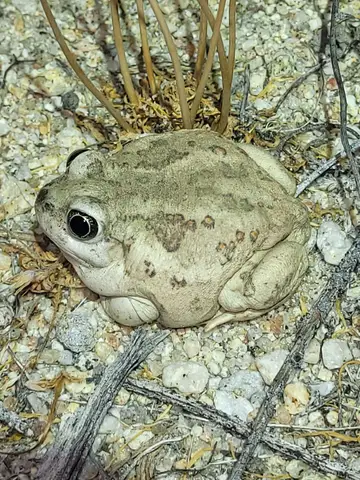
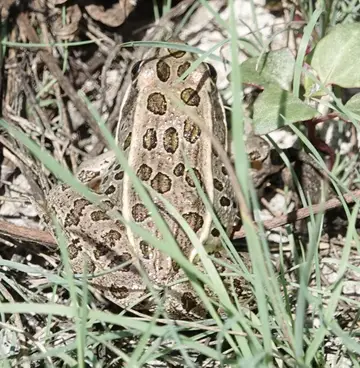
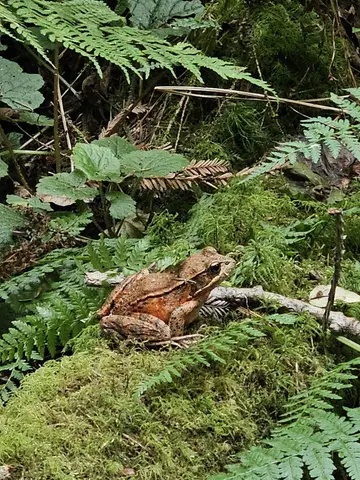
Oregon Department of Fish and Wildlife: Twelve native species of frogs and toads live in Oregon.
This page lists 13 species: all from Oregon Department of Fish and Wildlife's Oregon's Frogs and Toads and ODFW Wildlife Viewing: Frogs and Toads.
1 is nonnative. Oregon Department of Fish and Wildlife gives a total of 12; the 13 here are the frogs and toads official sources name one by one.
Which frogs and toads can hurt you
Official sources single out these frogs and toads in Oregon, in their own words:
Toads (and newts)
Poisons in skin glands. “Some amphibians, such as toads and newts, have poisons in their skin glands. They might harm you or your pets, if pets eat them.” Oregon State University Extension Service
No official source we use states whether this animal is venomous. That does not mean it is harmless: do not handle it.
Size
Usually 6 to 8 inches long (NCWRC); can reach 8 inches or more and weigh over 2 pounds (CDFW). Missouri gives 3.5 to 6 inches snout to vent, occasionally to 8.75.
How to recognize it
No ridge (dorsolateral fold) down each side of the back
Large round eardrum: about twice the eye in males, about eye-sized in females
Fully webbed hind feet, longest toe extends past the webbing
Records of frogs and toads in Oregon peak in May to September. They show when people record frogs and toads, not how many there are (about month bars).
JanFebMarAprMayJunJulAugSepOctNovDec
1,269 records of frogs and toads in Oregon by month (GBIF, CC0 and CC BY records).
If you are bitten or stung
Call 911 or Poison Help at 1-800-222-1222 right away. Poison Help connects you to your local poison center, any time of day.
How to report
Invasive species sightings: Oregon Invasives Hotline, oregoninvasiveshotline.org or 1-866-INVADER; wildlife conflicts: local ODFW office (ODFW main phone 503-947-6000) Oregon Invasives Hotline
“Some amphibians, such as toads and newts, have poisons in their skin glands. They might harm you or your pets, if pets eat them.”
Oregon Invasives Hotline. Oregon Invasives Hotline (Oregon Invasive Species Council; "Maintained by Oregon State University"). undated page; checked November 3, 2026.Quoted passages (1)
“Report potential invasive species you've found to the Online Hotline. Your submission will provide vital early detection information to the experts working to stop the next invasion before it starts!”