States Wildlife

Oregon Lizards: Identification Guide With Pictures

Last checked November 3, 2026 against official sources.

On this page
  1. All 12 lizards
  2. Lookalikes
  3. When they are active
  4. How to report
  5. About this list
  6. Sources

This page lists 12 lizards.

All 12 lizards

From A to Z.

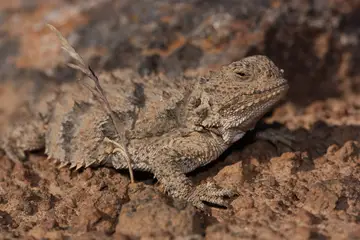
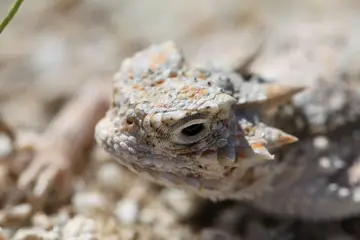
Desert horned lizard
Photo: Robb Hannawacker, while working for Joshua Tree National Park · Public domain · Wikimedia Commons

Desert horned lizard

Not stated

Venom
No official source we use states whether this animal is venomous. That does not mean it is harmless: do not handle it.
What the sources say

Habitat: The desert horned lizard is found in flat or gently rolling deserts covered with sagebrush or salt-desert shrub. (Oregon Department of Fish and Wildlife)

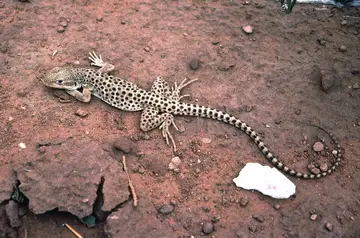
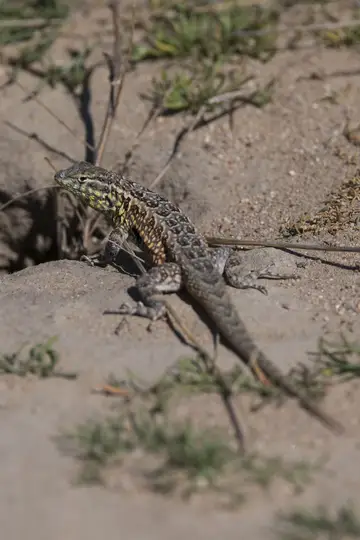
Long-nosed leopard lizard
Photo: ALAN SCHMIERER · CC0 · Wikimedia Commons

Long-nosed leopard lizard

Not stated

Venom
No official source we use states whether this animal is venomous. That does not mean it is harmless: do not handle it.
What the sources say

Habitat: These lizards are found in open desert shrublands, particularly where islands of sand have accumulated around shrubs and are absent where a dense grass understory would inhibit their ability to run. (Oregon Department of Fish and Wildlife)

No confirmed photo of Mojave black-collared lizard

Mojave black-collared lizard

Not stated

Venom
No official source we use states whether this animal is venomous. That does not mean it is harmless: do not handle it.
What the sources say

Habitat: This lizard is found in a variety of desert shrub vegetation types, but is most dependent on the presence of rock outcrops, boulders, or talus slopes. (Oregon Department of Fish and Wildlife)

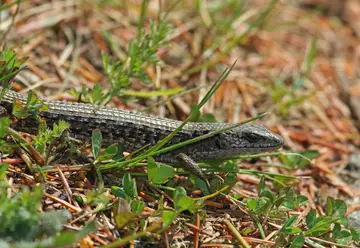
Northern alligator lizard
Photo: USFWS - Pacific Region · Public domain · Wikimedia Commons

Northern alligator lizard

Elgaria coerulea

Not stated

Venom
No official source we use states whether this animal is venomous. That does not mean it is harmless: do not handle it.
Where in Oregon
This is the only lizard found in the cool coastal forests of northern Oregon. Oregon Department of Fish and Wildlife
What the sources say

Habitat: This lizard prefers humid areas, such as the edges of meadows in coniferous forests, and is also found in riparian zones. (Oregon Department of Fish and Wildlife)

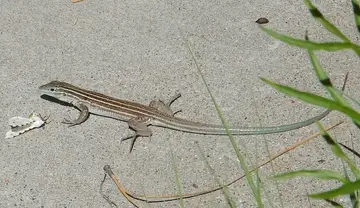
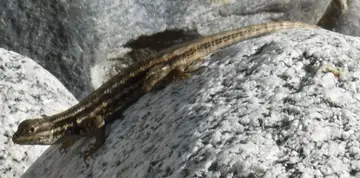
Plateau striped whiptail
Photo: Lon Brehmer · CC BY 4.0 · iNaturalist

Plateau striped whiptail

Not stated

Venom
No official source we use states whether this animal is venomous. That does not mean it is harmless: do not handle it.
Pygmy short-horned lizard
Photo: Walter Siegmund (talk) · CC BY-SA 3.0 · Wikimedia Commons · resized

Pygmy short-horned lizard

Not stated

Venom
No official source we use states whether this animal is venomous. That does not mean it is harmless: do not handle it.
What the sources say

Habitat: The pygmy short-horned lizard occurs in sagebrush deserts, juniper woodlands, and open coniferous forests. (Oregon Department of Fish and Wildlife)

Sagebrush lizard
Photo: zookanthos · CC BY 4.0 · iNaturalist

Sagebrush lizard

Sceloporus graciosus graciosus

Not stated

Venom
No official source we use states whether this animal is venomous. That does not mean it is harmless: do not handle it.
Where in Oregon
Also called the Northern sagebrush lizard, it is an Oregon Conservation Strategy Species in the Columbia Plateau ecoregion. Oregon Department of Fish and Wildlife
Conservation
Also called the Northern sagebrush lizard, it is an Oregon Conservation Strategy Species in the Columbia Plateau ecoregion.
What the sources say

Habitat: As their common name implies, these lizards are found in sagebrush habitats, but also occur in chaparral, juniper woodlands, and coniferous forests. (Oregon Department of Fish and Wildlife)

Side-blotched lizard
Photo: William Walker · CC BY 4.0 · iNaturalist

Side-blotched lizard

Uta stansburiana

Not stated

Venom
No official source we use states whether this animal is venomous. That does not mean it is harmless: do not handle it.
What the sources say

Habitat: The side-blotched lizard is found in sagebrush, juniper, and shadscale habitats. (Oregon Department of Fish and Wildlife)

No confirmed photo of Southern alligator lizard

Southern alligator lizard

Not stated

Venom
No official source we use states whether this animal is venomous. That does not mean it is harmless: do not handle it.
What the sources say

Habitat: The Southern alligator lizard is found in a variety of habitats from grassland and chaparral to oak woodlands and edges of open coniferous forests, as well as riparian zones and moist canyon bottoms. (Oregon Department of Fish and Wildlife)

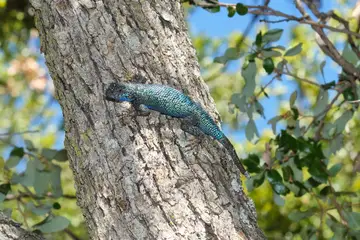
Western fence lizard
Photo: Shawn O'Donnell · CC BY 4.0 · iNaturalist

Western fence lizard

Sceloporus occidentalis

Not stated

Venom
No official source we use states whether this animal is venomous. That does not mean it is harmless: do not handle it.
Size
Adults 2.2 to 3.4 inches snout to vent (body without tail).
How to recognize it
  • Keeled, spiny scales on the back
  • In mature males the entire throat is blue and the blue belly patches are outlined in black
  • Yellow scales on the back of the thighs
512 records by month.
What the sources say

Habitat: The Western fence lizard occupies a wide range of habitats, from desert canyons and grasslands to coniferous forests. (Oregon Department of Fish and Wildlife)

Full Western fence lizard guide

No confirmed photo of Western skink

Western skink

Eumeces skiltonianus

Not stated

Venom
No official source we use states whether this animal is venomous. That does not mean it is harmless: do not handle it.
What the sources say

Habitat: The Western skink is found in moist places such as under rocks or logs in a variety of habitats from grassland and chaparral to desert scrub, juniper woodlands, and coniferous woodlands and forests. (Oregon Department of Fish and Wildlife)

No confirmed photo of Western whiptail

Western whiptail

Not stated

Venom
No official source we use states whether this animal is venomous. That does not mean it is harmless: do not handle it.
Where in Oregon
The Western whiptail is found in eastern Oregon deserts and semi-arid shrublands. Oregon Department of Fish and Wildlife

Lizards people confuse

Western Fence Lizard or Side-blotched lizard?

Western Fence Lizard
Photo: Shawn O'Donnell · CC BY 4.0 · iNaturalist

Western Fence Lizard Not stated

Side-blotched lizard
Photo: William Walker · CC BY 4.0 · iNaturalist

Side-blotched lizard Not stated

Smaller, with fine granular (not spiny) back scales, a fold of skin across the throat and a black spot on the side behind the front leg.

Photos show typical adults; individuals vary. Never get close to compare.

When lizards are active in Oregon

Records of lizards in Oregon peak in May to August. They show when people record lizards, not how many there are (about month bars).

877 records of lizards in Oregon by month (GBIF, CC0 and CC BY records).

How to report

Invasive species sightings: Oregon Invasives Hotline, oregoninvasiveshotline.org or 1-866-INVADER; wildlife conflicts: local ODFW office (ODFW main phone 503-947-6000) Oregon Invasives Hotline

About this list

The species list comes from ODFW Wildlife Viewing: Lizards and Skinks (Oregon Department of Fish and Wildlife, undated web page (footer "© Copyright 2026 Oregon Department of Fish & Wildlife"); as of retrieval 2026-11-03). 12 more entries come from other official sources named on each card.

Venom labels come only from official sources and link to them; "Not stated" never means harmless. How labels work.

Want a paper copy? Print the Oregon lizards ID chart.

Sources

  1. Wildlife Viewing. Oregon Department of Fish and Wildlife. undated page; checked November 3, 2026.
  2. Lizards and Skinks (ODFW Wildlife Viewing). Oregon Department of Fish and Wildlife. undated page; checked November 3, 2026.
  3. Desert horned lizard (ODFW Wildlife Viewing). Oregon Department of Fish and Wildlife. undated page; checked November 3, 2026.
  4. Long-nosed leopard lizard (ODFW Wildlife Viewing). Oregon Department of Fish and Wildlife. undated page; checked November 3, 2026.
  5. Mojave black-collared lizard (ODFW Wildlife Viewing). Oregon Department of Fish and Wildlife. undated page; checked November 3, 2026.
  6. Northern alligator lizard (ODFW Wildlife Viewing). Oregon Department of Fish and Wildlife. undated page; checked November 3, 2026.
  7. Plateau striped whiptail (ODFW Wildlife Viewing). Oregon Department of Fish and Wildlife. undated page; checked November 3, 2026.
  8. Pygmy short-horned lizard (ODFW Wildlife Viewing). Oregon Department of Fish and Wildlife. undated page; checked November 3, 2026.
  9. Sagebrush lizard (ODFW Wildlife Viewing). Oregon Department of Fish and Wildlife. undated page; checked November 3, 2026.
  10. Side-blotched lizard (ODFW Wildlife Viewing). Oregon Department of Fish and Wildlife. undated page; checked November 3, 2026.
  11. Southern alligator lizard (ODFW Wildlife Viewing). Oregon Department of Fish and Wildlife. undated page; checked November 3, 2026.
  12. Western fence lizard (ODFW Wildlife Viewing). Oregon Department of Fish and Wildlife. undated page; checked November 3, 2026.
  13. Western skink (ODFW Wildlife Viewing). Oregon Department of Fish and Wildlife. undated page; checked November 3, 2026.
  14. Western whiptail (ODFW Wildlife Viewing). Oregon Department of Fish and Wildlife. undated page; checked November 3, 2026.
  15. Oregon Invasives Hotline. Oregon Invasives Hotline (Oregon Invasive Species Council; "Maintained by Oregon State University"). undated page; checked November 3, 2026.
    Quoted passages (1)
    “Report potential invasive species you've found to the Online Hotline. Your submission will provide vital early detection information to the experts working to stop the next invasion before it starts!”
  16. GBIF.org occurrence records, human observations licensed CC0 1.0 or CC BY 4.0 only, accessed November 3, 2026. The datasets behind these counts are listed on our Sources page.