Oregon has 1 venomous snake named by official sources: Western Rattlesnake, as labelled by Oregon Department of Fish and Wildlife. This guide covers 10 animal groups from Oregon Department of Fish and Wildlife (ODFW) lists and other official sources, with photos, venomous status and when each group is active.
Identification help has limits: a photo cannot confirm that an animal is safe. Watch from a distance and never handle a wild animal.
These are the animals official sources describe as venomous or as a risk to people in Oregon, across 8 groups. The reason is given in the source's own terms.
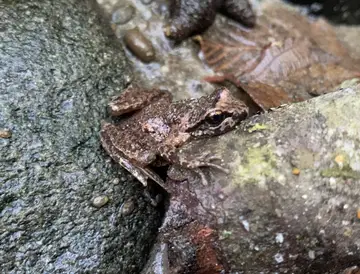
Poisons in skin glands: “Some amphibians, such as toads and newts, have poisons in their skin glands. They might harm you or your pets, if pets eat them.”
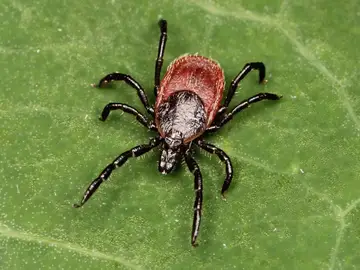
Disease (OSU Extension): “Other diseases spread by ticks have been found in Oregon including tick-borne relapsing fever, Rocky Mountain spotted fever, tularemia, and Colorado tick fever.”
Attacks on people are rare but have happened, including a fatal attack (ODFW): “Cougar attacks are rare but they have happened. Some have been fatal, such as a 2018 incident on Mt. Hood when a hiker was killed by a cougar.”
Can be infected with rabies (ODFW): “Striped skunks tend to be docile and unobtrusive; except during breeding season or when infected with rabies, they are not aggressive or belligerent.”
Attacks on humans are rare: “While coyote and wolf attacks on humans are rare, use caution, manage food and garbage safely, and leave dogs at home or keep them leashed and near you at all times.”
Attacks on humans are rare: “While coyote and wolf attacks on humans are rare, use caution, manage food and garbage safely, and leave dogs at home or keep them leashed and near you at all times.”
8 nonnative animals are named on Oregon's official lists (Oregon Department of Fish and Wildlife). The USGS Nonindigenous Aquatic Species database records 1 nonnative animal in our groups with an established population in Oregon.
Darker cells are the months with more open-licence observation records of each group in Oregon (GBIF). They show when people see and record these animals, not how many there are. The current month, this month, is highlighted.
Yes. The Western Rattlesnake is Oregon's only native rattlesnake (two subspecies: Northern Pacific and Great Basin). Oregon Department of Fish and Wildlife
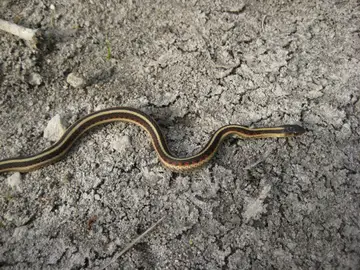
Are garter snakes venomous in Oregon?
No. ODFW calls Oregon's four garter snakes non-venomous and harmless to humans; their saliva may be mildly toxic to small prey. Oregon Department of Fish and Wildlife
Are there coral snakes in Oregon?
No. ODFW says California mountain kingsnakes are often killed when mistaken for coral snakes, which are native to the southeastern U.S. and as far west as southern Arizona. Oregon Department of Fish and Wildlife
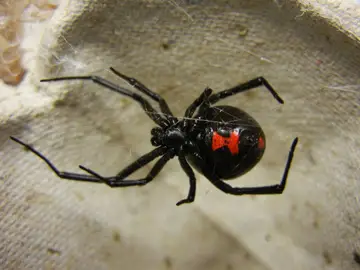
Yes. The western black widow (Latrodectus hesperus) lives in Oregon and is the most common venomous spider (OSU Extension Master Gardeners, Douglas County). Douglas County Master Gardeners
Are there scorpions in Oregon?
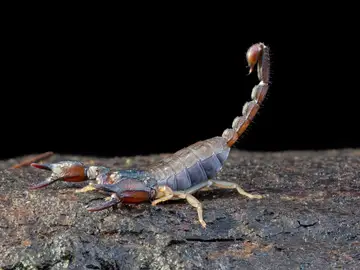
Yes. OSU Extension identifies the western forest scorpion (Uroctonus mordax) in western Oregon; the Oregon Poison Center says the Northwest Forest Scorpion has been found in the Cascade foothills. Oregon State University Extension Service
Are there alligators in Oregon?
Not established. USGS NAS has 2 Oregon records of American alligator (Clackamas 2008, Josephine 2009), both with status "failed", which NAS defines as a population that did not successfully reproduce or have overwinter survival. US Geological Survey, Nonindigenous Aquatic Species (NAS) database
Are there sharks off the oregon coast?
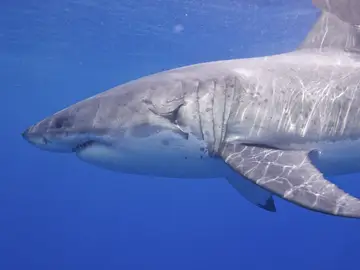
Yes. ODFW names salmon, white, spiny dogfish, soupfin, common thresher, basking and blue sharks among those found along the coast. Oregon Department of Fish and Wildlife
Are there cougars in Oregon?
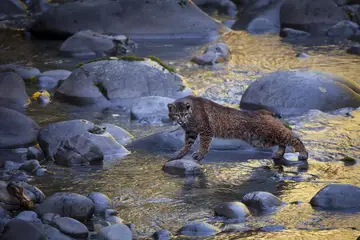
Yes. ODFW says Oregon has more than 6,000 cougars; attacks are rare but have happened, including a fatal attack on Mt. Hood in 2018. Oregon Department of Fish and Wildlife
Are there grizzly bears in Oregon?
No. ODFW: there are no grizzly bears in Oregon; any "brown" bear seen in Oregon is a black bear. Oregon has about 25,000 to 30,000 black bears. Oregon Department of Fish and Wildlife
Are there northern giant hornets (murder hornets) in Oregon?
OSU Extension (Aug 2022) said the northern giant hornet had not been detected outside the very northwest tip of Washington. Oregon State University Extension Service
Are there sea turtles in Oregon?
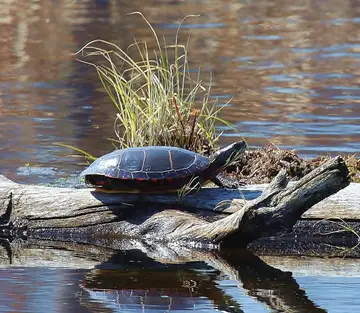
Yes. ODFW says three sea turtle species (loggerhead, green, leatherback) can be found in Oregon's coastal waters. Oregon Department of Fish and Wildlife
Sources
Wildlife Viewing. Oregon Department of Fish and Wildlife. undated page; checked November 3, 2026.
Living with Wildlife: Snakes. Oregon Department of Fish and Wildlife. undated page; checked November 3, 2026.Quoted passages (12)
“There are 15 native snake species in Oregon. Of these, only the Western Rattlesnake has poisonous venom that is dangerous to humans.”
“The Western Rattlesnake (Crotalus viridis) is Oregon’s only indigenous rattlesnake. Two sub-species are recognized in Oregon: the Northern Pacific Rattlesnake (C. v. oreganus) … and the Great Basin Rattlesnake (C. v. lutosus)”
“Garter snakes are non-venomous and harmless to humans, though the saliva of a garter snake may be mildly toxic to amphibians and other small animals.”
“These snakes are often killed when people mistakenly think they are venomous coral snakes native to the southeastern U.S. and as far west as southern Arizona.”
“While human deaths from rattlesnake bites are rare, a doctor should be consulted immediately as a bite can be lethal.”
“If you encounter a rattlesnake, move away.”
“Do not step or put your hands where you cannot see.”
“Emergence from hibernation can begin as early as March, depending on the species, location and weather.”
“Because they are particularly active and less wary during the breeding season, be on the lookout for them in spring.”
“They are most likely to be seen during the spring and fall when moving to and from hibernation sites.”
“Young hatch from July through September and fend for themselves after hatching, although there has been documentation of rattlesnake mothers defending their young for a period after birth.”
“It is most commonly seen during periods when slugs are active in the fall when the ground is wet but before it begins to freeze at night and in the spring before it becomes too dry.”
“…focusing on the black widow spider, the most common ven-omous spider in our area.”
“The Western Black Widow Spider, Latrodectus hesperus, is the species we have in Oregon.”
Bites & Stings. Oregon Poison Center, Oregon Health & Science University (poison-control program serving Oregon). undated page; checked November 3, 2026.Quoted passages (11)
“Widow spider envenomation may lead to symptoms that include painful muscle spasms, abdominal pain, and sweating.”
“Scorpions have long, curved tipped tails containing venom and pincers for hands.”
“Most scorpions found in the U.S. are less toxic than those found in other areas of the world, but may still be painful.”
“To treat a bee sting, avoid squeezing the stinger or venom sac which can release more venom into the skin.”
“If left untreated, the effects can be life threatening.”
“Mosquitos can transmit more serious diseases like Zika virus or West Nile virus (WNV).”
“Deer flies can transmit Tularemia, a bacterial infection.”
“To treat a venomous snake bite, seek medical treatment immediately by calling 9-1-1 or the poison center at 1-800-222-1222.”
“The Oregon Poison Center is here to help 24 hours a day, 7 days a week. Call 1-800-222-1222 to speak with a poison specialist.”
“If you are experiencing difficulty breathing or swallowing, seek immediate medical attention by calling 911 or the poison center at 1-800-222-1222.”
“Their peak season begins in the summer and continues through the fall.”
“Some amphibians, such as toads and newts, have poisons in their skin glands. They might harm you or your pets, if pets eat them.”
How to protect yourself from ticks (EM 9529). Oregon State University Extension Service. EM 9529, Published June 2021, Reviewed 2025; checked November 3, 2026.Quoted passages (2)
“Other diseases spread by ticks have been found in Oregon including tick-borne relapsing fever, Rocky Mountain spotted fever, tularemia, and Colorado tick fever.”
“Cases of Lyme disease from tick bites in Oregon are very rare.”
Living with cougars. Oregon Department of Fish and Wildlife. article dated March 27, 2026; checked November 3, 2026.Quoted passages (2)
“Cougar attacks are rare but they have happened. Some have been fatal, such as a 2018 incident on Mt. Hood when a hiker was killed by a cougar.”
“Oregon is home to more than 6,000 cougars, or mountain lions—a count that includes juveniles and adults.”
“In most cases, a bear will avoid human contact and attacks are uncommon. However, it is never safe to approach a bear.”
“While coyote and wolf attacks on humans are rare, use caution, manage food and garbage safely, and leave dogs at home or keep them leashed and near you at all times.”
“Striped skunks tend to be docile and unobtrusive; except during breeding season or when infected with rabies, they are not aggressive or belligerent.”
Spiny dogfish. Oregon Department of Fish and Wildlife. undated page; checked November 3, 2026.Quoted passages (1)
“When landing the fish, be careful of the venomous spines in front of the dorsal fins.”
Nutria (ODFW Wildlife Viewing). Oregon Department of Fish and Wildlife. undated page; checked November 3, 2026.Quoted passages (1)
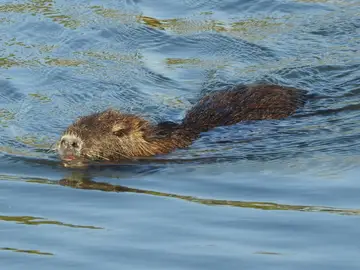
“In Oregon, the nutria is considered an invasive species.”
“The Rock pigeon is an invasive species introduced from Europe.”
Oregon Invasives Hotline. Oregon Invasives Hotline (Oregon Invasive Species Council; "Maintained by Oregon State University"). undated page; checked November 3, 2026.Quoted passages (1)
“Report potential invasive species you've found to the Online Hotline. Your submission will provide vital early detection information to the experts working to stop the next invasion before it starts!”
Sharks Fishing. Oregon Department of Fish and Wildlife. undated page; checked November 3, 2026.Quoted passages (1)
“Along Oregon's coast a number of species can be found including the salmon shark, white shark, spiny dogfish, soupfin shark, common thresher shark, basking shark, blue shark, and several others.”
Living with black bears. Oregon Department of Fish and Wildlife. undated page; checked November 3, 2026.Quoted passages (1)
“There are no grizzly bears in Oregon, so if you see a "brown" bear in Oregon, it is a black bear.”
Gray wolf (ODFW Wildlife Viewing). Oregon Department of Fish and Wildlife. undated page; checked November 3, 2026.Quoted passages (1)
“The gray wolf is an Oregon Conservation Strategy Species in the Blue Mountains, East Cascades, Klamath Mountains, Northern Basin and Range and the West Cascades ecoregions.”
“Throughout most of their geographic range in autumn, black bears fatten, become more and more lethargic, enter dens, and remain inactive throughout winter.”