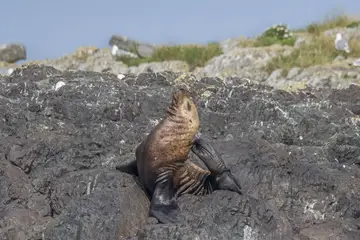
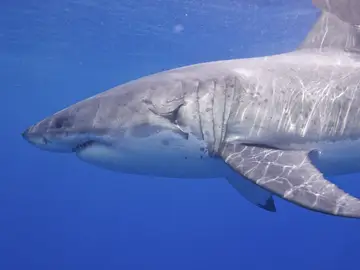
This page lists 22 sharks, rays and other marine animals: 4 from Oregon Department of Fish and Wildlife's ODFW Sharks and ODFW Wildlife Viewing: Marine Life and 18 named in other official sources.
1 is venomous by official accounts.
Not every species: this page shows the sharks, rays and other marine animals named in the official sources below. How lists are built.
Which sharks, rays and other marine animals can hurt you
Official sources single out these sharks, rays and other marine animals in Oregon, in their own words:
Spiny dogfish
Venomous dorsal-fin spines (ODFW). “When landing the fish, be careful of the venomous spines in front of the dorsal fins.” Oregon Department of Fish and Wildlife
All 22 sharks, rays and other marine animals
Venomous species first, then A to Z. Do not handle them.
Venom: “When landing the fish, be careful of the venomous spines in front of the dorsal fins.” (Oregon Department of Fish and Wildlife)
No confirmed photo of Basking shark
Basking shark
Not stated
Venom
No official source we use states whether this animal is venomous. That does not mean it is harmless: do not handle it.
Where in Oregon
Along Oregon's coast a number of species can be found including the salmon shark, white shark, spiny dogfish, soupfin shark, common thresher shark, basking shark, blue … Oregon Department of Fish and Wildlife
Conservation
Some species like the white shark and basking shark are prohibited from harvest.
No official source we use states whether this animal is venomous. That does not mean it is harmless: do not handle it.
Where in Oregon
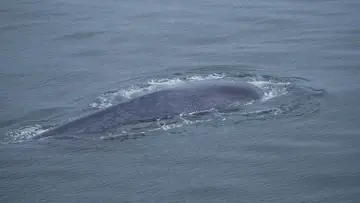
They migrate between feeding areas along the west coast of the United States and Canada and breeding and calving grounds off Mexico and Central America. Oregon Department of Fish and Wildlife
Conservation
They are thought to be among the most endangered of the great whales.
Habitat: Many enter rivers to feed and some individuals migrate far up the larger rivers. (Oregon Department of Fish and Wildlife)
No confirmed photo of Common thresher shark
Common thresher shark
Not stated
Venom
No official source we use states whether this animal is venomous. That does not mean it is harmless: do not handle it.
Where in Oregon
Along Oregon's coast a number of species can be found including the salmon shark, white shark, spiny dogfish, soupfin shark, common thresher shark, basking shark, blue … Oregon Department of Fish and Wildlife
The gray whale is an Oregon Conservation Strategy Species in the Nearshore ecoregion.
No confirmed photo of Harbor porpoise
Harbor porpoise
Phocoena phocoena
Not stated
Venom
No official source we use states whether this animal is venomous. That does not mean it is harmless: do not handle it.
Where in Oregon
Found throughout the temperate coastal waters of the Northern Hemisphere, harbor porpoises are the smallest of the Northern Pacific cetaceans growing to five feet and … Oregon Department of Fish and Wildlife
Conservation
The harbor porpoise is an Oregon Conservation Strategy Species in the Nearshore ecoregion.
No confirmed photo of Humpback whale
Humpback whale
Megaptera novaeangliae
Not stated
Venom
No official source we use states whether this animal is venomous. That does not mean it is harmless: do not handle it.
Where in Oregon
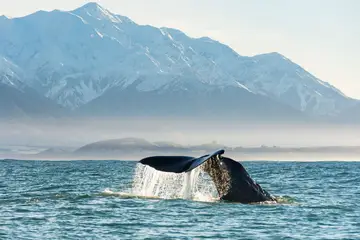
Humpback whales are seen during their north and south migrations from northern waters to breeding grounds near Hawaii and also feeding offshore during the summer. Oregon Department of Fish and Wildlife
No official source we use states whether this animal is venomous. That does not mean it is harmless: do not handle it.
Where in Oregon
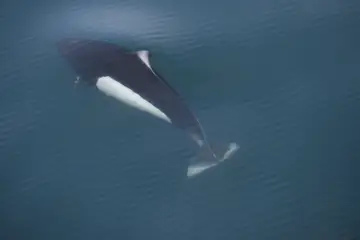
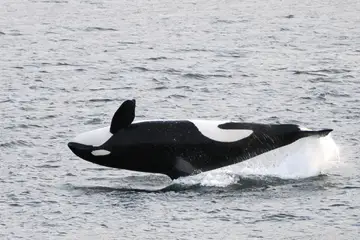
Seeing killer whales off the Oregon coast is a rare treat, but whale watchers can usually count on a pod of orca’s patrolling the coast in mid-April – just in time to … Oregon Department of Fish and Wildlife
Conservation
Killer whales are an Oregon Conservation Strategy Species in the Nearshore ecoregion.
No official source we use states whether this animal is venomous. That does not mean it is harmless: do not handle it.
Where in Oregon
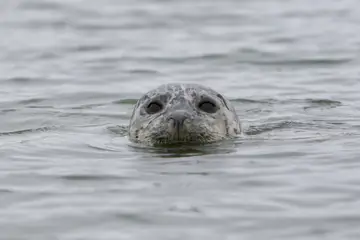
Pacific harbor seals have been observed ashore at 32 sites along the Oregon coast and in estuaries from the Columbia River to Hunter's Island, Curry County. Oregon Department of Fish and Wildlife
Conservation
The Pacific harbor seal is an Oregon Conservation Strategy Species in the Nearshore ecoregion.
What the sources say
Habitat: They commonly come ashore on estuarine mud flats, sandy beaches, rocky headlands and offshore rocks and islands. (Oregon Department of Fish and Wildlife)
No official source we use states whether this animal is venomous. That does not mean it is harmless: do not handle it.
Where in Oregon
These animals can be found from the tip of Baja to the Aleutians and the western Pacific from the Kuril Islands to Japan. Oregon Department of Fish and Wildlife
What the sources say
Habitat: They prefer deep, off-shore waters, so sightings are usually limited to recreational and commercial fishers. (Oregon Department of Fish and Wildlife)
No confirmed photo of Salmon shark
Salmon shark
Not stated
Venom
No official source we use states whether this animal is venomous. That does not mean it is harmless: do not handle it.
Where in Oregon
Along Oregon's coast a number of species can be found including the salmon shark, white shark, spiny dogfish, soupfin shark, common thresher shark, basking shark, blue … Oregon Department of Fish and Wildlife
No confirmed photo of Soupfin shark
Soupfin shark
Galeorhinus galeus
Not stated
Venom
No official source we use states whether this animal is venomous. That does not mean it is harmless: do not handle it.
Where in Oregon
Along Oregon's coast a number of species can be found including the salmon shark, white shark, spiny dogfish, soupfin shark, common thresher shark, basking shark, blue … Oregon Department of Fish and Wildlife
No official source we use states whether this animal is venomous. That does not mean it is harmless: do not handle it.
What the sources say
Habitat: Sperm whales inhabit all oceans of the world, and have been observed in Oregon waters from March through November. (Oregon Department of Fish and Wildlife)
No official source we use states whether this animal is venomous. That does not mean it is harmless: do not handle it.
Where in Oregon
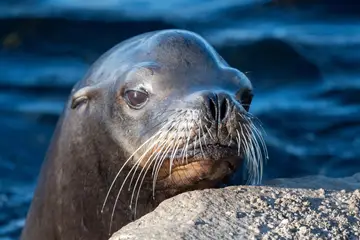
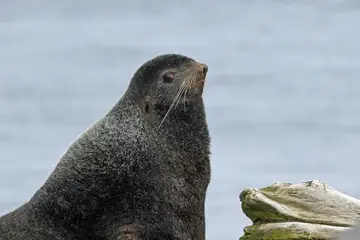
In surveys along the Oregon Coast, Steller sea lions were observed ashore at 10 sites extending from the South Jetty at the mouth of the Columbia River in Clatsop … Oregon Department of Fish and Wildlife
Conservation
The Steller sea lion is an Oregon Conservation Strategy Species in the Nearshore ecoregion.
When sharks, rays and other marine animals are active in Oregon
Records of sharks, rays and other marine animals in Oregon peak in July to October. They show when people record sharks, rays and other marine animals, not how many there are (about month bars).
JanFebMarAprMayJunJulAugSepOctNovDec
260 records of sharks, rays and other marine animals in Oregon by month (GBIF, CC0 and CC BY records).
Call 911 or Poison Help at 1-800-222-1222 right away. Poison Help connects you to your local poison center, any time of day.
How to report
Invasive species sightings: Oregon Invasives Hotline, oregoninvasiveshotline.org or 1-866-INVADER; wildlife conflicts: local ODFW office (ODFW main phone 503-947-6000) Oregon Invasives Hotline
What official sources say
Are there sharks off the oregon coast?
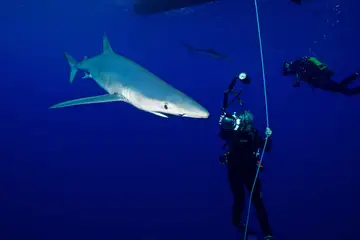
Yes. ODFW names salmon, white, spiny dogfish, soupfin, common thresher, basking and blue sharks among those found along the coast. Oregon Department of Fish and Wildlife
“Along Oregon's coast a number of species can be found including the salmon shark, white shark, spiny dogfish, soupfin shark, common thresher shark, basking shark, blue shark, and several others.”
Venom labels come only from official sources and link to them; "Not stated" never means harmless. How labels work.
Sources
Wildlife Viewing. Oregon Department of Fish and Wildlife. undated page; checked November 3, 2026.
Sharks Fishing. Oregon Department of Fish and Wildlife. undated page; checked November 3, 2026.Quoted passages (1)
“Along Oregon's coast a number of species can be found including the salmon shark, white shark, spiny dogfish, soupfin shark, common thresher shark, basking shark, blue shark, and several others.”
Great white shark. Oregon Department of Fish and Wildlife. undated page; checked November 3, 2026.
Spiny dogfish. Oregon Department of Fish and Wildlife. undated page; checked November 3, 2026.Quoted passages (1)
“When landing the fish, be careful of the venomous spines in front of the dorsal fins.”
Blue shark. Oregon Department of Fish and Wildlife. undated page; checked November 3, 2026.
Oregon Invasives Hotline. Oregon Invasives Hotline (Oregon Invasive Species Council; "Maintained by Oregon State University"). undated page; checked November 3, 2026.Quoted passages (1)
“Report potential invasive species you've found to the Online Hotline. Your submission will provide vital early detection information to the experts working to stop the next invasion before it starts!”