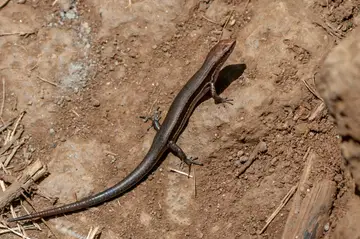
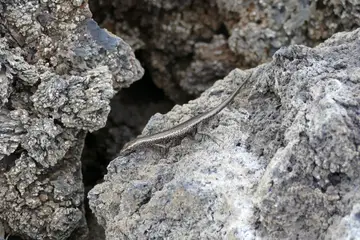
On this page All 12 lizards When they are active How to report About this list Sources National Park Service: Hawaii has a terrestrial herpetofauna consisting of six frogs, 19 lizards, one snake, and four turtles.
This page lists 12 lizards : 9 from National Park Service, Pacific Island Network's Species named in the NPS Hawaii National Parks Herpetofauna Inventory park species lists, HISC invasive species profiles and Bishop Museum cards and 3 named in other official sources.
12 are nonnative. National Park Service gives a total of 19; the 12 here are the lizards official sources name one by one.
All 12 lizards From A to Z.
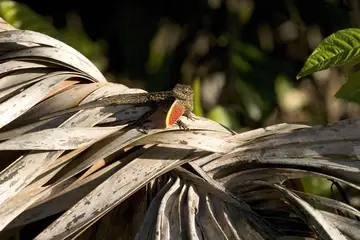
Photo: Everglades NPS from Homestead, Florida, United States · Public domain · Wikimedia Commons Anolis sagrei
Not stated Nonnative
Venom No official source we use states whether this animal is venomous. That does not mean it is harmless: do not handle it. Size About 5 to 8.5 inches (12 to 21 cm) total length (SREL); Alabama DCNR says up to 9 inches, and the tail may be longer than the body. How to recognize it Males have an orange or red throat fan (dewlap) with a white edge. Brown to grayish with whitish or yellowish markings on the back; variable dark spots, half moons, triangles or lines. Fairly stout body and a shorter head than the green anole; slightly expanded toe pads. Where in Hawaii O'ahu (Bishop Museum card) Bishop Museum
J F M A M J J A S O N D
807 records by month. Full Brown Anole guide
No confirmed photo of Common House Gecko Common House Gecko Hemidactylus frenatus
Not stated Nonnative
Venom No official source we use states whether this animal is venomous. That does not mean it is harmless: do not handle it. Where in Hawaii NPS park lists (2005): HALE, HAVO, KALA (Present in Park) National Park Service, Pacific Island Network No confirmed photo of Indo-Pacific Gecko Indo-Pacific Gecko Hemidactylus garnotii
Not stated Nonnative
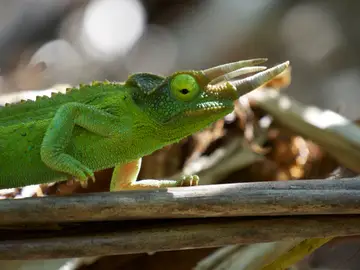
Venom No official source we use states whether this animal is venomous. That does not mean it is harmless: do not handle it. Where in Hawaii NPS park lists (2005): HALE, HAVO, KALA National Park Service, Pacific Island Network Photo: Nils · CC BY 4.0 · iNaturalist Jackson's Chameleon Chamaeleo jacksonii
Not stated Invasive
Venom No official source we use states whether this animal is venomous. That does not mean it is harmless: do not handle it. Where in Hawaii Hawai'i Island, Maui, O'ahu (HISC); not established on Kaua'i or Lana'i (report sightings there) Hawaii DLNR Conservation Hawaii Injurious Wildlife (HAR 13-124 Exhibit 5) Lepidodactylus lugubris
Not stated Nonnative
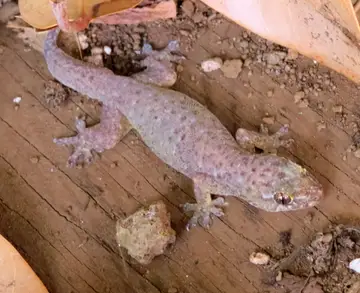
Venom No official source we use states whether this animal is venomous. That does not mean it is harmless: do not handle it. Where in Hawaii NPS park lists (2005): HALE, HAVO, KALA National Park Service, Pacific Island Network Photo: Steve Wells · CC0 1.0 · iNaturalist Gehyra mutilata
Not stated Nonnative
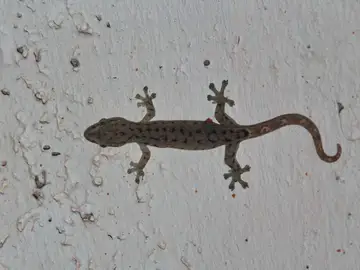
Venom No official source we use states whether this animal is venomous. That does not mean it is harmless: do not handle it. Where in Hawaii NPS park lists (2005): HALE, HAVO, KALA National Park Service, Pacific Island Network Photo: ian_dugdale · CC BY 4.0 · Wikimedia Commons Hemiphyllodactylus typus
Not stated Nonnative
Venom No official source we use states whether this animal is venomous. That does not mean it is harmless: do not handle it. Where in Hawaii NPS park lists (2005): HALE, KALA (present); HAVO (probably present) National Park Service, Pacific Island Network Photo: Niki Robertson · CC BY 4.0 · iNaturalist Lampropholis delicata
Not stated Nonnative
Venom No official source we use states whether this animal is venomous. That does not mean it is harmless: do not handle it. Where in Hawaii NPS park lists (2005): HALE, HAVO, KALA National Park Service, Pacific Island Network Photo: Amy MacPherson · CC BY-SA 4.0 · iNaturalist · resized Cryptoblepharus poecilopleurus
Not stated Nonnative
Venom No official source we use states whether this animal is venomous. That does not mean it is harmless: do not handle it. Where in Hawaii NPS park lists (2005): HALE, HAVO (present); KALA (probably present) National Park Service, Pacific Island Network Lipinia noctua
Not stated Nonnative
Venom No official source we use states whether this animal is venomous. That does not mean it is harmless: do not handle it. Where in Hawaii NPS park list (2005): KALA (Kalaupapa, Moloka'i) National Park Service, Pacific Island Network Emoia cyanura
Not stated Nonnative
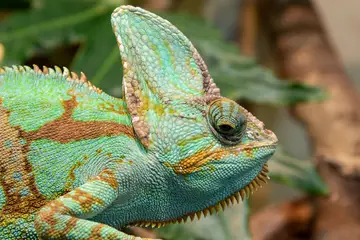
Venom No official source we use states whether this animal is venomous. That does not mean it is harmless: do not handle it. Where in Hawaii NPS park list (2005): KALA 'Encroaching' (documented adjacent to park) National Park Service, Pacific Island Network Photo: Σ64 · CC BY 4.0 · Wikimedia Commons Veiled Chameleon Chamaeleo calyptratus
Not stated Invasive
Venom No official source we use states whether this animal is venomous. That does not mean it is harmless: do not handle it. Where in Hawaii Maui (Upcountry); single 2004 sighting on Kaua'i; 'Oahu, Molokai, Big Island: Not known to be present at this time.' Hawaii DLNR Conservation Hawaii Injurious Wildlife (HAR 124) When lizards are active in Hawaii Records of lizards in Hawaii peak in February to March, May to June, August to September and December. They show when people record lizards, not how many there are (about month bars ).
Jan Feb Mar Apr May Jun Jul Aug Sep Oct Nov Dec
3,026 records of lizards in Hawaii by month (GBIF, CC0 and CC BY records). How to report Invasive species (including any snake sighting): Pest Hotline 808-643-PEST (643-7378) or online at 643pest.org. Hawaii DLNR
Sources About Us (Division of Forestry and Wildlife) . Hawaii DLNR Division of Forestry and Wildlife. undated page; checked November 3, 2026. Hawaii National Parks Herpetofauna Inventory: park species lists for Haleakala (HALE), Hawaii Volcanoes (HAVO), Kalaupapa (KALA) . National Park Service, Pacific Island Network (inventory data by F. Kraus). 2005-09; checked November 3, 2026. Hawaii National Parks Herpetofauna Inventory Dataset (data.gov catalog record) . National Park Service (catalog record on data.gov). dataset last updated 2005-09-22; checked November 3, 2026. Quoted passages (1) “Hawaii has a terrestrial herpetofauna consisting of six frogs, 19 lizards, one snake, and four turtles.” Jackson's Chameleon (invasive species profile) . Hawaii Invasive Species Council (Hawaii DLNR). undated page; checked November 3, 2026. Veiled Chameleon (invasive species profile) . Hawaii Invasive Species Council (Hawaii DLNR). undated page; checked November 3, 2026. Good Guys & Bad Guys card: Knight Anole . Bishop Museum (Hawaii Biological Survey). undated page; checked November 3, 2026. Examples of Invasive Species in Hawaii . Hawaii Invasive Species Council (Hawaii DLNR). undated page; checked November 3, 2026. Quoted passages (1) “Report Invasive Species Online at 643pest.org Report Invasive Species by Phone: 808 643-PEST” GBIF.org occurrence records, human observations licensed CC0 1.0 or CC BY 4.0 only, accessed November 3, 2026. The datasets behind these counts are listed on our Sources page.