States Wildlife

Hawaii Frogs and Toads: Pictures & ID Guide

Last checked November 3, 2026 against official sources.

On this page
  1. Which frogs and toads can hurt you
  2. All 14 frogs and toads
  3. Lookalikes
  4. When they are active
  5. If you are bitten or stung
  6. How to report
  7. About this list
  8. Sources

National Park Service: Hawaii has a terrestrial herpetofauna consisting of six frogs, 19 lizards, one snake, and four turtles.

This page lists 14 species: all from USGS Nonindigenous Aquatic Species (NAS) database's USGS Nonindigenous Aquatic Species database: Species List, Amphibians, State = Hawaii. 14 are nonnative. National Park Service gives a total of 6; the 14 here are the frogs and toads official sources name one by one.

Which frogs and toads can hurt you

Official sources single out these frogs and toads in Hawaii, in their own words:

  • Cane Toad
    Photo: Maximilian Paradiz from Amsterdam, Netherlands · CC BY 2.0 · Wikimedia Commons

    Cane Toad

    Toxic. “…this toad soon spread beyond the canefileds and into gardens and other urban areas where it can cause illness or even death if licked by pets or small children.” Bishop Museum

All 14 frogs and toads

From A to Z. Do not handle them.

American Bullfrog
Photo: Paul Danese · CC BY-SA 4.0 · Wikimedia Commons · resized

American Bullfrog

Lithobates catesbeianus

Not stated Nonnative

Venom
No official source we use states whether this animal is venomous. That does not mean it is harmless: do not handle it.
Size
Usually 6 to 8 inches long (NCWRC); can reach 8 inches or more and weigh over 2 pounds (CDFW). Missouri gives 3.5 to 6 inches snout to vent, occasionally to 8.75.
How to recognize it
  • No ridge (dorsolateral fold) down each side of the back
  • Large round eardrum: about twice the eye in males, about eye-sized in females
  • Fully webbed hind feet, longest toe extends past the webbing
47 records by month.

Full American Bullfrog guide

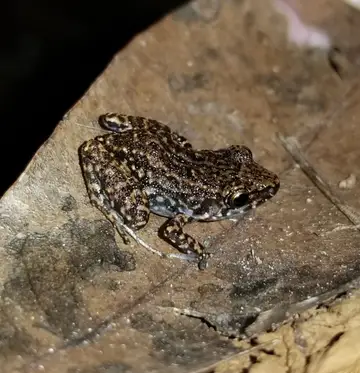
Black-spotted Frog
Photo: ノボホショコロトソ · CC BY 4.0 · Wikimedia Commons

Black-spotted Frog

Pelophylax nigromaculatus

Not stated Nonnative

Venom
No official source we use states whether this animal is venomous. That does not mean it is harmless: do not handle it.
No confirmed photo of California Toad

California Toad

Anaxyrus boreas halophilus

Not stated Nonnative

Venom
No official source we use states whether this animal is venomous. That does not mean it is harmless: do not handle it.
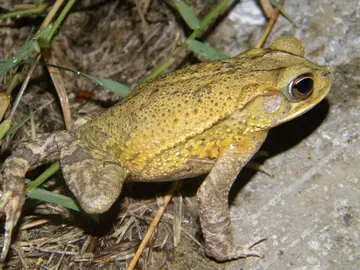
Cane Toad
Photo: Maximilian Paradiz from Amsterdam, Netherlands · CC BY 2.0 · Wikimedia Commons

Cane Toad

Rhinella marina

Not stated Nonnative

Venom
No official source we use states whether this animal is venomous. That does not mean it is harmless: do not handle it.
Danger to people
“…this toad soon spread beyond the canefileds and into gardens and other urban areas where it can cause illness or even death if licked by pets or small children.” Bishop Museum
Size
Florida FWC: generally 6 to 9 inches long. UF/IFAS: adults are 3 to 6 inches and some reach 8 or 9 inches.
How to recognize it
  • Large glands behind the eyes that angle down onto the shoulders and give off a milky-white toxin
  • Glands are large and somewhat triangular, tapering back to a point
  • No knobs or crests on top of the head; a ridge around the eyes and above the nose
Where in Hawaii
Bishop Museum: widely distributed in lowlands of all main islands except Lana'i USGS Nonindigenous Aquatic Species (NAS) database
250 records by month.

Full Cane Toad guide

Coqui
Photo: Cricket Raspet · CC BY 4.0 · Wikimedia Commons

Coqui

Eleutherodactylus coqui

Not stated Invasive

Venom
No official source we use states whether this animal is venomous. That does not mean it is harmless: do not handle it.
Size
1 to 2 inches (HISC; CDFW: average 1 to 2 inches, females slightly larger). USGS: 33 to 57 mm snout to rear, Florida animals slightly smaller.
How to recognize it
  • Loud, whistling "ko-KEE" call of the male, heard at night
  • Round body, broad rounded snout and distinct toe pads
  • Eyes gold to brown; large toes for climbing and no webbing on the feet
Conservation
Hawaii Injurious Wildlife (Exhibit 5, Chapter 13-124)
576 records by month.

Full Coqui guide

No confirmed photo of European Toad

European Toad

Bufo bufo

Not stated Nonnative

Venom
No official source we use states whether this animal is venomous. That does not mean it is harmless: do not handle it.
No confirmed photo of Green and Black Poison Dart Frog

Green and Black Poison Dart Frog

Dendrobates auratus

Not stated Nonnative

Venom
No official source we use states whether this animal is venomous. That does not mean it is harmless: do not handle it.
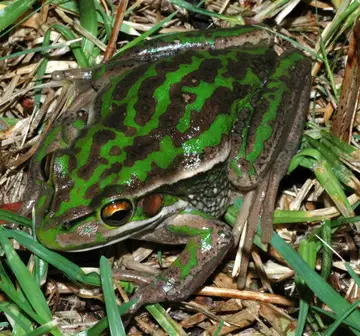
Green and Golden Bell Frog
Photo: Froggydarb at English Wikipedia · CC BY-SA 3.0 · Wikimedia Commons · resized

Green and Golden Bell Frog

Ranoidea aurea

Not stated Nonnative

Venom
No official source we use states whether this animal is venomous. That does not mean it is harmless: do not handle it.
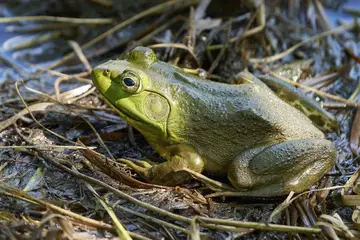
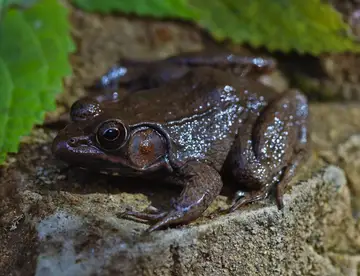
Green Frog
Photo: Peter Paplanus from St. Louis, Missouri · CC BY 2.0 · Wikimedia Commons

Green Frog

Lithobates clamitans

Not stated Nonnative

Venom
No official source we use states whether this animal is venomous. That does not mean it is harmless: do not handle it.
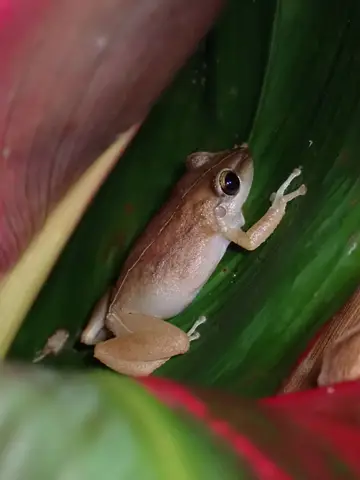
Greenhouse Frog
Photo: Rachel Crane · CC BY 4.0 · iNaturalist

Greenhouse Frog

Eleutherodactylus planirostris

Not stated Nonnative

Venom
No official source we use states whether this animal is venomous. That does not mean it is harmless: do not handle it.
No confirmed photo of Japanese Wrinkled Frog

Japanese Wrinkled Frog

Glandirana rugosa

Not stated Nonnative

Venom
No official source we use states whether this animal is venomous. That does not mean it is harmless: do not handle it.
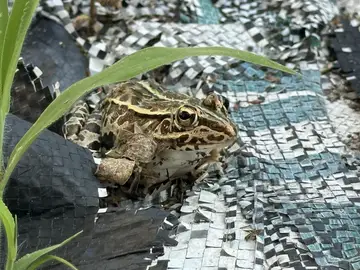
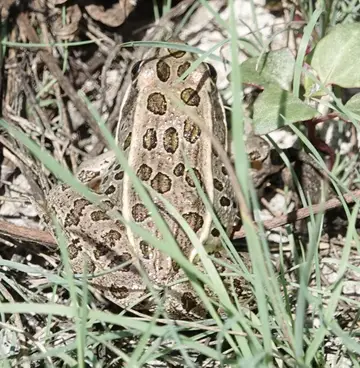
Northern Leopard Frog
Photo: Colin Croft · CC BY 4.0 · iNaturalist

Northern Leopard Frog

Lithobates pipiens

Not stated Nonnative

Venom
No official source we use states whether this animal is venomous. That does not mean it is harmless: do not handle it.
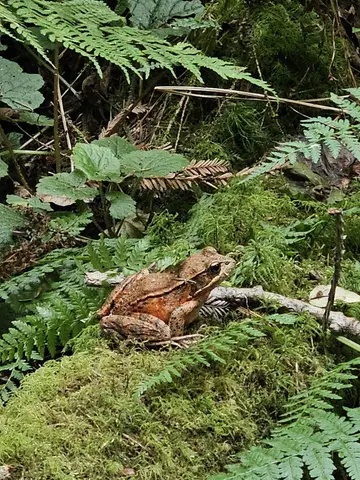
Northern Red-legged Frog
Photo: Mandy Hackney · CC BY 4.0 · iNaturalist

Northern Red-legged Frog

Rana aurora

Not stated Nonnative

Venom
No official source we use states whether this animal is venomous. That does not mean it is harmless: do not handle it.
No confirmed photo of Yellow-banded Poison Dart Frog

Yellow-banded Poison Dart Frog

Dendrobates leucomelas

Not stated Nonnative

Venom
No official source we use states whether this animal is venomous. That does not mean it is harmless: do not handle it.

Frogs and Toads people confuse

Coqui (common coqui) or Greenhouse Frog?

Coqui (common coqui)
Photo: Cricket Raspet · CC BY 4.0 · Wikimedia Commons

Coqui (common coqui) Not stated

Greenhouse Frog
Photo: Rachel Crane · CC BY 4.0 · iNaturalist

Greenhouse Frog Not stated

USGS: the coqui has gold, golden-brown or brown eyes, not red like the greenhouse frog, and has toe pads for climbing.

American Bullfrog or Green Frog (Bronze Frog)?

American Bullfrog
Photo: Paul Danese · CC BY-SA 4.0 · Wikimedia Commons · resized

American Bullfrog Not stated

Green Frog (Bronze Frog)
Photo: Peter Paplanus from St. Louis, Missouri · CC BY 2.0 · Wikimedia Commons

Green Frog (Bronze Frog) Not stated

Bullfrogs lack the dorsolateral ridges that green frogs have.

Photos show typical adults; individuals vary. Never get close to compare.

When frogs and toads are active in Hawaii

Records of frogs and toads in Hawaii peak in February, June to September and November to December. They show when people record frogs and toads, not how many there are (about month bars).

958 records of frogs and toads in Hawaii by month (GBIF, CC0 and CC BY records).

If you are bitten or stung

Call 911 or Poison Help at 1-800-222-1222 right away. Poison Help connects you to your local poison center, any time of day.

Official advice from Bishop Museum:

  • Cane toads can sicken or kill pets or small children who lick them Bishop Museum

How to report

Invasive species (including any snake sighting): Pest Hotline 808-643-PEST (643-7378) or online at 643pest.org. Hawaii DLNR

About this list

The species list comes from USGS Nonindigenous Aquatic Species (NAS) database: Species List, Amphibians, State = Hawaii (USGS Nonindigenous Aquatic Species (NAS) database, 2026-11-03 (live NAS query); count from NPS data.gov record, 2005).

Venom labels come only from official sources and link to them; "Not stated" never means harmless. How labels work.

"Nonnative" and "Invasive" follow the wording of the source list. See invasive species in Hawaii.

Want a paper copy? Print the Hawaii frogs and toads ID chart.

Sources

  1. About Us (Division of Forestry and Wildlife). Hawaii DLNR Division of Forestry and Wildlife. undated page; checked November 3, 2026.
  2. NAS Species List: Amphibians, Hawaii. USGS Nonindigenous Aquatic Species (NAS) database. database queried November 3, 2026; checked November 3, 2026.
  3. Hawaii National Parks Herpetofauna Inventory Dataset (data.gov catalog record). National Park Service (catalog record on data.gov). dataset last updated 2005-09-22; checked November 3, 2026.
    Quoted passages (1)
    “Hawaii has a terrestrial herpetofauna consisting of six frogs, 19 lizards, one snake, and four turtles.”
  4. Good Guys & Bad Guys card: Cane Toad. Bishop Museum (Hawaii Biological Survey). undated page; checked November 3, 2026.
    Quoted passages (2)
    “…this toad soon spread beyond the canefileds and into gardens and other urban areas where it can cause illness or even death if licked by pets or small children.”
    “…where it can cause illness or even death if licked by pets or small children.”
  5. Coqui frog (invasive species profile). Hawaii Invasive Species Council (Hawaii DLNR). undated page; checked November 3, 2026.
    Quoted passages (2)
    “It has a round body shape and a broad rounded snout with distinctive toe pads.”
    “The coqui is a small, nocturnal, 1-2 inch tree frog with colors varying from tan to dark brown.”
  6. Examples of Invasive Species in Hawaii. Hawaii Invasive Species Council (Hawaii DLNR). undated page; checked November 3, 2026.
    Quoted passages (1)
    “Report Invasive Species Online at 643pest.org Report Invasive Species by Phone: 808 643-PEST”
  7. GBIF.org occurrence records, human observations licensed CC0 1.0 or CC BY 4.0 only, accessed November 3, 2026. The datasets behind these counts are listed on our Sources page.