Invasive and nonnative animals in North Carolina
Last checked November 3, 2026 against official sources.
On this page
- Nonindigenous Aquatic Species - species list for North Carolina (by group)
- Feral Swine (NCWRC species page)
- Nutria (NCWRC species page)
- Invasive Apple Snails Now Confirmed in North Carolina (press release)
- Red Imported Fire Ant in North Carolina
- NCDA&CS confirms first finding of yellow-legged hornet in the state, asks beekeepers to watch for predator hornet (press release)
- USGS established records
- How to report
- Sources
45 nonnative animals are named on 6 official lists for North Carolina: “Nonindigenous Aquatic Species - species list for North Carolina (by group)” (US Geological Survey, Nonindigenous Aquatic Species (NAS) database), “Feral Swine (NCWRC species page)” (N.C. Wildlife Resources Commission), “Nutria (NCWRC species page)” (N.C. Wildlife Resources Commission), “Invasive Apple Snails Now Confirmed in North Carolina (press release)” (N.C. Wildlife Resources Commission), “Red Imported Fire Ant in North Carolina” (NC State Extension) and “NCDA&CS confirms first finding of yellow-legged hornet in the state, asks beekeepers to watch for predator hornet (press release)” (N.C. Department of Agriculture and Consumer Services).
The USGS Nonindigenous Aquatic Species database records an established population in North Carolina for 2 nonnative animals in the groups this guide covers.
To report a sighting, see how to report.
Being on a list of nonnative species does not always mean an animal is harmful or established: each list below is described in its source's terms. A sighting of a listed animal is still worth reporting to the agency.
Nonindigenous Aquatic Species - species list for North Carolina (by group)
U.S. Geological Survey, Nonindigenous Aquatic Species (NAS) database, database queried November 3, 2026. 40 animals.
-
a calanoid copepod Eurytemora affinis
-
a copepod Elaphoidella bidens bidens
-
a waterflea Daphnia lumholtzi
-
African Clawed Frog Xenopus laevis
-
anchor worm Lernaea cyprinacea
-
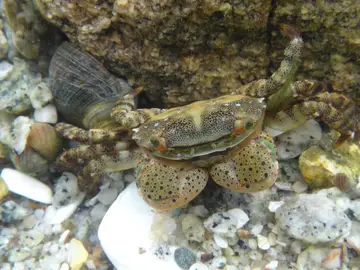
Photo: Alie / C.A. Kratzer · CC BY-SA 4.0 · iNaturalist · resized Asian shore crab Hemigrapsus sanguineus
-
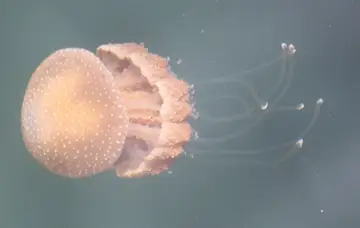
Photo: Millie Basden · CC BY 4.0 · iNaturalist Australian spotted jellyfish Phyllorhiza punctata
-
bloodfluke planorb Biomphalaria glabrata
-
Blotched Snakehead Channa maculata
-
Blue Tilapia Oreochromis aureus
-
channeled applesnail Pomacea canaliculata
-
Chinese mysterysnail Cipangopaludina chinensis
-
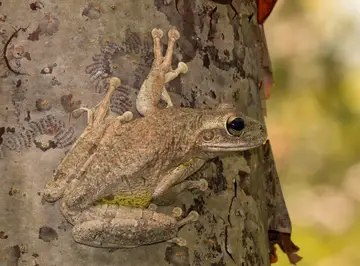
Photo: Charles J. Sharp · CC BY-SA 4.0 · Wikimedia Commons · resized Cuban Treefrog Osteopilus septentrionalis
-
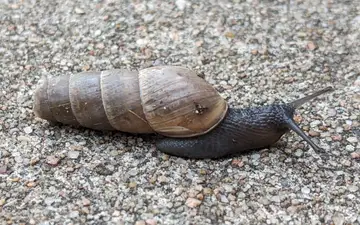
Photo: Adam Kranz · CC0 1.0 · iNaturalist decollate snail Rumina decollata
-
East Asian river prawn Macrobrachium nipponense
-
freshwater golden clam Corbicula fluminea
-
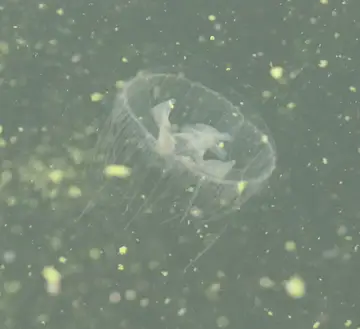
Photo: Zihao Wang · CC BY 4.0 · iNaturalist freshwater jellyfish Craspedacusta sowerbii
-
giant applesnail Pomacea maculata
-
giant tiger prawn Penaeus monodon
-
Goldfish Carassius auratus
-
Grass Carp Ctenopharyngodon idella
-
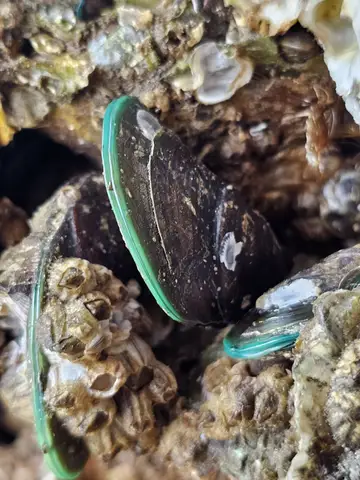
Photo: Marisa · CC BY 4.0 · iNaturalist green mussel Perna viridis
-
Indo-Pacific swimming crab Charybdis hellerii
-
Japanese mysterysnail Cipangopaludina japonica
-
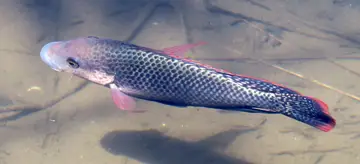
Photo: Steve Wells · CC0 1.0 · iNaturalist Mozambique Tilapia Oreochromis mossambicus
-
mysterysnail Cipangopaludina sp.
-
Nile Tilapia Oreochromis niloticus
-
Northern Snakehead Channa argus
-
Corbicula sp.
-
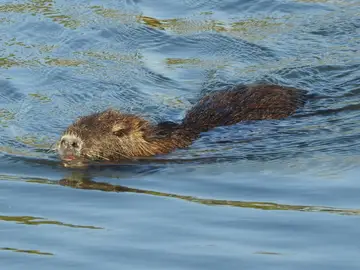
Photo: Sam Kieschnick · CC BY 4.0 · iNaturalist nutria Myocastor coypus
-
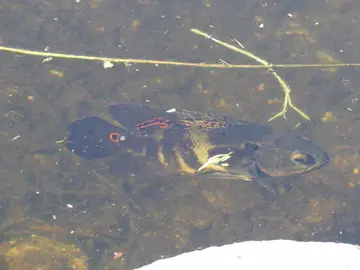
Photo: botanygirl · CC BY 4.0 · iNaturalist Oscar Astronotus ocellatus
-
pirapitinga, red-bellied pacu Piaractus brachypomus
-
Pond Loach Misgurnus anguillicaudatus
-
red piranha Pygocentrus nattereri
-
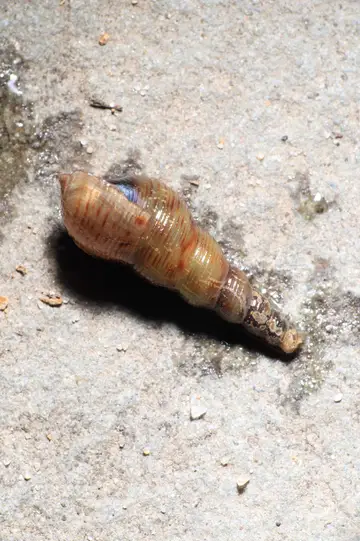
Photo: Steven Bodzin · CC BY 4.0 · iNaturalist red-rim melania Melanoides tuberculata
-
Redbelly Tilapia Tilapia zillii
-
striate peaclam Pisidium punctiferum
-
Titan acorn barnacle Megabalanus coccopoma
-
unidentified pacu Colossoma or Piaractus sp.
-
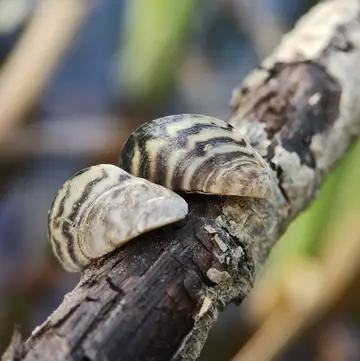
Photo: Harukano · CC0 1.0 · iNaturalist zebra mussel Dreissena polymorpha

Feral Swine (NCWRC species page)
N.C. Wildlife Resources Commission, undated page. 1 animal.
-
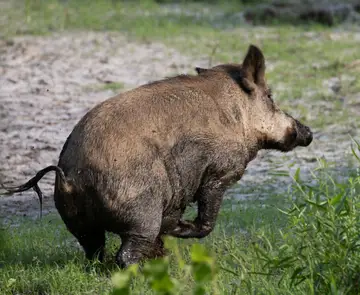
Photo: Cullen Hanks · CC BY 4.0 · iNaturalist Feral swine Sus scrofa
Disjunct populations statewide N.C. Wildlife Resources Commission
Nutria (NCWRC species page)
N.C. Wildlife Resources Commission, undated page. 1 animal.
-
Photo: Sam Kieschnick · CC BY 4.0 · iNaturalist Nutria Myocastor coypus
Locally abundant N.C. Wildlife Resources Commission
Invasive Apple Snails Now Confirmed in North Carolina (press release)
N.C. Wildlife Resources Commission, October 2, 2023. 1 animal.
-
Apple snails Pomacea sp.
Lumber River, Lumberton (as of 2023-10-02 per source) N.C. Wildlife Resources Commission
Red Imported Fire Ant in North Carolina
NC State Extension (N.C. Cooperative Extension, NC State University), Publication date: June 20, 2017. 1 animal.
-
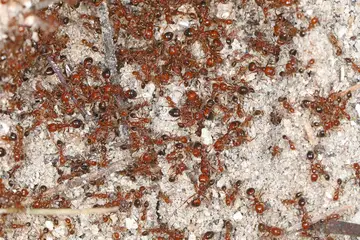
Photo: Judy Gallagher · CC BY 2.0 · Wikimedia Commons Red imported fire ant Solenopsis invicta
At least 75 of 100 counties (source reviewed 2019-04-13) NC State Extension

NCDA&CS confirms first finding of yellow-legged hornet in the state, asks beekeepers to watch for predator hornet (press release)
N.C. Department of Agriculture and Consumer Services, July 27, 2026. 1 animal.
-
Yellow-legged hornet Vespa velutina
Matthews; additional adults near the Union and Mecklenburg county line (2026-07-27) N.C. Department of Agriculture and Consumer Services
Established in North Carolina, per USGS records
The U.S. Geological Survey's Nonindigenous Aquatic Species (NAS) database tracks nonnative aquatic animals. These have at least one record with the status "established" in North Carolina, which USGS defines as a population showing evidence of reproduction and overwinter survival.
| Animal | Group | First record | Latest record | Counties |
|---|---|---|---|---|
| Lionfish Pterois volitans/miles | Sharks and Marine Life | 2000 | 2019 | 3 |
| Nutria Myocastor coypus | Mammals | 1958 | 2021 | 17 |
Source: U.S. Geological Survey. [2026]. Nonindigenous Aquatic Species Database. Gainesville, Florida. Accessed [11/3/2026]. "Native Transplant" animals are native elsewhere in the US but not in North Carolina.
How to report a sighting in North Carolina
NC Wildlife Helpline (NCWRC), Monday-Friday 8 a.m.-5 p.m.: 866-318-2401; email [email protected]. Aquatic invasive species: NCWRC Aquatic Nuisance Species Reporting Tool (https://survey123.arcgis.com/share/710337fbf02140599fd788ebfdd72744). Rattlesnake sightings: [email protected] or HerpMapper. Wildlife violations / alligator emergencies: 800-662-7137. Yellow-legged hornet: www.ncagr.gov/YLH (NCDA&CS). N.C. Wildlife Resources Commission
Do not try to catch or handle the animal. A photo taken from a safe distance, the place and the date help the agency.
Sources
- Feral Swine (NCWRC species page). N.C. Wildlife Resources Commission. undated page; checked November 3, 2026.
Quoted passages (1)
“Due to these factors, they are considered invasive and undesirable as free-ranging animals on North Carolina’s landscape.”
- Nutria (NCWRC species page). N.C. Wildlife Resources Commission. undated page; checked November 3, 2026.
Quoted passages (1)
“Nutrias are a non-native rodent that were imported into the United States from South America in the early 1900s as a way to control noxious plant species.”
- Invasive Apple Snails Now Confirmed in North Carolina (press release). N.C. Wildlife Resources Commission. October 2, 2023; checked November 3, 2026.
Quoted passages (1)
“The N.C. Wildlife Resources Commission (NCWRC) announced today that Apple Snails, a harmful invasive aquatic species, have been identified along the Lumber River in Lumberton.”
- Red Imported Fire Ant in North Carolina. NC State Extension (N.C. Cooperative Extension, NC State University). Publication date: June 20, 2017; checked November 3, 2026.
Quoted passages (1)
“In North Carolina, imported fire ants can be found in at least 75 of our 100 counties, including isolated areas in western North Carolina.”
- NCDA&CS confirms first finding of yellow-legged hornet in the state, asks beekeepers to watch for predator hornet (press release). N.C. Department of Agriculture and Consumer Services. July 27, 2026; checked November 3, 2026.
Quoted passages (1)
“The North Carolina Department of Agriculture and Consumer Services has confirmed the first established presence of the invasive yellow-legged hornet (Vespa velutina) in the state, in Matthews.”
- Nonindigenous Aquatic Species - species list for North Carolina (by group). U.S. Geological Survey, Nonindigenous Aquatic Species (NAS) database. database queried November 3, 2026; checked November 3, 2026.
- Have a Wildlife Problem? N.C. Wildlife Resources Commission. undated page; checked November 3, 2026.
Quoted passages (1)
“The Wildlife Helpline is open Monday through Friday, 8 a.m. to 5 p.m. Call: 866-318-2401”
- U.S. Geological Survey. [2026]. Nonindigenous Aquatic Species Database. Gainesville, Florida. Accessed [11/3/2026].