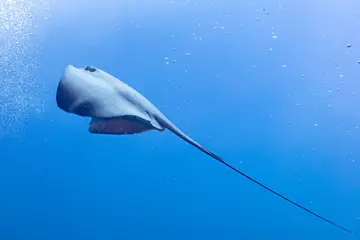
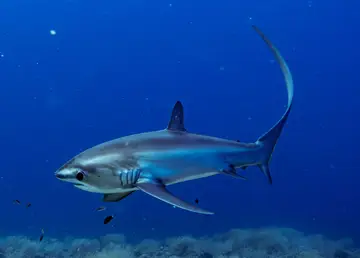
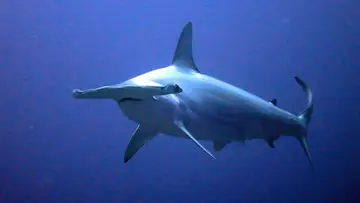
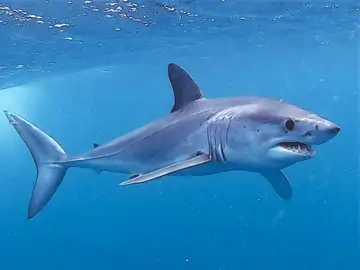
On this page Which sharks, rays and other marine animals can hurt you All 54 sharks, rays and other marine animals Lookalikes When they are active If you are bitten or stung How to report What official sources say About this list Sources Hawaii DLNR Division of Aquatic Resources: There are about forty species of sharks that occur in Hawaiian waters, ranging in size from the deep-water pygmy shark (about 8 inches) to the whale shark (up to 50 feet or more).
This page lists 54 sharks, rays and other marine animals : 53 from Hawaii DLNR Division of Aquatic Resources's Hawai'i Sharks: Species List, Hawaii DLNR Division of Aquatic Resources and 1 named in other official sources.
1 is venomous by official accounts.
Which sharks, rays and other marine animals can hurt you Official sources single out these sharks, rays and other marine animals in Hawaii, in their own words:
All 54 sharks, rays and other marine animals Venomous species first, then A to Z. Do not handle them.
Find by name
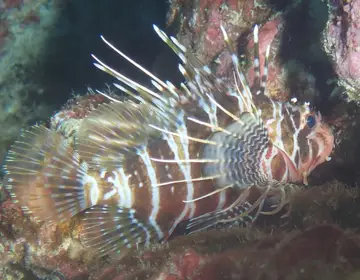
Photo: jeyre · CC BY 4.0 · iNaturalist Lionfish (Hawaiian lionfish) Pterois sphex
Venomous per Bishop Museum
Where in Hawaii All the main islands (Bishop Museum) Bishop Museum What the sources say Venom: “Its long white spines are extremely venomous and can cause great pain if touched.” (Bishop Museum)
Habitat: Caves or crevices by day (Bishop Museum)
No confirmed photo of Bigeye sand tiger shark Bigeye sand tiger shark Odontaspis noronhai
Not stated
Venom No official source we use states whether this animal is venomous. That does not mean it is harmless: do not handle it. Where in Hawaii Hawaiian waters Hawaii DLNR Division of Aquatic Resources No confirmed photo of Bigeye thresher shark Bigeye thresher shark Alopias superciliosus
Not stated
Venom No official source we use states whether this animal is venomous. That does not mean it is harmless: do not handle it. Where in Hawaii Hawaiian waters Hawaii DLNR Division of Aquatic Resources No confirmed photo of Bignose shark Bignose shark Carcharhinus altimus
Not stated
Venom No official source we use states whether this animal is venomous. That does not mean it is harmless: do not handle it. Where in Hawaii Hawaiian waters Hawaii DLNR Division of Aquatic Resources No confirmed photo of Blackbelly lantern shark Blackbelly lantern shark Etmopterus lucifer
Not stated
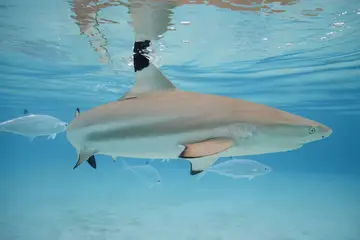
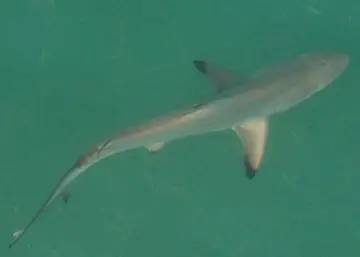
Venom No official source we use states whether this animal is venomous. That does not mean it is harmless: do not handle it. Where in Hawaii Hawaiian waters Hawaii DLNR Division of Aquatic Resources Photo: Charles J. Sharp · CC BY-SA 4.0 · Wikimedia Commons · resized Blacktip reef shark Carcharhinus melanopterus
Not stated
Venom No official source we use states whether this animal is venomous. That does not mean it is harmless: do not handle it. Where in Hawaii Hawaiian waters Hawaii DLNR Division of Aquatic Resources Photo: John G. Phillips · CC BY 4.0 · iNaturalist Carcharhinus limbatus
Not stated
Venom No official source we use states whether this animal is venomous. That does not mean it is harmless: do not handle it. Size Average about 5 feet and 50 pounds; maximum about 8 feet. How to recognize it Anal fin usually has no black tip Long, pointed snout; small eyes First dorsal fin begins over or slightly behind the rear of the pectoral fins Where in Hawaii Hawaiian waters Hawaii DLNR Division of Aquatic Resources Full Blacktip shark guide
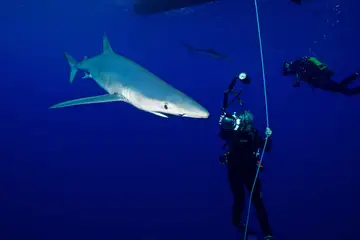
Photo: Juergen Gangoly · CC BY-SA 4.0 · Wikimedia Commons · resized Blue shark Prionace glauca
Not stated
Venom No official source we use states whether this animal is venomous. That does not mean it is harmless: do not handle it. Where in Hawaii Hawaiian waters Hawaii DLNR Division of Aquatic Resources No confirmed photo of Bluntnose sixgill shark Bluntnose sixgill shark Hexanchus griseus
Not stated
Venom No official source we use states whether this animal is venomous. That does not mean it is harmless: do not handle it. Where in Hawaii Hawaiian waters Hawaii DLNR Division of Aquatic Resources No confirmed photo of Blurred smooth lantern shark Blurred smooth lantern shark Etmopterus bigelowi
Not stated
Venom No official source we use states whether this animal is venomous. That does not mean it is harmless: do not handle it. Where in Hawaii Hawaiian waters Hawaii DLNR Division of Aquatic Resources No confirmed photo of Brown stingray Brown stingray Dasyatis lata
Not stated
Venom No official source we use states whether this animal is venomous. That does not mean it is harmless: do not handle it. Where in Hawaii Hawaiian waters Hawaii DLNR Division of Aquatic Resources No confirmed photo of Combtooth dogfish Combtooth dogfish Centroscyllium nigrum
Not stated
Venom No official source we use states whether this animal is venomous. That does not mean it is harmless: do not handle it. Where in Hawaii Hawaiian waters Hawaii DLNR Division of Aquatic Resources No confirmed photo of Cookiecutter shark Cookiecutter shark Isistius brasiliensis
Not stated
Venom No official source we use states whether this animal is venomous. That does not mean it is harmless: do not handle it. Where in Hawaii Hawaiian waters Hawaii DLNR Division of Aquatic Resources No confirmed photo of Crocodile shark Crocodile shark Pseudocarcharias kamoharai
Not stated
Venom No official source we use states whether this animal is venomous. That does not mean it is harmless: do not handle it. Where in Hawaii Hawaiian waters Hawaii DLNR Division of Aquatic Resources No confirmed photo of Diamond stingray Diamond stingray Dasyatis dipterura
Not stated
Venom No official source we use states whether this animal is venomous. That does not mean it is harmless: do not handle it. Where in Hawaii Hawaiian waters Hawaii DLNR Division of Aquatic Resources No confirmed photo of False cat shark False cat shark Pseudotriakis microdon
Not stated
Venom No official source we use states whether this animal is venomous. That does not mean it is harmless: do not handle it. Where in Hawaii Hawaiian waters Hawaii DLNR Division of Aquatic Resources No confirmed photo of Frilled shark Frilled shark Chlamydoselachus anguineus
Not stated
Venom No official source we use states whether this animal is venomous. That does not mean it is harmless: do not handle it. Where in Hawaii Hawaiian waters Hawaii DLNR Division of Aquatic Resources No confirmed photo of Galapagos shark Galapagos shark Carcharhinus galapagensis
Not stated
Venom No official source we use states whether this animal is venomous. That does not mean it is harmless: do not handle it. Where in Hawaii Hawaiian waters Hawaii DLNR Division of Aquatic Resources No confirmed photo of Giant stingaree Giant stingaree Plesiobatis daviesi
Not stated
Venom No official source we use states whether this animal is venomous. That does not mean it is harmless: do not handle it. Where in Hawaii Hawaiian waters Hawaii DLNR Division of Aquatic Resources No confirmed photo of Gray reef shark Gray reef shark Carcharhinus amblyrhynchos
Not stated
Venom No official source we use states whether this animal is venomous. That does not mean it is harmless: do not handle it. Where in Hawaii Hawaiian waters Hawaii DLNR Division of Aquatic Resources No confirmed photo of Gulper shark Gulper shark Centrophorus granulosus
Not stated
Venom No official source we use states whether this animal is venomous. That does not mean it is harmless: do not handle it. Where in Hawaii Hawaiian waters Hawaii DLNR Division of Aquatic Resources No confirmed photo of Hawaiian lantern shark Hawaiian lantern shark Etmopterus villosus
Not stated
Venom No official source we use states whether this animal is venomous. That does not mean it is harmless: do not handle it. Where in Hawaii Hawaiian waters Hawaii DLNR Division of Aquatic Resources No confirmed photo of Kitefin shark Kitefin shark Dalatias licha
Not stated
Venom No official source we use states whether this animal is venomous. That does not mean it is harmless: do not handle it. Where in Hawaii Hawaiian waters Hawaii DLNR Division of Aquatic Resources No confirmed photo of Longfin mako Longfin mako Isurus paucus
Not stated
Venom No official source we use states whether this animal is venomous. That does not mean it is harmless: do not handle it. Where in Hawaii Hawaiian waters Hawaii DLNR Division of Aquatic Resources No confirmed photo of Longnosed chimaera Longnosed chimaera Rhinochimaera pacifica
Not stated
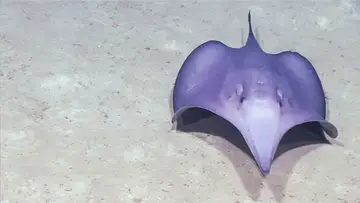
Venom No official source we use states whether this animal is venomous. That does not mean it is harmless: do not handle it. Where in Hawaii Hawaiian waters Hawaii DLNR Division of Aquatic Resources Photo: NOAA Office of Ocean Exploration and Research · Public domain · Wikimedia Commons (U.S. federal work, public domain) Longnosed deepwater ray Hexatrygon longirostra
Not stated
Venom No official source we use states whether this animal is venomous. That does not mean it is harmless: do not handle it. Where in Hawaii Hawaiian waters Hawaii DLNR Division of Aquatic Resources No confirmed photo of Manta ray Manta ray Manta birostris
Not stated
Venom No official source we use states whether this animal is venomous. That does not mean it is harmless: do not handle it. Where in Hawaii Hawaiian waters Hawaii DLNR Division of Aquatic Resources Conservation Federally Listed as Threatened (SWAP 2025, Oceanic Manta) No confirmed photo of Megamouth shark Megamouth shark Megachasma pelagios
Not stated
Venom No official source we use states whether this animal is venomous. That does not mean it is harmless: do not handle it. Where in Hawaii Hawaiian waters Hawaii DLNR Division of Aquatic Resources No confirmed photo of Mosaic gulper shark Mosaic gulper shark Centrophorus tessellatus
Not stated
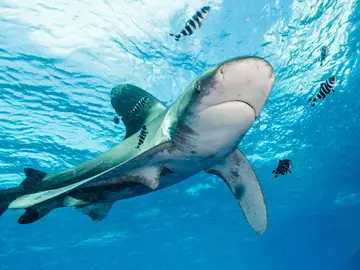
Venom No official source we use states whether this animal is venomous. That does not mean it is harmless: do not handle it. Where in Hawaii Hawaiian waters Hawaii DLNR Division of Aquatic Resources Photo: Alexander Vasenin · CC BY-SA 4.0 · Wikimedia Commons · resized Oceanic whitetip Carcharhinus longimanus
Not stated
Venom No official source we use states whether this animal is venomous. That does not mean it is harmless: do not handle it. Where in Hawaii Hawaiian waters Hawaii DLNR Division of Aquatic Resources Conservation Federally Listed as Threatened (SWAP 2025) Photo: Diego Delso · CC BY-SA 4.0 · Wikimedia Commons · resized Pelagic stingray Pteroplatytrygon violacea
Not stated
Venom No official source we use states whether this animal is venomous. That does not mean it is harmless: do not handle it. Where in Hawaii Hawaiian waters Hawaii DLNR Division of Aquatic Resources Photo: Pierre Pericard · CC BY 4.0 · Wikimedia Commons Pelagic thresher shark Alopias pelagicus
Not stated
Venom No official source we use states whether this animal is venomous. That does not mean it is harmless: do not handle it. Where in Hawaii Hawaiian waters Hawaii DLNR Division of Aquatic Resources No confirmed photo of Prickly shark Prickly shark Echinorhinus cookei
Not stated
Venom No official source we use states whether this animal is venomous. That does not mean it is harmless: do not handle it. Where in Hawaii Hawaiian waters Hawaii DLNR Division of Aquatic Resources No confirmed photo of Purple chimaera Purple chimaera Hydrolagus purpurescens
Not stated
Venom No official source we use states whether this animal is venomous. That does not mean it is harmless: do not handle it. Where in Hawaii Hawaiian waters Hawaii DLNR Division of Aquatic Resources No confirmed photo of Pygmy shark Pygmy shark Euprotomicrus bispinatus
Not stated
Venom No official source we use states whether this animal is venomous. That does not mean it is harmless: do not handle it. Where in Hawaii Hawaiian waters Hawaii DLNR Division of Aquatic Resources No confirmed photo of Sandbar shark Sandbar shark Carcharhinus plumbeus
Not stated
Venom No official source we use states whether this animal is venomous. That does not mean it is harmless: do not handle it. Where in Hawaii Hawaiian waters Hawaii DLNR Division of Aquatic Resources Photo: NOAA Photo Library · Public domain · Wikimedia Commons Scalloped hammerhead Sphyrna lewini
Not stated
Venom No official source we use states whether this animal is venomous. That does not mean it is harmless: do not handle it. Where in Hawaii Hawaiian waters Hawaii DLNR Division of Aquatic Resources Photo: Fábio Olmos · CC BY 4.0 · iNaturalist Isurus oxyrinchus
Not stated
Venom No official source we use states whether this animal is venomous. That does not mean it is harmless: do not handle it. Size Up to about 13 ft (NOAA, Atlantic; Florida Museum); Pacific: up to 12 ft, averaging 6 to 7 ft (NOAA). SCDNR: averages 5 to 8 ft. How to recognize it Very pointed snout and long gill slits Crescent-shaped (lunate) tail with a single strong keel on each side of the tail base Long, slender, smooth-edged teeth, visible even with the mouth closed Where in Hawaii Hawaiian waters Hawaii DLNR Division of Aquatic Resources Full Short-finned mako guide
No confirmed photo of Shortspine spurdog shark Shortspine spurdog shark Squalus mitsukurii
Not stated
Venom No official source we use states whether this animal is venomous. That does not mean it is harmless: do not handle it. Where in Hawaii Hawaiian waters Hawaii DLNR Division of Aquatic Resources No confirmed photo of Silky shark Silky shark Carcharhinus falicformes
Not stated
Venom No official source we use states whether this animal is venomous. That does not mean it is harmless: do not handle it. Where in Hawaii Hawaiian waters Hawaii DLNR Division of Aquatic Resources Photo: NOAA Office of Ocean Exploration and Research · Public domain · Wikimedia Commons (U.S. federal work, public domain) Sixgill stingray Hexatrygon bickelli
Not stated
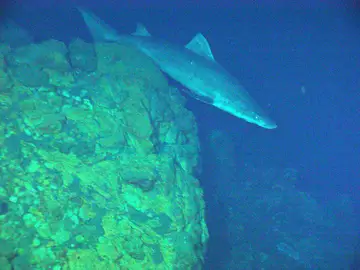
Venom No official source we use states whether this animal is venomous. That does not mean it is harmless: do not handle it. Where in Hawaii Hawaiian waters Hawaii DLNR Division of Aquatic Resources Photo: Pacific Ring of Fire 2004 Expedition. NOAA Office of Ocean Exploration; Dr. Bob Embley, NOAA PMEL, Chief Scientist · Public domain · Wikimedia Commons (U.S. federal work, public domain) Smalltooth sand tiger shark Odontaspis ferox
Not stated
Venom No official source we use states whether this animal is venomous. That does not mean it is harmless: do not handle it. Where in Hawaii Hawaiian waters Hawaii DLNR Division of Aquatic Resources No confirmed photo of Smooth hammerhead Smooth hammerhead Sphyrna zygaena
Not stated
Venom No official source we use states whether this animal is venomous. That does not mean it is harmless: do not handle it. Where in Hawaii Hawaiian waters Hawaii DLNR Division of Aquatic Resources No confirmed photo of Smooth lantern shark Smooth lantern shark Etmopterus pussilus
Not stated
Venom No official source we use states whether this animal is venomous. That does not mean it is harmless: do not handle it. Where in Hawaii Hawaiian waters Hawaii DLNR Division of Aquatic Resources No confirmed photo of Spinetail devil ray Spinetail devil ray Mobula japanica
Not stated
Venom No official source we use states whether this animal is venomous. That does not mean it is harmless: do not handle it. Where in Hawaii Hawaiian waters Hawaii DLNR Division of Aquatic Resources No confirmed photo of Sponge-headed cat shark Sponge-headed cat shark Apristurus spongiceps
Not stated
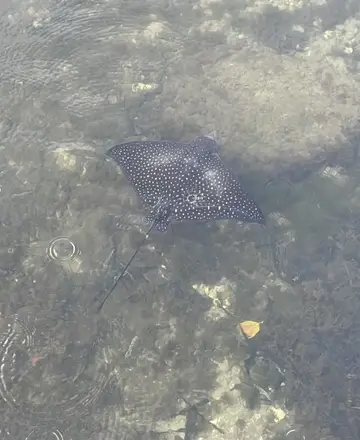
Venom No official source we use states whether this animal is venomous. That does not mean it is harmless: do not handle it. Where in Hawaii Hawaiian waters Hawaii DLNR Division of Aquatic Resources Photo: John Burnett · CC BY-SA 4.0 · iNaturalist · resized Spotted eagle ray Aetobatus narinari
Not stated
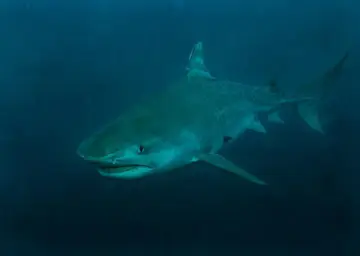
Venom No official source we use states whether this animal is venomous. That does not mean it is harmless: do not handle it. Where in Hawaii Hawaiian waters Hawaii DLNR Division of Aquatic Resources Photo: Georgina Jones · CC BY-SA 4.0 · iNaturalist · resized Galeocerdo cuvier
Not stated
Venom No official source we use states whether this animal is venomous. That does not mean it is harmless: do not handle it. Danger to people “Tigers are considered the most dangerous sharks in Hawaiian waters.” Hawaii DLNR Division of Aquatic Resources Size Florida gives a maximum of about 18 ft and 2,000 lb. How to recognize it Blunt snout and vertical bars on the sides Very broad head; short, broadly rounded snout much shorter than the mouth is wide Large triangular teeth, strongly serrated, with a deep notch on the outer edge Where in Hawaii Hawaiian waters Hawaii DLNR Division of Aquatic Resources Full Tiger shark guide
No confirmed photo of Torpedo ray Torpedo ray Torpedo sp.
Not stated
Venom No official source we use states whether this animal is venomous. That does not mean it is harmless: do not handle it. Where in Hawaii Hawaiian waters Hawaii DLNR Division of Aquatic Resources No confirmed photo of Velvet dogfish Velvet dogfish Scymnodon squamulosus
Not stated
Venom No official source we use states whether this animal is venomous. That does not mean it is harmless: do not handle it. Where in Hawaii Hawaiian waters Hawaii DLNR Division of Aquatic Resources No confirmed photo of Viper dogfish Viper dogfish Trigonognathus kabeyai
Not stated
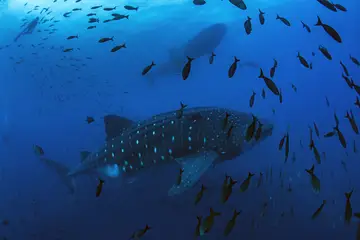
Venom No official source we use states whether this animal is venomous. That does not mean it is harmless: do not handle it. Where in Hawaii Hawaiian waters Hawaii DLNR Division of Aquatic Resources Photo: Jonathan Green · CC BY 4.0 · Wikimedia Commons Whale shark Rhincodon typus
Not stated
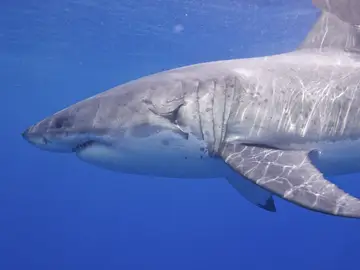
Venom No official source we use states whether this animal is venomous. That does not mean it is harmless: do not handle it. Where in Hawaii Hawaiian waters Hawaii DLNR Division of Aquatic Resources Photo: Elias Levy · CC BY 2.0 · Wikimedia Commons Carcharodon carcharias
Not stated
Venom No official source we use states whether this animal is venomous. That does not mean it is harmless: do not handle it. Danger to people “White sharks, which are also very dangerous, are rarely seen in Hawaii.” Hawaii DLNR Division of Aquatic Resources Size Born about 4 feet long; grows to about 20-21 feet and over 4,000 pounds (NOAA quick facts: up to 4,500 pounds). How to recognize it Torpedo-shaped body, conical snout, prominent keel at the base of a crescent-shaped tail Large first dorsal fin, usually with a pointed tip Broad, triangular, serrated teeth Where in Hawaii Hawaiian waters Hawaii DLNR Division of Aquatic Resources Full White shark guide
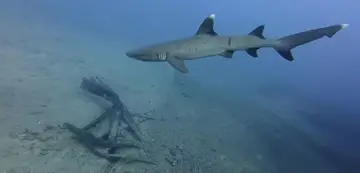
Photo: Robin White · CC BY 4.0 · iNaturalist Whitetip reef shark Triaenodon obesus
Not stated
Venom No official source we use states whether this animal is venomous. That does not mean it is harmless: do not handle it. Where in Hawaii Hawaiian waters Hawaii DLNR Division of Aquatic Resources Sharks and Marine Life people confuse Great white shark or Shortfin mako shark? Mako lacks black tips on the undersides of the fins and has thin, pointed teeth without serrations.
Shortfin Mako Shark or White shark? The white shark has broad, triangular, serrated teeth; mako teeth are slender and smooth-edged.
Photos show typical adults; individuals vary. Never get close to compare.
When sharks, rays and other marine animals are active in Hawaii Records of sharks, rays and other marine animals in Hawaii peak in March, June to July and November to December. They show when people record sharks, rays and other marine animals, not how many there are (about month bars ).
Jan Feb Mar Apr May Jun Jul Aug Sep Oct Nov Dec
244 records of sharks, rays and other marine animals in Hawaii by month (GBIF, CC0 and CC BY records). If you are bitten or stung Call 911 or Poison Help at 1-800-222-1222 right away. Poison Help connects you to your local poison center, any time of day.
Official advice from Hawaii DLNR Division of Aquatic Resources and Hawaii State Department of Health, Disease Outbreak Control Division:
How to report Invasive species (including any snake sighting): Pest Hotline 808-643-PEST (643-7378) or online at 643pest.org. Hawaii DLNR
What official sources say Are there sharks in Hawaii? Yes. DAR: about forty species occur in Hawaiian waters, and about eight are somewhat common nearshore. Shark bites average about three or four per year. Hawaii DLNR Division of Aquatic Resources
“There are about forty species of sharks that occur in Hawaiian waters” Sources About Us (Division of Forestry and Wildlife) . Hawaii DLNR Division of Forestry and Wildlife. undated page; checked November 3, 2026. Hawai'i Sharks: Species List (species list for Hawaiian waters) . Hawaii DLNR Division of Aquatic Resources. undated page; checked November 3, 2026. Shark Safety: Fact Sheet . Hawaii DLNR Division of Aquatic Resources. undated page; checked November 3, 2026. Quoted passages (7) “There are about forty species of sharks that occur in Hawaiian waters, ranging in size from the deep-water pygmy shark (about 8 inches) to the whale shark (up to 50 feet or more).” “A tiger shark is easily recognized by its blunt snout and the vertical bars on its sides.” “Tigers are considered the most dangerous sharks in Hawaiian waters.” “White sharks, which are also very dangerous, are rarely seen in Hawaii.” “Hammerheads are also easy to identify, and have been implicated in a few cases where they may have been provoked.” “Tiger sharks are often attracted to stream mouths after heavy rains, when upland fishes and other animals are swept out to sea.” “There are about forty species of sharks that occur in Hawaiian waters” Good Guys & Bad Guys card: Lionfish . Bishop Museum (Hawaii Biological Survey). undated page; checked November 3, 2026. Quoted passages (1) “Its long white spines are extremely venomous and can cause great pain if touched.” Shark Safety: Safety Tips . Hawaii DLNR Division of Aquatic Resources. undated page; checked November 3, 2026. Quoted passages (4) “Stay out of the water at dawn, dusk, and night, when some species of sharks may move inshore to feed. But be aware that tiger sharks are known to bite people at all times of the day.” “Do not enter the water if sharks are known to be present, and leave the water quickly and calmly if one is sighted. Do not provoke or harass a shark, even a small one.” “Swim or surf at beaches patrolled by lifeguards, and follow their advice.” “Stay out of the water at dawn, dusk, and night, when some species of sharks may move inshore to feed.” Leptospirosis . Hawaii State Department of Health, Disease Outbreak Control Division. undated page; checked November 3, 2026. Quoted passages (1) “Do not swim or wade in any freshwater streams or ponds in Hawaii, especially when you have open cuts or sores.” Box Jellyfish Calendar . Waikiki Aquarium (University of Hawai'i at Manoa). page modified 2026-09-30; checked November 3, 2026. Quoted passages (1) “All jellyfish arrival dates are estimates. Jellyfish may be present on any day of the year.” Examples of Invasive Species in Hawaii . Hawaii Invasive Species Council (Hawaii DLNR). undated page; checked November 3, 2026. Quoted passages (1) “Report Invasive Species Online at 643pest.org Report Invasive Species by Phone: 808 643-PEST” GBIF.org occurrence records, human observations licensed CC0 1.0 or CC BY 4.0 only, accessed November 3, 2026. The datasets behind these counts are listed on our Sources page.