On this page All 48 sharks, rays and other marine animals Lookalikes When they are active How to report Common questions About this list Sources
This page lists 48 sharks, rays and other marine animals : 41 from N.C. Department of Environmental Quality, Division of Marine Fisheries's Proclamation FF-3-2026: Shark - Commercial and Recreational - Opening Date and Harvest Restrictions and 7 named in other official sources.
1 is nonnative.
All 48 sharks, rays and other marine animals From A to Z.
Find by name
No confirmed photo of Atlantic angel shark Atlantic angel shark Squatina dumerili
Not stated
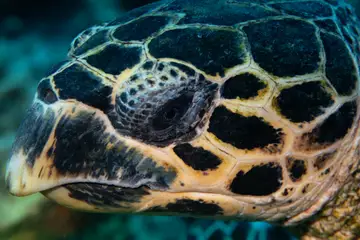
Venom No official source we use states whether this animal is venomous. That does not mean it is harmless: do not handle it. Conservation prohibited species (must be released) under NC DMF proclamation FF-3-2026 Photo: cello caruso-turiello · CC BY 4.0 · iNaturalist Atlantic Hawksbill Sea Turtle Eretmochelys imbricata imbricata
Not stated
Venom No official source we use states whether this animal is venomous. That does not mean it is harmless: do not handle it. Conservation Federal ESA Protection Status: E; NC State Protection Status: E No confirmed photo of Atlantic Sharpnose shark Atlantic Sharpnose shark Not stated
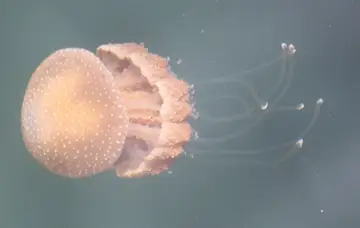
Venom No official source we use states whether this animal is venomous. That does not mean it is harmless: do not handle it. Photo: Millie Basden · CC BY 4.0 · iNaturalist Australian spotted jellyfish Phyllorhiza punctata
Not stated Nonnative
Venom No official source we use states whether this animal is venomous. That does not mean it is harmless: do not handle it. No confirmed photo of Basking shark Basking shark Cetorhinus maximus
Not stated
Venom No official source we use states whether this animal is venomous. That does not mean it is harmless: do not handle it. Conservation prohibited species (must be released) under NC DMF proclamation FF-3-2026 No confirmed photo of Bigeye sandtiger shark Bigeye sandtiger shark Odontaspis noronhai
Not stated
Venom No official source we use states whether this animal is venomous. That does not mean it is harmless: do not handle it. Conservation prohibited species (must be released) under NC DMF proclamation FF-3-2026 No confirmed photo of Bigeye sixgill shark Bigeye sixgill shark Hexanchus nakamurai
Not stated
Venom No official source we use states whether this animal is venomous. That does not mean it is harmless: do not handle it. Conservation prohibited species (must be released) under NC DMF proclamation FF-3-2026 No confirmed photo of Bigeye thresher shark Bigeye thresher shark Alopias superciliosus
Not stated
Venom No official source we use states whether this animal is venomous. That does not mean it is harmless: do not handle it. Conservation prohibited species (must be released) under NC DMF proclamation FF-3-2026 No confirmed photo of Bignose shark Bignose shark Carcharhinus altimus
Not stated
Venom No official source we use states whether this animal is venomous. That does not mean it is harmless: do not handle it. Conservation prohibited species (must be released) under NC DMF proclamation FF-3-2026 No confirmed photo of Blacknose shark Blacknose shark Not stated
Venom No official source we use states whether this animal is venomous. That does not mean it is harmless: do not handle it. No confirmed photo of Blacktip shark Blacktip shark Not stated
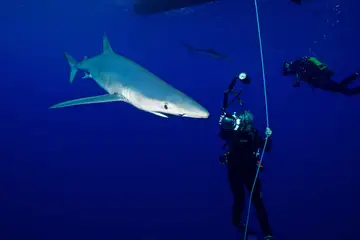
Venom No official source we use states whether this animal is venomous. That does not mean it is harmless: do not handle it. Photo: Juergen Gangoly · CC BY-SA 4.0 · Wikimedia Commons · resized Blue shark Not stated
Venom No official source we use states whether this animal is venomous. That does not mean it is harmless: do not handle it. No confirmed photo of Bonnethead shark Bonnethead shark Not stated
Venom No official source we use states whether this animal is venomous. That does not mean it is harmless: do not handle it. No confirmed photo of Bull shark Bull shark Not stated
Venom No official source we use states whether this animal is venomous. That does not mean it is harmless: do not handle it. No confirmed photo of Caribbean reef shark Caribbean reef shark Carcharhinus perezii
Not stated
Venom No official source we use states whether this animal is venomous. That does not mean it is harmless: do not handle it. Conservation prohibited species (must be released) under NC DMF proclamation FF-3-2026 No confirmed photo of Caribbean sharpnose shark Caribbean sharpnose shark Rhizoprionodon porosus
Not stated
Venom No official source we use states whether this animal is venomous. That does not mean it is harmless: do not handle it. Conservation prohibited species (must be released) under NC DMF proclamation FF-3-2026 No confirmed photo of Dusky shark Dusky shark Carcharhinus obscurus
Not stated
Venom No official source we use states whether this animal is venomous. That does not mean it is harmless: do not handle it. Conservation prohibited species (must be released) under NC DMF proclamation FF-3-2026 No confirmed photo of Finetooth shark Finetooth shark Not stated
Venom No official source we use states whether this animal is venomous. That does not mean it is harmless: do not handle it. No confirmed photo of Galapagos shark Galapagos shark Carcharhinus galapagensis
Not stated
Venom No official source we use states whether this animal is venomous. That does not mean it is harmless: do not handle it. Conservation prohibited species (must be released) under NC DMF proclamation FF-3-2026 No confirmed photo of Green Sea Turtle Green Sea Turtle Chelonia mydas
Not stated
Venom No official source we use states whether this animal is venomous. That does not mean it is harmless: do not handle it. Conservation Federal ESA Protection Status: T; NC State Protection Status: T No confirmed photo of Hammerhead, great shark Hammerhead, great shark Not stated
Venom No official source we use states whether this animal is venomous. That does not mean it is harmless: do not handle it. No confirmed photo of Hammerhead, scalloped shark Hammerhead, scalloped shark Not stated
Venom No official source we use states whether this animal is venomous. That does not mean it is harmless: do not handle it. No confirmed photo of Hammerhead, smooth shark Hammerhead, smooth shark Not stated
Venom No official source we use states whether this animal is venomous. That does not mean it is harmless: do not handle it. No confirmed photo of Kemp's Ridley Sea Turtle Kemp's Ridley Sea Turtle Lepidochelys kempii
Not stated
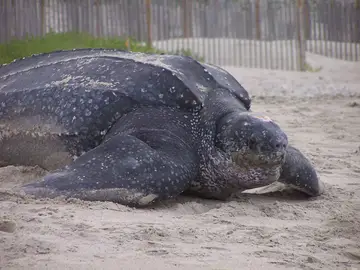
Venom No official source we use states whether this animal is venomous. That does not mean it is harmless: do not handle it. Conservation Federal ESA Protection Status: E; NC State Protection Status: E Photo: Rabon David, U.S. Fish and Wildlife Service · Public domain · Wikimedia Commons Dermochelys coriacea
Not stated
Venom No official source we use states whether this animal is venomous. That does not mean it is harmless: do not handle it. Size Adults 5 to 6 feet long, 750 to 1,000 pounds (NOAA). Texas Parks and Wildlife cites weights up to 1,300 lb and shells up to 8 feet. How to recognize it The only sea turtle that lacks scales and a hard shell. Front flippers proportionally longer than in other sea turtles; rear flippers paddle-shaped. Usually a pink spot on top of the head that can identify individuals. Conservation Federal ESA Protection Status: E; NC State Protection Status: E Full Leatherback Sea Turtle guide
Photo: GregAmptman · CC BY 4.0 · Wikimedia Commons Lemon shark Not stated
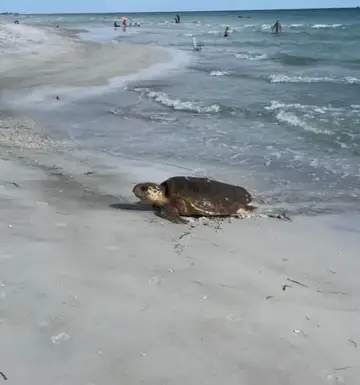
Venom No official source we use states whether this animal is venomous. That does not mean it is harmless: do not handle it. Photo: Kristiina Hurme · CC BY 4.0 · iNaturalist Caretta caretta
Not stated
Venom No official source we use states whether this animal is venomous. That does not mean it is harmless: do not handle it. Size Adults 2.5 to 3.5 feet long and 200 to 350 pounds (NOAA). NCWRC gives 31 to 45 inches shell length and 170 to 350 pounds; SCDNR says adults can weigh as much as 300 pounds and reach up to four feet in shell length. How to recognize it Very large head with powerful jaws. Slightly heart-shaped top shell. Two pairs of scales (prefrontal scutes) between the eyes above the nostrils; two claws on each flipper. Conservation Federal ESA Protection Status: T; NC State Protection Status: T Full Loggerhead Sea Turtle guide
No confirmed photo of Long fin mako shark Long fin mako shark Isurus paucus
Not stated
Venom No official source we use states whether this animal is venomous. That does not mean it is harmless: do not handle it. Conservation prohibited species (must be released) under NC DMF proclamation FF-3-2026 No confirmed photo of Narrowtooth shark Narrowtooth shark Carcharhinus brachyurus
Not stated
Venom No official source we use states whether this animal is venomous. That does not mean it is harmless: do not handle it. Conservation prohibited species (must be released) under NC DMF proclamation FF-3-2026 No confirmed photo of Night shark Night shark Carcharhinus signatu
Not stated
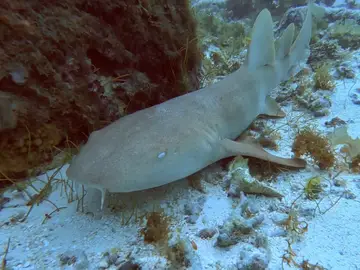
Venom No official source we use states whether this animal is venomous. That does not mean it is harmless: do not handle it. Conservation prohibited species (must be released) under NC DMF proclamation FF-3-2026 Photo: Matteo Bellucci · CC BY 4.0 · iNaturalist Nurse shark Not stated
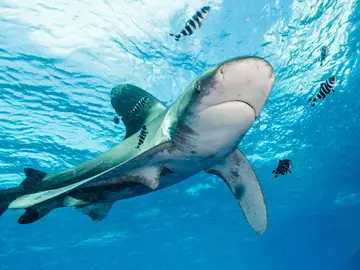
Venom No official source we use states whether this animal is venomous. That does not mean it is harmless: do not handle it. Photo: Alexander Vasenin · CC BY-SA 4.0 · Wikimedia Commons · resized Oceanic whitetip shark Carcharhinus longimanus
Not stated
Venom No official source we use states whether this animal is venomous. That does not mean it is harmless: do not handle it. Conservation prohibited species (must be released) under NC DMF proclamation FF-3-2026 No confirmed photo of Porbeagle shark Porbeagle shark Not stated
Venom No official source we use states whether this animal is venomous. That does not mean it is harmless: do not handle it. No confirmed photo of Sandbar shark Sandbar shark Carcharhinus plumbeus
Not stated
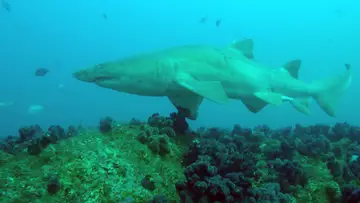
Venom No official source we use states whether this animal is venomous. That does not mean it is harmless: do not handle it. Photo: Tom Heijnen · CC BY 4.0 · iNaturalist Sandtiger shark Carcharias taurus
Not stated
Venom No official source we use states whether this animal is venomous. That does not mean it is harmless: do not handle it. Conservation prohibited species (must be released) under NC DMF proclamation FF-3-2026 No confirmed photo of Sevengill shark Sevengill shark Heptranchias perlo
Not stated
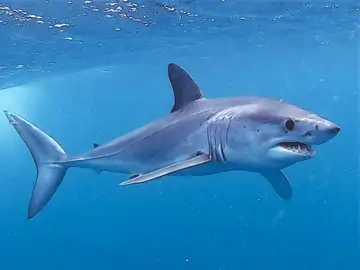
Venom No official source we use states whether this animal is venomous. That does not mean it is harmless: do not handle it. Conservation prohibited species (must be released) under NC DMF proclamation FF-3-2026 Photo: Fábio Olmos · CC BY 4.0 · iNaturalist Isurus oxyrinchus
Not stated
Venom No official source we use states whether this animal is venomous. That does not mean it is harmless: do not handle it. Size Up to about 13 ft (NOAA, Atlantic; Florida Museum); Pacific: up to 12 ft, averaging 6 to 7 ft (NOAA). SCDNR: averages 5 to 8 ft. How to recognize it Very pointed snout and long gill slits Crescent-shaped (lunate) tail with a single strong keel on each side of the tail base Long, slender, smooth-edged teeth, visible even with the mouth closed Conservation prohibited species (must be released) under NC DMF proclamation FF-3-2026 Full Shortfin mako shark guide
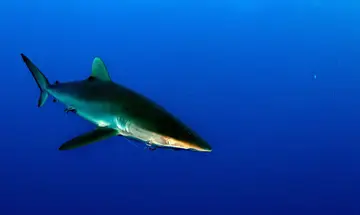
Photo: Joi Ito from Inbamura, Japan · CC BY 2.0 · Wikimedia Commons Silky shark Carcharhinus falciformis
Not stated
Venom No official source we use states whether this animal is venomous. That does not mean it is harmless: do not handle it. No confirmed photo of Sixgill shark Sixgill shark Hexanchus griseus
Not stated
Venom No official source we use states whether this animal is venomous. That does not mean it is harmless: do not handle it. Conservation prohibited species (must be released) under NC DMF proclamation FF-3-2026 No confirmed photo of Smalltail shark Smalltail shark Carchahrinus porosus
Not stated
Venom No official source we use states whether this animal is venomous. That does not mean it is harmless: do not handle it. Conservation prohibited species (must be released) under NC DMF proclamation FF-3-2026 No confirmed photo of Smooth dogfish Smooth dogfish Mustelus canis
Not stated
Venom No official source we use states whether this animal is venomous. That does not mean it is harmless: do not handle it. No confirmed photo of Spinner shark Spinner shark Not stated
Venom No official source we use states whether this animal is venomous. That does not mean it is harmless: do not handle it. No confirmed photo of Spiny dogfish Spiny dogfish Squalus acanthias
Not stated
Venom No official source we use states whether this animal is venomous. That does not mean it is harmless: do not handle it. No confirmed photo of Thresher shark Thresher shark Not stated
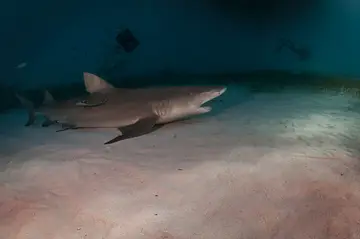
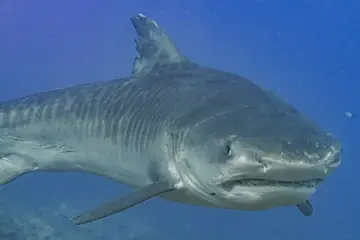
Venom No official source we use states whether this animal is venomous. That does not mean it is harmless: do not handle it. Photo: cello caruso-turiello · CC BY 4.0 · iNaturalist Tiger shark Not stated
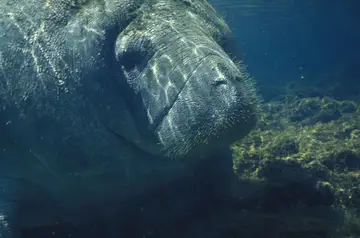
Venom No official source we use states whether this animal is venomous. That does not mean it is harmless: do not handle it. Photo: Ryan Hagerty · Public domain · Wikimedia Commons Trichechus manatus
Not stated
Venom No official source we use states whether this animal is venomous. That does not mean it is harmless: do not handle it. Size Adults typically 9-10 ft long and about 1,000 lb; can exceed 13 ft and 3,500 lb. Calves weigh about 60-70 lb at birth. How to recognize it Two front flippers and a large, round, flattened paddle-shaped tail Often only the snout breaks the surface when it breathes Signs on the water: a swirl, or a back, snout, tail or flipper breaking the surface Conservation Federal ESA Protection Status: T; NC State Protection Status: T Full West Indian Manatee guide
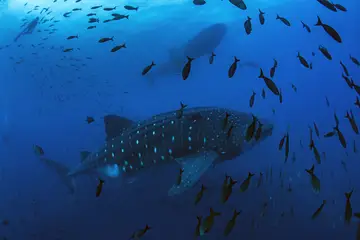
Photo: Jonathan Green · CC BY 4.0 · Wikimedia Commons Whale shark Rhincodon typus
Not stated
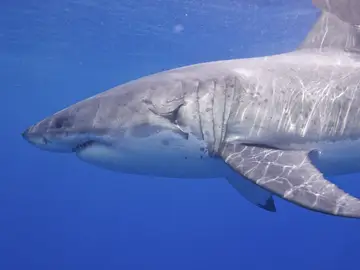
Venom No official source we use states whether this animal is venomous. That does not mean it is harmless: do not handle it. Conservation prohibited species (must be released) under NC DMF proclamation FF-3-2026 Photo: Elias Levy · CC BY 2.0 · Wikimedia Commons Carcharodon carcharias
Not stated
Venom No official source we use states whether this animal is venomous. That does not mean it is harmless: do not handle it. Size Born about 4 feet long; grows to about 20-21 feet and over 4,000 pounds (NOAA quick facts: up to 4,500 pounds). How to recognize it Torpedo-shaped body, conical snout, prominent keel at the base of a crescent-shaped tail Large first dorsal fin, usually with a pointed tip Broad, triangular, serrated teeth Conservation prohibited species (must be released) under NC DMF proclamation FF-3-2026 Full White shark guide
Sharks and Marine Life people confuse Shortfin Mako Shark or White shark? The white shark has broad, triangular, serrated teeth; mako teeth are slender and smooth-edged.
Great white shark or Shortfin mako shark? Mako lacks black tips on the undersides of the fins and has thin, pointed teeth without serrations.
Loggerhead sea turtle or Leatherback sea turtle? Adult leatherbacks differ from all other sea turtles, including the loggerhead, in their large size, spindle-shaped body and leathery shell without scales.
Photos show typical adults; individuals vary. Never get close to compare.
When sharks, rays and other marine animals are active in North Carolina Records of sharks, rays and other marine animals in North Carolina peak in January, April to July and December. They show when people record sharks, rays and other marine animals, not how many there are (about month bars ).
Jan Feb Mar Apr May Jun Jul Aug Sep Oct Nov Dec
376 records of sharks, rays and other marine animals in North Carolina by month (GBIF, CC0 and CC BY records). How to report NC Wildlife Helpline (NCWRC), Monday-Friday 8 a.m.-5 p.m.: 866-318-2401; email [email protected] . Aquatic invasive species: NCWRC Aquatic Nuisance Species Reporting Tool (https://survey123.arcgis.com/share/710337fbf02140599fd788ebfdd72744). Rattlesnake sightings: [email protected] or HerpMapper. Wildlife violations / alligator emergencies: 800-662-7137. Yellow-legged hornet: www.ncagr.gov/YLH (NCDA&CS). N.C. Wildlife Resources Commission
Sources North Carolina's State Wildlife Action Plan (SWAP) page . N.C. Wildlife Resources Commission. 2025 SWAP approved by USFWS January 2026; checked November 3, 2026. Proclamation FF-3-2026: Shark - Commercial and Recreational - Opening Date and Harvest Restrictions . N.C. Department of Environmental Quality, Division of Marine Fisheries. effective 12:01 A.M., January 1, 2026; checked November 3, 2026. 2025 SWAP Appendix 3 Table 3-7 REPTILES SGCN and Priority Species List (2025 WAP Revision Taxa Team Evaluations) . N.C. Wildlife Resources Commission. 2025 NC SWAP; checked November 3, 2026. 2025 SWAP Appendix 3 Table 3-6 MAMMALS SGCN and Priority Species List (2025 WAP Revision Taxa Team Evaluations) . N.C. Wildlife Resources Commission. 2025 NC SWAP; checked November 3, 2026. Nonindigenous Aquatic Species - species list for North Carolina (by group) . U.S. Geological Survey, Nonindigenous Aquatic Species (NAS) database. database queried November 3, 2026; checked November 3, 2026. Have a Wildlife Problem? N.C. Wildlife Resources Commission. undated page; checked November 3, 2026. Quoted passages (1) “The Wildlife Helpline is open Monday through Friday, 8 a.m. to 5 p.m. Call: 866-318-2401” GBIF.org occurrence records, human observations licensed CC0 1.0 or CC BY 4.0 only, accessed November 3, 2026. The datasets behind these counts are listed on our Sources page.